

Table of Contents
- What is Wayfinding Signage?
- Digital Wayfinding Signage Solutions in Dubai & Abu Dhabi (UAE) & Egypt
- Benefits of Wayfinding Signage
- Types of Wayfinding Signage
- What We Offer
- Why Choose Unitec Advertising for Wayfinding Signage?
- Signage Materials
- Disabilities and Signage
- Common Wayfinding Signage Considerations and Issues
- FAQs
- What are the 4 D’s of Navigation?
- What are the 7 Core Design Principles?
- What are the Four Types of Wayfinding Signage?
- What are the Benefits of Wayfinding Signage?
- How Many Types of Signage are There?
- What are the Key Elements of Wayfinding?
- What are the Three Basic Types of Signs?
- How to Create Wayfinding Signage?
What is Wayfinding Signage?
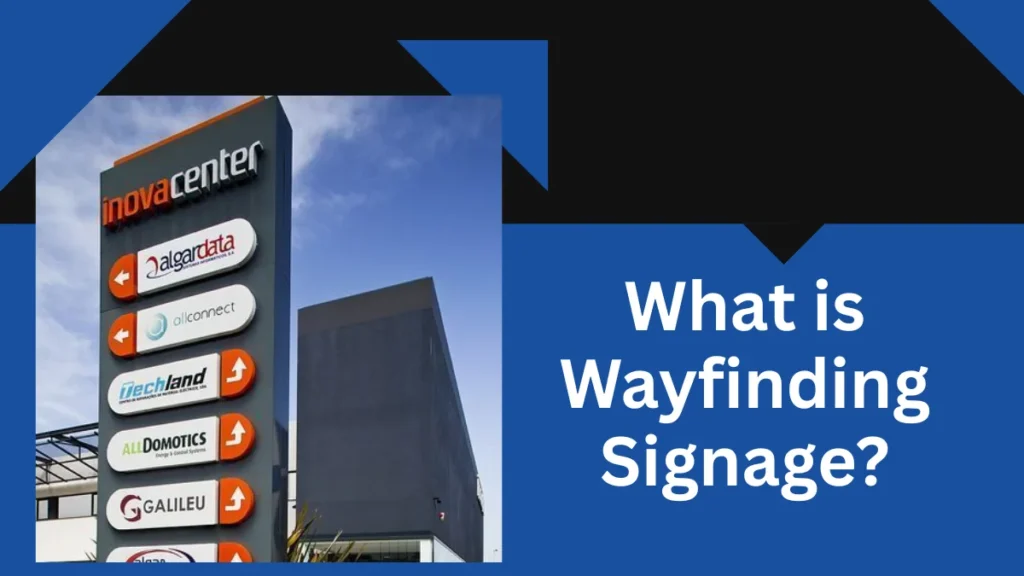
Wayfinding signage serves as a crucial navigation tool that helps people find their way through built environments. These systems combine visual cues, directional signs, and identification elements to guide visitors, users, and individuals through complex spaces with directional systems clarity and certainty. The concept of wayfinding was notably explored by Kevin Lynch, who emphasized how people perceive and navigate through their surroundings.
At its core, effective wayfinding signage addresses basic human needs for spatial orientation and reduces confusion in unfamiliar areas. Whether guiding someone through a building for the first time or helping regular users navigate efficiently, these systems play a vital role in creating positive experiences within any environment.
Digital Wayfinding Signage Solutions in Dubai & Abu Dhabi (UAE) & Egypt
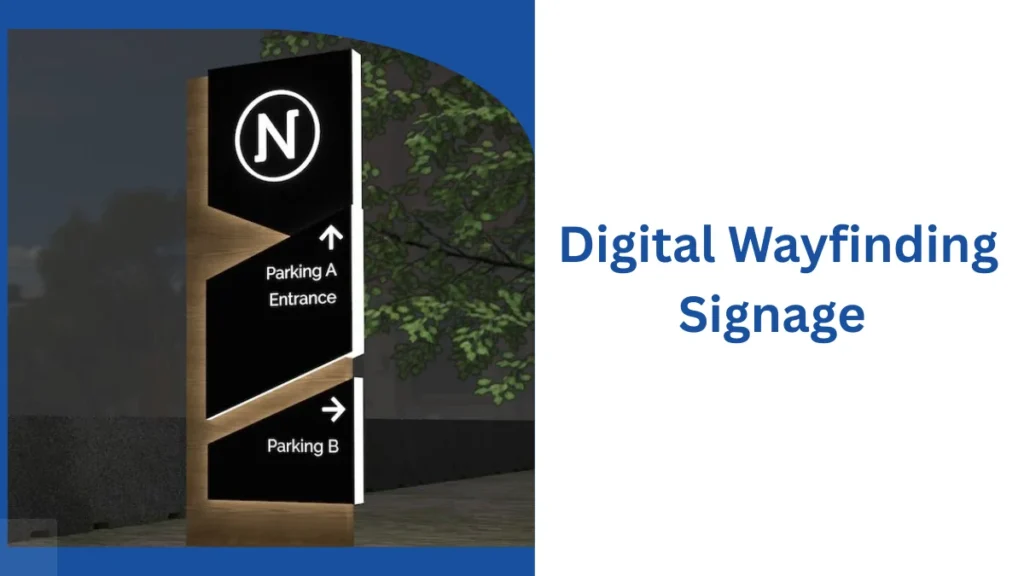
The demand for advanced wayfinding solutions has grown significantly across the Middle East and North Africa regions. In Dubai, Abu Dhabi, and Egypt, businesses and organizations are increasingly implementing digital signage systems that offer interactive maps, real-time updates, and touchpoint experiences for visitors.
Digital signage transforms how people interact with public spaces, corporate campuses, healthcare facilities, and retail environments. These modern solutions integrate seamlessly with brand identity while providing dynamic navigation assistance that traditional static signs cannot match. The hospitality sector, in particular, has embraced these technologies to enhance the overall wayfinding experience for guests exploring large hotel properties and entertainment venues.
Benefits of Wayfinding Signage
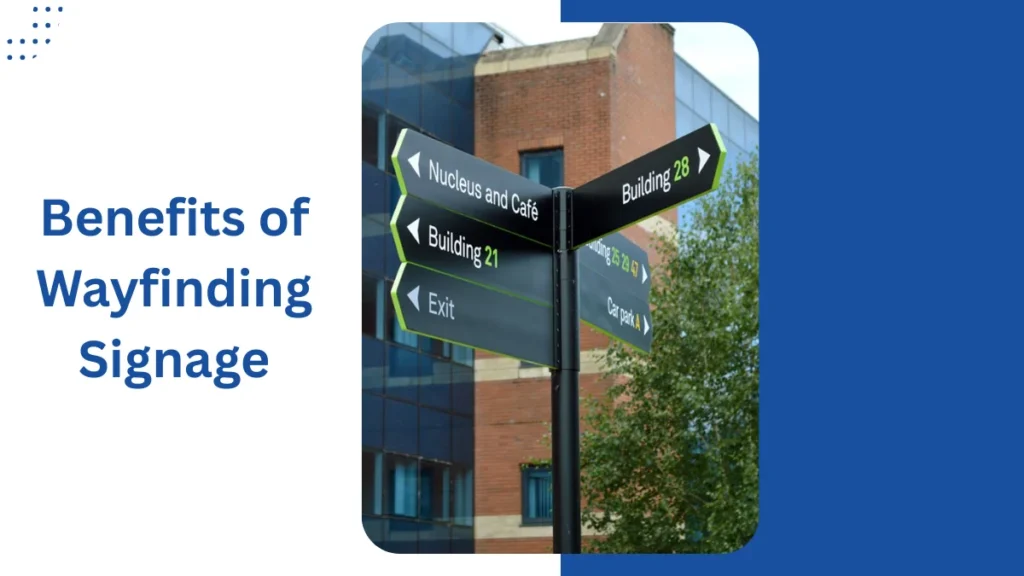
Implementing a well-designed wayfinding system delivers numerous advantages that extend beyond simple navigation. These benefits impact both the individuals using the space and the organizations managing it.
Enhanced User Experience
Quality signage designs improve the user experience by reducing stress and saving time. When visitors can easily locate their destination, they feel more confident and comfortable, satisfying needs related to love and belonging within the space. This psychological comfort aligns with A Theory of Human Motivation, addressing physiological needs for safety and orientation.
Improved Traffic Flow
Strategic placement of directional signage helps manage traffic flow through buildings, preventing bottlenecks in high-traffic areas. This is particularly valuable in supermarkets, retail stores, and healthcare settings where efficient movement through aisles and corridors is essential.
Brand Reinforcement
Wayfinding signages serve as an extension of brand identity, incorporating colors, typography, and graphics that reflect organizational branding. Every sign becomes a touchpoint that reinforces brand recognition and creates a cohesive visual environment.
Accessibility and Compliance
Modern wayfinding systems prioritize universal access, ensuring ADA-compliant and accessible design for people with diverse abilities. This commitment to universal design demonstrates social responsibility while meeting compliance requirements.
Types of Wayfinding Signage
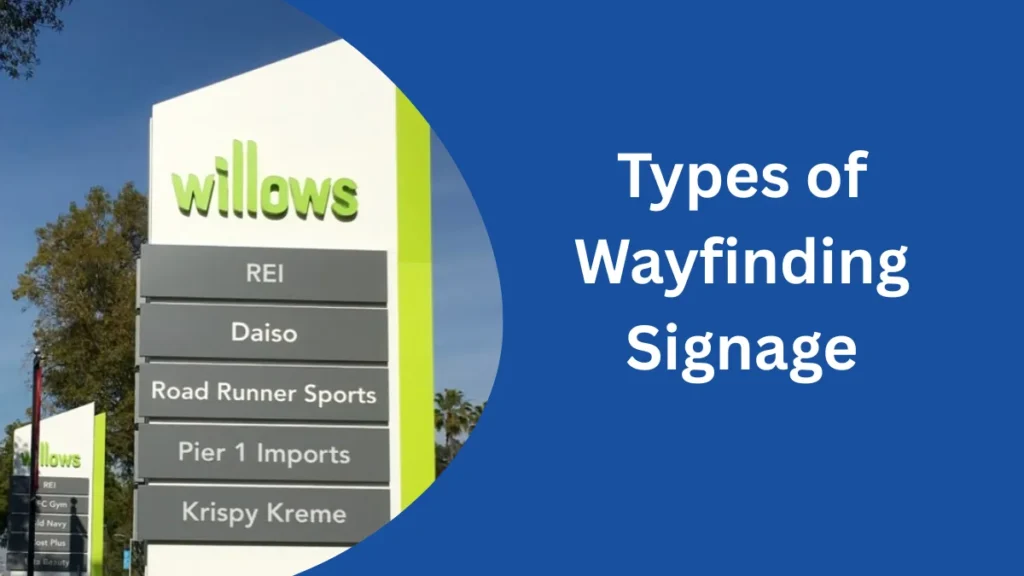
Understanding the different types of wayfinding signage helps organizations select the right solutions for their unique needs. Each type serves specific functions within the overall navigation strategy.
Directional Systems
Directional signs guide people along routes, indicating the way to specific locations within buildings or outdoor environments. These signs use arrows, symbols, and text to provide clear specific instructions at decision points where users might otherwise experience confusion.
Identification Signage
Identification elements mark destinations, confirming that visitors have reached their intended location. These include room numbers, department names, and facility labels that help people verify their position within the space.
Informational Graphics
Informational signage provides context about the environment, services, or project details. Maps, directories, and regulatory information fall into this category, offering users a broader view of the space and available resources.
Regulatory Signs
These signs communicate rules, safety information, and compliance requirements. While less focused on navigation, they remain an integral part of the wayfinding experience, ensuring people understand expectations and restrictions within particular areas.
What We Offer
Unitec Advertising provides comprehensive design services tailored to diverse applications across multiple sectors. The team specializes in creating wayfinding signage design solutions that address the unique needs of each project, from initial concept through installation.
Services include architectural signage development, retail wayfinding signage systems, campus navigation solutions, and specialized designs for healthcare and hospitality environments. Sales consultants work closely with clients throughout the design process, ensuring every element aligns with project goals and brand standards.
The approach combines creativity with functionality, developing signage systems that enhance both aesthetics and usability. Whether working on corporate campuses, public spaces, or complex retail environments, the focus remains on delivering solutions that improve spatial orientation and overall user satisfaction.
Why Choose Unitec Advertising for Wayfinding Signage?
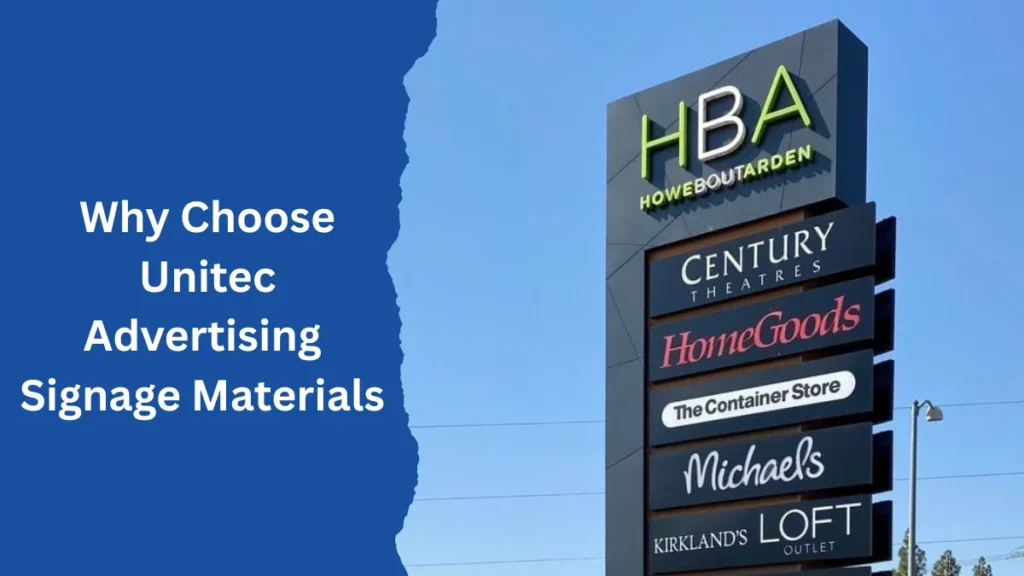
Selecting the right partner for wayfinding projects requires careful consideration of experience, expertise, and approach. Unitec Advertising distinguishes itself through several key factors that benefit clients and end-users alike.
Expertise Across Environments
The team brings extensive experience working across built environments, understanding how different spaces influence navigation needs. From the fast-paced demands of retail to the sensitive requirements of healthcare facilities, this breadth of knowledge ensures appropriate solutions for each setting.
User-Centered Design Philosophy
Every project begins with understanding the user experience, examining how people will interact with signs and navigate through spaces. This human-centered approach considers motivation, emotion, and thoughts that influence how individuals perceive and use wayfinding elements.
Integration of Technology and Tradition
While embracing digital signage innovations, Unitec also recognizes the enduring value of traditional signage materials and methods. This balanced strategy ensures solutions that combine the best aspects of both approaches, creating systems optimized for visibility, legibility, and long-term performance.
Comprehensive Project Management
From initial consultation through final installation, the team manages every aspect of the project timeline. This includes source selection, material specification, production coordination, and quality assurance, ensuring seamless execution that meets deadlines and exceeds expectations.
Signage Materials
The selection of appropriate materials significantly impacts the effectiveness, durability, and appearance of wayfinding signages. Different environments and applications require specific material characteristics to perform optimally over time.
Indoor Materials
Interior design applications often utilize acrylic, vinyl, aluminum, and various plastics that offer clean aesthetics and easy maintenance. These materials work well in controlled environments where weather resistance is not a primary concern. Lighting integration is also simpler with indoor materials, enhancing visibility during all hours of operation.
Outdoor Materials
Exterior signage demands weather-resistant materials that withstand environmental exposure. Options include treated metals, durable plastics, and specially coated materials that resist fading, corrosion, and temperature fluctuations. Proper material selection ensures long-term legibility and reduces maintenance requirements.
Sustainable Options
Growing environmental awareness has increased demand for eco-friendly signage materials. Recycled content, renewable resources, and materials with lower environmental impact are becoming standard considerations in the design process, aligning with broader sustainability goals.
Disabilities and Signage
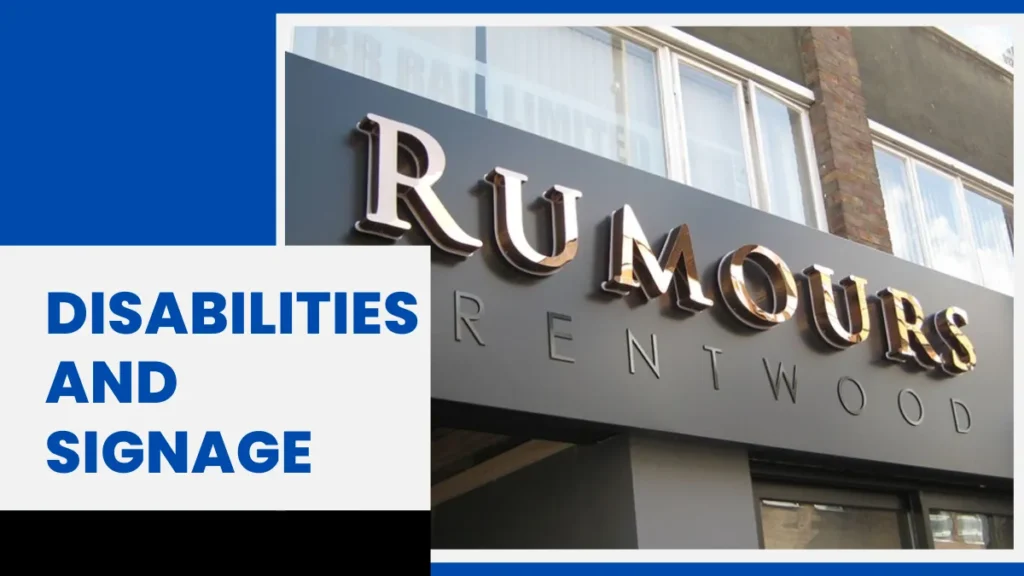
Creating inclusive wayfinding systems requires thoughtful attention to accessibility and universal design principles. Effective signage must serve people with various abilities, ensuring equal access to navigation information.
Visual Considerations
For individuals with visual impairments, tactile elements, high-contrast color schemes, and appropriate text sizing are essential. Braille integration and raised lettering provide alternative ways to access identification information. Proper lighting also plays a critical role in ensuring visibility for people with varying levels of vision.
Cognitive Accessibility
Clear, simple messaging benefits everyone, but is particularly important for people with cognitive disabilities. Using familiar icons, avoiding jargon, and maintaining consistency throughout the signage system helps reduce cognitive load and makes navigation more intuitive.
Physical Accessibility
Placement height, viewing angles, and proximity to accessible routes ensure that people using mobility devices can easily view and benefit from wayfinding elements. ADA-compliant standards provide specific instructions on these aspects, creating equitable access across all user groups.
Common Wayfinding Signage Considerations and Issues
Developing effective wayfinding systems involves addressing various challenges that can impact performance and user satisfaction. Understanding these common examples helps create more successful implementations.
Consistency and Coherence
Maintaining visual consistency across all signage elements creates a coherent system that users can quickly learn to read and trust. Inconsistent designs, colors, or terminology create confusion and undermine the overall wayfinding experience.
Information Overload
While providing adequate information is important, overwhelming users with excessive text or too many directional options at a single decision point can create rather than resolve confusion. Balancing completeness with simplicity remains a key challenge in the design process.
Maintenance and Updates
Environments change over time, with new tenants, relocated services, and modified layouts requiring signage updates. Planning for future flexibility and establishing maintenance protocols ensures systems remain accurate and useful throughout their lifecycle.
Cultural and Linguistic Diversity
In multicultural environments, addressing language diversity through multilingual signage or universally understood symbols helps ensure all visitors can navigate successfully. This consideration is particularly relevant in international destinations and diverse metropolitan areas.
FAQs
What are the 4 D’s of Navigation?
The four D’s of navigation—Discover, Decide, Direct, and Deliver—create a framework for how people move through spaces. Discover helps users identify their location and options through directories and maps. Decide provides route information like distances and time estimates. Direct uses directional signs and visual cues to guide the journey. Deliver confirms arrival with clear identification signage.
What are the 7 Core Design Principles?
Seven principles guide effective wayfinding signage: Legibility ensures text and symbols are readable. Visibility balances prominence with harmony through proper lighting and placement. Simplicity keeps messaging clear. Consistency maintains uniform design elements. Accessibility ensures universal access for all abilities. Context tailors solutions to specific environments and needs. Sustainability considers long-term environmental impact.
What are the Four Types of Wayfinding Signage?
Wayfinding systems use four primary sign types: Identification signs mark specific locations and confirm destinations. Directional signs guide movement using arrows and distance information. Informational signs provide maps, directories, and general services information. Regulatory signs communicate rules and safety requirements.
What are the Benefits of Wayfinding Signage?
Wayfinding signage reduces anxiety for first time visitors, improves operational efficiency by saving time, enhances brand perception through thoughtful design, and increases safety by helping people locate emergency exits and critical facilities quickly.
How Many Types of Signage are There?
Beyond the four core wayfinding types, signage includes promotional signs for marketing, decorative elements, interpretive signs for education, and merchandising signs in retail stores. The mix depends on the environment’s purpose and user needs.
What are the Key Elements of Wayfinding?
Successful wayfinding includes clear hierarchy, strategic placement at decision points, appropriate scale for viewing distances, color coding for area differentiation, symbolic language using icons for universal access, and integration with architecture for harmonious spaces.
What are the Three Basic Types of Signs?
Signs fall into three categories: Informational signs educate about services and policies. Directional signs guide navigation and movement. Identificational signs label and confirm locations.
How to Create Wayfinding Signage?
Creating wayfinding signage involves six steps: Assessment (analyze traffic flow and userneeds), Strategy development (outline sign types and placement), Design development (create graphics reflecting brand identity), Material selection (choose durable materials), Installation (proper mounting and lighting), and Evaluation (gather feedback for improvement).