

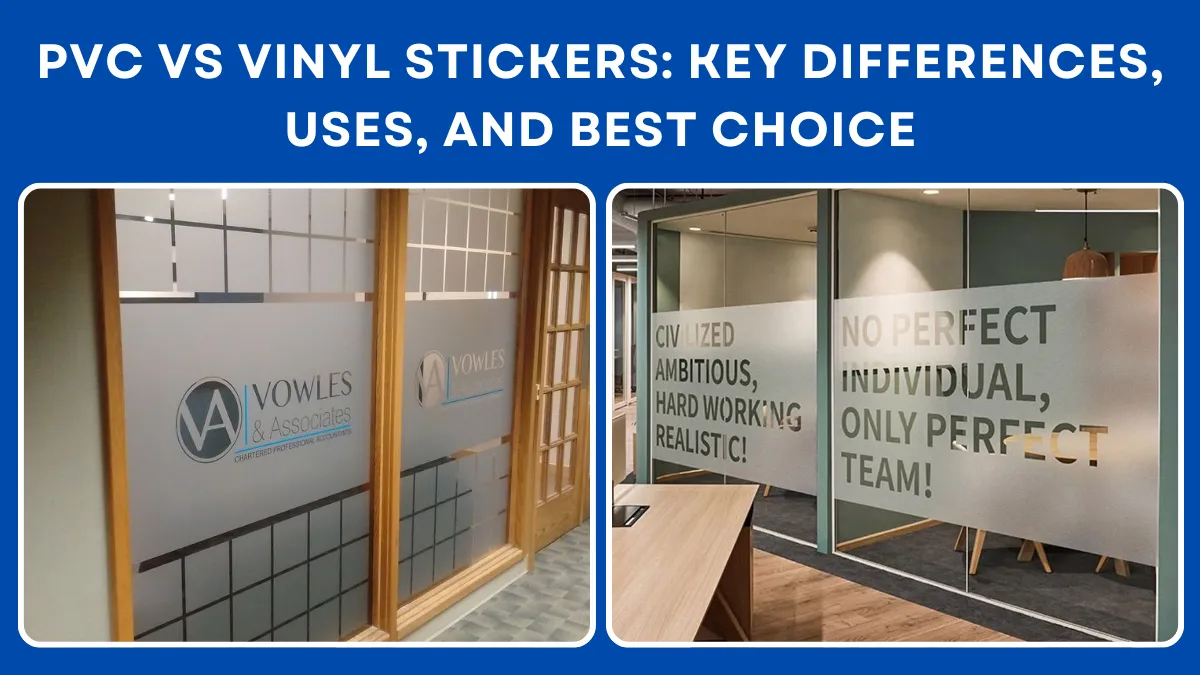
Table of Contents
When people search for PVC vs vinyl stickers, they are usually trying to answer one very practical question: which material will actually work best for the job? On the surface, these sticker types can look very similar. Both can be printed beautifully. Both can be cut into custom shapes. Both are often described as durable. But once you look more closely at how they behave on different surfaces, in different weather, and over different time frames, the differences become much more pronounced.
That is why PVC vs vinyl stickers is not just a technical materials question. It is a decision that affects appearance, durability, budget, and user experience. A sticker used on a product box for a short promotion does not need the same performance as a sticker used on glass, a car, an outdoor sign, or a high-traffic branded surface. The right choice depends on where the sticker will go, how long it needs to last, and what kind of finish the brand is trying to achieve.
If you get the decision wrong, the result can be frustrating. The sticker may peel too early, fade in sunlight, struggle on a curved surface, or cost more than necessary for the application. If you get it right, the sticker looks sharper, performs better, and delivers much better value over time. That is exactly why the PVC vs vinyl stickers conversation matters for businesses, event planners, retail brands, packaging teams, and anyone ordering custom stickers for real-world use.
PVC vs Vinyl Stickers: The Quick Answer
If you want the short version of PVC vs vinyl stickers, here it is: PVC stickers are often chosen for more budget-conscious, shorter-term, or flatter-surface uses, while vinyl stickers are usually the better fit when flexibility, weather resistance, and long-term outdoor performance matter more.
That does not mean PVC stickers are “bad” and vinyl stickers are “good.” It means each one solves a different problem. In many cases, PVC stickers make sense for indoor labels, promotional tags, temporary campaigns, and projects where cost control matters. Vinyl stickers, on the other hand, are often preferred for car decals, branding on glass, outdoor applications, and surfaces that need more conformability and durability.
The smartest way to think about PVC vs vinyl stickers is not to ask which material is universally better. Ask which one fits your environment, your lifespan expectations, your print goals, and your brand use case. That is where the right answer becomes much clearer.
What PVC Stickers Really Are
A lot of confusion in the PVC vs vinyl stickers debate comes from the fact that both terms are often used loosely in the market. PVC refers to polyvinyl chloride, which is a plastic material used in many sticker and decal products. In practical buying language, PVC stickers are usually understood as plastic-based adhesive stickers that can be waterproof and cost-effective, especially for short-term or indoor-oriented applications.
In many cases, PVC stickers are selected because they are affordable, easy to print, and suitable for promotional pieces, packaging labels, indoor signs, and temporary branding. Depending on thickness and finish, they may feel more rigid than high-flex vinyl materials. That makes them workable for many flat-surface uses, but not always the strongest choice when a sticker needs to wrap, stretch slightly, or sit neatly on a curved object.
This is one of the most important parts of understanding PVC vs vinyl stickers. A sticker can be waterproof and still not be the best outdoor performer. A sticker can look premium on day one and still not be the right option for long exposure to sun, rain, heat, or friction. PVC stickers absolutely have their place, but that place is usually more specific than many buyers first assume.
What Vinyl Stickers Really Are
When buyers compare PVC vs vinyl stickers, vinyl usually comes out as the more versatile option for demanding use. Vinyl stickers are commonly described as flexible film-based stickers that can handle curved surfaces better, hold up well in changing temperatures, and perform more reliably in outdoor conditions when made with the right film, adhesive, and ink system.
That flexibility matters more than people realize. A sticker on a flat box is one thing. A sticker on a vehicle, glass panel, curved bottle, branded window, or uneven display surface is another. Vinyl is typically preferred in those situations because it conforms better, feels smoother in application, and is more likely to keep its finish over time. That is why vinyl is often associated with car decals, retail branding, promotional stickers, glass applications, and longer-term signage.
In the PVC vs vinyl stickers discussion, vinyl also tends to win on long-term outdoor confidence. Not simply because the word “vinyl” sounds premium, but because flexible high-performance vinyl is often built for waterproofing, UV resistance, and weather exposure in a way that supports lasting results. Some competitor guidance even frames vinyl as the more suitable option for outdoor use, lasting several years when combined with appropriate adhesives and printing methods.
PVC vs Vinyl Stickers: The Real Differences You Should Care About
The biggest difference in PVC vs vinyl stickers is not appearance. It is performance in context. A sticker that looks fine in a product sample can behave very differently once it is placed in sunlight, on glass, on textured materials, or in daily handling. That is why smart buyers compare these materials based on flexibility, lifespan, surface compatibility, print needs, and environment rather than just price alone.
- Flexibility is one of the clearest distinctions. Vinyl stickers are widely described as more flexible and more suitable for curved surfaces. PVC stickers can work well on flat surfaces, but for wraps, decals, and more demanding surfaces, vinyl is often the safer choice. This matters for applications like car branding, glass graphics, display pieces, bottles, and shaped promotional products.
- Weather resistance is another major point in the PVC vs vinyl stickers comparison. PVC stickers may be waterproof, but that does not automatically make them ideal for prolonged outdoor use. One of the more useful competitor angles is the reminder that not all outdoor-looking stickers are truly outdoor-ready. Outdoor performance depends on both the material and the print system, including whether the inks and adhesive are appropriate for UV exposure, moisture, and long-term wear.
- Durability over time also separates the two. PVC may be enough for short campaigns, temporary promotions, and lower-cost branding needs. Vinyl becomes more attractive when the sticker needs to last through temperature changes, regular handling, sunlight, or exposure to vehicles, equipment, or windows. In long-term use, the higher upfront price of vinyl can still make financial sense because the sticker may not need to be replaced as quickly.
- Printing and finishing also matter in PVC vs vinyl stickers. Both materials can be printed, but the compatibility of the material with the print method affects the final look. Digital printing may work well for smaller runs, while screen printing and other professional methods may be better suited to more durable outdoor results. This is one reason sticker buying should never be treated as only a material decision. The final result comes from the full combination of film, adhesive, print method, ink, and finishing.
How PVC vs Vinyl Stickers Compare for Indoor Applications
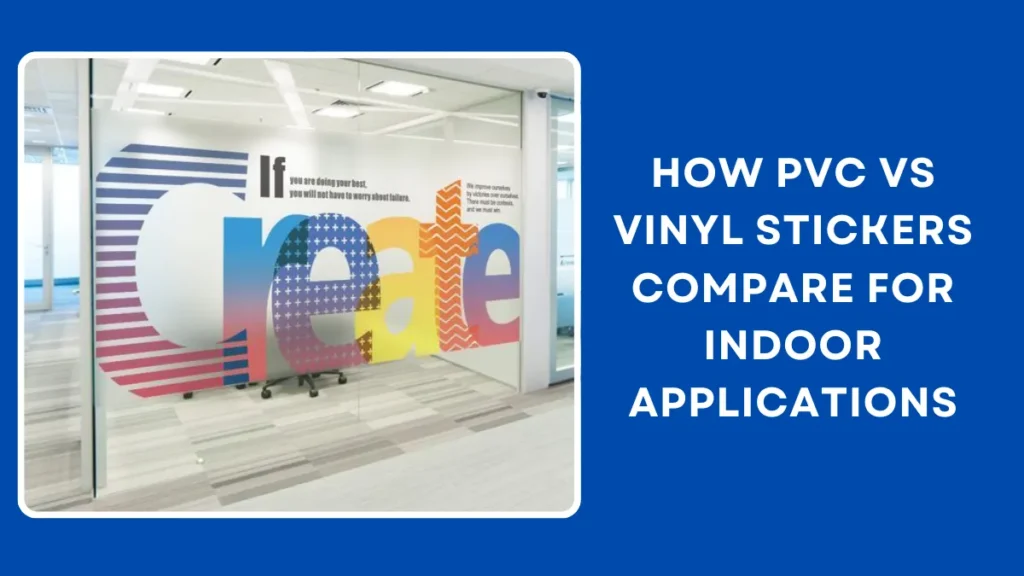
For indoor projects, the PVC vs vinyl stickers answer is often more forgiving. If the sticker is being used on packaging, promotional handouts, temporary displays, event materials, indoor labels, or surfaces that will not face harsh weather, PVC stickers may be entirely suitable. They can offer good appearance, solid printability, and practical affordability for short- to medium-term use.
This is where many businesses can save money without compromising the result. If your sticker is only needed for a seasonal campaign, a one-time event, a short-run product launch, or indoor point-of-sale branding, PVC can be a reasonable and efficient choice. In the PVC vs vinyl stickers debate, indoor use is where PVC often makes the most sense from a budget-performance perspective.
But even indoors, surface shape still matters. If the sticker is going onto curved packaging, glass, or surfaces where cleaner application is important, vinyl may still be worth considering. That is why the best decision is never based only on “indoor vs outdoor“. It is also about fit, finish, and how premium the final application needs to feel.
How PVC vs Vinyl Stickers Perform in Outdoor Use
Outdoor use is where the PVC vs vinyl sticker comparison becomes much sharper. If a sticker needs to face the sun, moisture, heat, changing temperatures, or regular exposure over time, vinyl is generally the stronger candidate. Competitor guidance repeatedly points to vinyl’s better flexibility, higher weather resistance, and longer outdoor lifespan when properly produced.
That makes vinyl a more natural fit for car decals, glass branding, outdoor promotions, equipment labels, external signs, and other situations where appearance and adhesion both need to hold up. A sticker that fades quickly, curls at the edges, or loses impact after a short time creates a poor brand impression. In that context, choosing vinyl can protect both the look and the value of the project.
One especially useful takeaway from the PVC vs vinyl stickers conversation is this: outdoor durability is not only about the film. The inks must also be suited to outdoor use. A beautiful sticker printed with the wrong system can still fade too quickly. So if you are ordering stickers for outdoor branding, it is worth checking not just the material name but also the full production approach behind it.
Choosing Between PVC vs Vinyl Stickers for Branding, Packaging, and Promotions
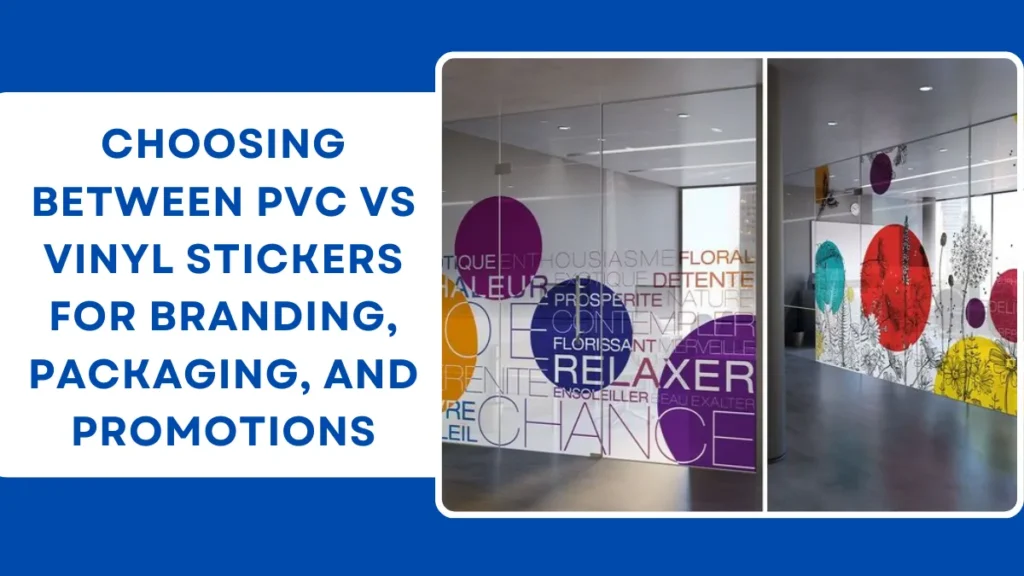
In branding and marketing, PVC vs vinyl stickers often come down to campaign duration and surface type. For packaging inserts, indoor labels, event branding, and shorter promotional runs, PVC can often deliver the right balance of price and appearance. If the goal is visibility for a specific event or a quick campaign, it may be all you need.
For premium branding, vehicle graphics, window stickers, retail glass applications, and more permanent branded visuals, vinyl often gives a cleaner long-term solution. That is especially true when the sticker becomes part of the customer’s physical experience of the brand. If the sticker is visible every day, the material choice becomes part of how professional the business looks.
This is where PVC vs vinyl stickers becomes a brand decision as much as a materials decision. A premium-looking sticker that stays neat, vivid, and properly adhered does more than decorate a surface. It supports credibility, consistency, and recall. In branding, the sticker is often a small detail with a surprisingly large visual role.
PVC vs Vinyl Stickers: Cost Now vs Value Later
Price is one of the first things buyers compare in PVC vs vinyl stickers, and understandably so. PVC is often the lower-cost option, which makes it attractive for bulk runs, temporary applications, and projects with tighter budgets. But upfront cost should never be the only factor.
If the sticker only needs to last a short time, PVC can be an excellent value. But if the application is long-term, outdoors, or visually important, replacement cost becomes part of the real equation. A cheaper sticker that needs to be redone sooner can end up costing more in time, labour, and brand inconsistency. That is why the smarter PVC vs vinyl stickers question is often not “Which one is cheaper?” but “Which one gives the better result for the lifespan I actually need?”
This longer-view thinking is one of the strongest commercial lessons behind PVC vs vinyl stickers. The right material saves money when it prevents rework, protects print quality, and keeps the sticker performing in the environment it was chosen for.
Important Questions to Ask Before You Choose PVC vs Vinyl Stickers

Before placing an order, it helps to simplify the PVC vs vinyl stickers choice into a few practical questions. Where will the sticker be applied? Is the surface flat, curved, smooth, or textured? Will the sticker be used indoors or outdoors? How long does it need to last? Does the design need a premium finish, or is cost the bigger priority?
You should also ask how the stickers will be printed and what adhesives or finishes are being used. This is especially important for outdoor and glass applications. One of the best competitor angles is the reminder that material alone does not guarantee performance. A strong sticker result depends on matching the film, the print process, and the intended use.
That is why PVC vs vinyl stickers should never be treated as a one-line comparison. It is a practical buying decision shaped by surface, environment, printing, budget, and brand purpose. Once those factors are clear, the right material usually becomes much easier to identify.
Where Unitec Advertising Fits In
If you are comparing PVC vs vinyl stickers because you want a business-ready solution rather than just material theory, Unitec Advertising’s stickers page gives a useful picture of the kinds of applications businesses often need in real life. The company positions its sticker services around custom designs, premium quality, indoor and outdoor durability, waterproof performance, and flexible use across branding, promotions, and advertising.
Its current sticker-related offerings also point to the kinds of projects where material choice matters: vinyl glass stickers, frosted glass stickers, event stickers, self-adhesive vinyl for glass, fluted glass film, one-way vision stickers, gradient glass film, reflective sun cooling film, die-cut stickers, PVC or transparent stickers, and custom stickers. That range is useful because it shows that the real-world PVC vs vinyl stickers decision often depends on the surface and brand purpose, not just the material label by itself.
So if your project involves retail glass, event branding, business promotions, visibility graphics, or custom sticker printing in Dubai, the smarter route is usually to describe the use case first and choose the material second. That is the point where professional guidance becomes genuinely helpful instead of generic.
Which One Should You Choose?
If your project is short-term, cost-sensitive, and mostly indoor, PVC vs vinyl stickers may lean in favor of PVC. It can do the job well without pushing the budget higher than necessary.
If your project involves outdoor exposure, vehicles, curved surfaces, glass, longer use, or a more premium finish, PVC vs vinyl stickers usually lean toward vinyl. It offers better flexibility, stronger environmental performance, and more confidence in demanding applications.
If you are still unsure, use this rule: choose based on the job, not the label. The right sticker is the one that matches the environment, lifespan, design expectations, and surface conditions. That is the most reliable way to make the PVC vs vinyl sticker decision without overbuying or underperforming.
Ready to Choose the Right Sticker Material for Your Brand?
If you are weighing PVC vs vinyl stickers for packaging, branding, events, windows, or promotional use, Unitec Advertising currently offers custom sticker printing in Dubai with multiple sticker formats and glass-focused options for business use. The page highlights tailored designs, durable materials, quick service, and flexible production for branding and advertising needs. So what are you waiting for?
Contact us at 971589412091.
Find us on Google Maps
Get a free quote now
Which is better for outdoor use: PVC or vinyl?
For longer-term outdoor use, vinyl is generally the stronger choice because it is more flexible and more commonly associated with weather resistance and UV durability.
Are PVC stickers waterproof?
PVC stickers are commonly described as waterproof, but waterproof is not the same as fully weather-resistant for long-term outdoor exposure.
Why do some outdoor stickers fail quickly?
Because not all outdoor stickers are produced with the right full system. Material, adhesive, ink, and printing method all affect how well the sticker survives outside.
Which material works better on curved surfaces?
Vinyl is usually better on curved surfaces because it is more flexible and conformable than more rigid sticker materials.
