

The first time you hold a freshly printed brochure, you feel it immediately—whether it represents you or just… exists. In Dubai, where people make decisions fast and expectations are high, print still shapes trust in quiet, powerful ways.
If you’re comparing options for a printing service in Dubai, start here: a calm, practical guide that helps you choose materials, avoid expensive reprints, and plan your files like a pro—without needing a design degree. For a broader overview of what Unitec offers across branding and production, you can also explore the main site of Unitec Advertising UAE.
What should I check before sending a file to print?
Confirm size, bleed, safe margins, and resolution first. Then export a print-ready PDF with embedded fonts and correct color mode (usually CMYK). Finally, review a proof at 100% zoom for spelling and alignment—most reprints happen because of tiny, avoidable oversights.
Is digital or offset better for business materials?
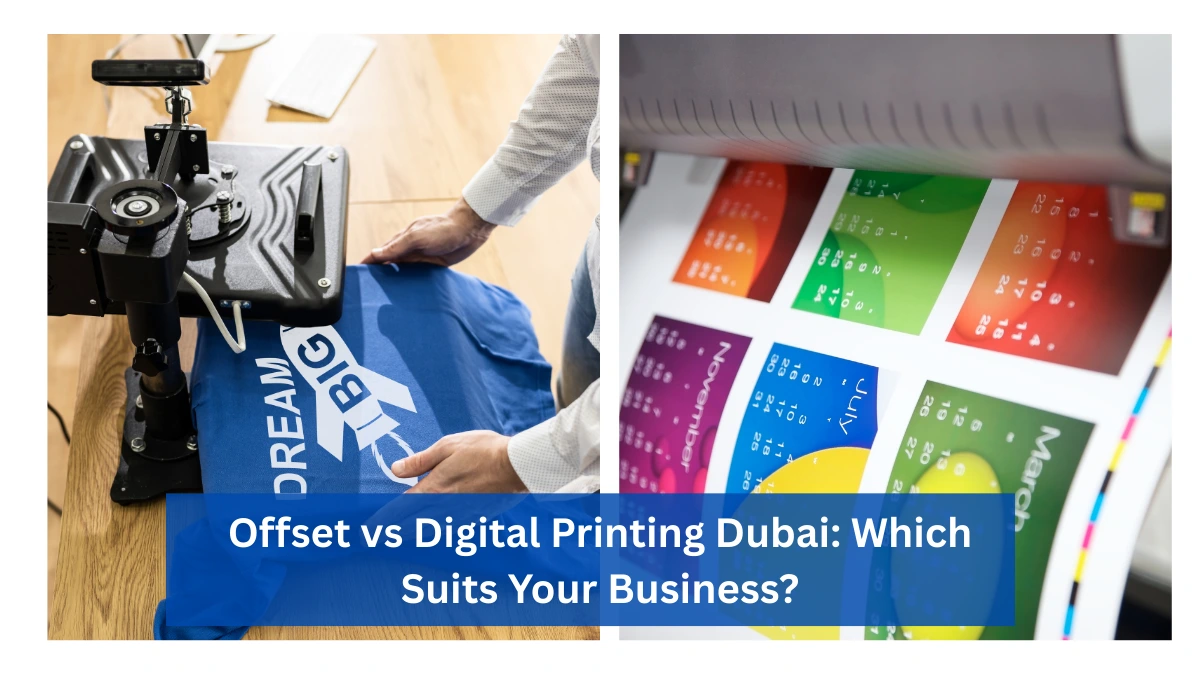
Digital is best for speed, small quantities, and variable names or versions. Offset is best for large runs and consistent color across thousands of pieces. Your budget, timeline, and how “brand-critical” the color is should decide, not just the price per sheet.
How do I make print feel premium without overspending?
Choose one “hero” upgrade: thicker stock, soft-touch lamination, or spot finishing. Keep the layout clean and give the design breathing room. Premium print isn’t only about cost—it’s about restraint, texture, and consistency.
How a printing service becomes a professional printing service for Dubai teams
Here’s the truth, people don’t say out loud: most print problems aren’t “print problems.” There are communication problems—unclear sizes, rushed approvals, last-minute edits, and assumptions like “the color will match the screen.”
A professional printing service earns trust by translating your goal into the right process. In practical terms, that means guiding you through:
- Business printing solutions that match your use case (events, retail, corporate, real estate)
- Paper and finishing choices that signal high-quality printing without shouting
- Clear expectations for fast printing turnaround vs. quality-sensitive jobs
- A proofing habit that protects your budget and your reputation
One real-life example: a café launches a new menu and prints it on thin stock because “it’s cheaper.” Two weeks later, corners curl, ink scuffs, and the menu looks tired. The fix wasn’t “better ink.” It was choosing the right paper + a basic lamination option from the start.
When print is done right, it quietly says: we care about details.
The print-ready basics that prevent 80% of reprints
A lot of teams only learn these after the first mistake. Save yourself the pain:
- Bleed: extend background color/images beyond the trim edge
- Safe area: keep text away from edges so nothing feels cramped
- Resolution: aim for crisp imagery (especially for faces and products)
- Fonts: embed them (or outline if required) to avoid substitutions
- Proof: review an actual PDF proof—not a screenshot
Adobe’s own guidance around printer marks and PDF boxes (trim/bleed areas) is a useful reference if you want the “why” behind those settings.
For a straightforward bleed setup example (commonly 1/8 inch / 0.125″), this university print guide explains a typical workflow and export checks.
Digital vs offset: choosing the right digital printing service for the job
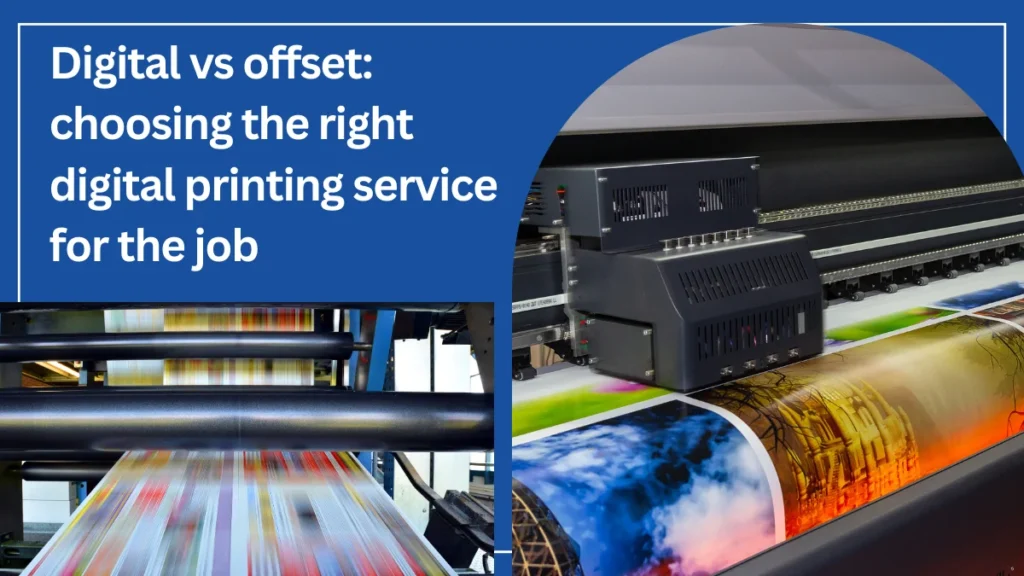
A digital printing service is perfect when life is moving quickly—last-minute event collateral, updated price lists, short-run brochures, or personalized pieces. But “digital vs offset” is less a rivalry and more a decision tree.
A quick comparison (save this)
| What you need | Best fit | Why it works |
| 50–300 flyers for an event | Digital | Speed + lower setup cost |
| 2,000+ catalogs with strict brand color | Offset printing | Consistent color + cost efficiency at scale |
| Multiple versions (Arabic/English, price changes) | Digital | Easy updates without plate changes |
| Premium stationery feels in bulk | Offset printing | Stable quality across big runs |
In Dubai, this choice matters because print often sits in high-visibility places: reception desks, showrooms, exhibitions, and delivery packaging. The goal isn’t “pick the fanciest.” It’s to pick what stays consistent under real use.
If you’re printing high-volume pieces like flyer printing for a franchise rollout or large commercial printing jobs for an expo season, ask about color stability and batching—those details impact how “uniform” your brand looks across locations.
When digital wins (and why it feels modern)
Digital shines when you need agility:
- Short-run promo materials
- Test prints before a big rollout
- Fast updates (QR codes, pricing, seasonal offers)
- Multiple versions of the same design
That’s why many brands treat digital as their “iteration engine.” You test what works, learn from real customers, then scale the winners.
To see ongoing updates and behind-the-scenes work in a more casual format, you can check Unitec’s posts on Facebook when you want inspiration or examples.
When offset wins (and why it still matters)
Offset isn’t “old.” It’s reliable—especially for consistent ink coverage and long-run efficiency. If you’re doing thousands of pieces where your brand color must look identical across every batch, offset is often the calmer choice.
Offset becomes especially relevant for:
- High-volume brochure printing for property launches
- Brand-critical stationery sets
- Large distribution campaigns where unit cost matters
- Certain specialty papers and finishes
If you care about the emotional feel of print—how it signals confidence—offset can be worth it when you’re scaling.
From idea to handoff: building a custom printing service workflow that avoids costly mistakes
A custom printing service isn’t only about “you can choose anything.” It’s about choosing the right combination—format, stock, finish, and timeline—based on how the printed piece will live in the real world.
Think about the moment your print gets used:
- A business card is handed over in two seconds. It must feel intentional.
- A banner is seen from meters away. It must read instantly.
- A brochure is skimmed under bright lights. Contrast matters.
A simple workflow that keeps teams sane
- Clarify the job (not just the item)
Are you trying to attract walk-ins, close leads, or guide visitors at an event? - Choose format + paper together
Size and paperwork as one system. A premium paper on the wrong size still feels awkward. - Pick one hero finish
Soft-touch lamination, spot gloss, textured paper—choose one and let it shine. - Proof like your budget depends on it
Because it does. Look for tiny spacing issues, wrong phone numbers, and cropped logos. - Plan delivery or pickup early
Dubai timelines get tight during peak seasons and exhibition weeks.
If you want a broader look at services that sit around print—like branding, signage, and production support—you can explore more details on Unitec’s website as a reference point.
Real examples of what “custom” looks like (without overcomplicating)
- Business card printing with a thicker stock + clean matte finish for executives
- Banner printing in large format with reinforced edges for outdoor use
- Brochure printing with a fold style that guides reading (tri-fold vs bi-fold vs gatefold)
- Flyer printing optimized for quick scanning (strong headline, simple offer, QR code)
The biggest mistake is trying to “say everything.” The best print usually says one thing clearly—and invites the next step.
Print finishing: the small upgrade people remember
Finishing turns “ink on paper” into something people keep.
Consider:
- Matte or gloss lamination (durability + feel)
- Soft-touch lamination (premium, tactile)
- Foil or spot accents (use sparingly—one highlight is enough)
- Clean folding and trimming (nothing kills trust like sloppy edges)
This is where high-end brands quietly win. Not with louder designs—but with better control.
Ordering online without the stress: how an online printing service should work in 2025
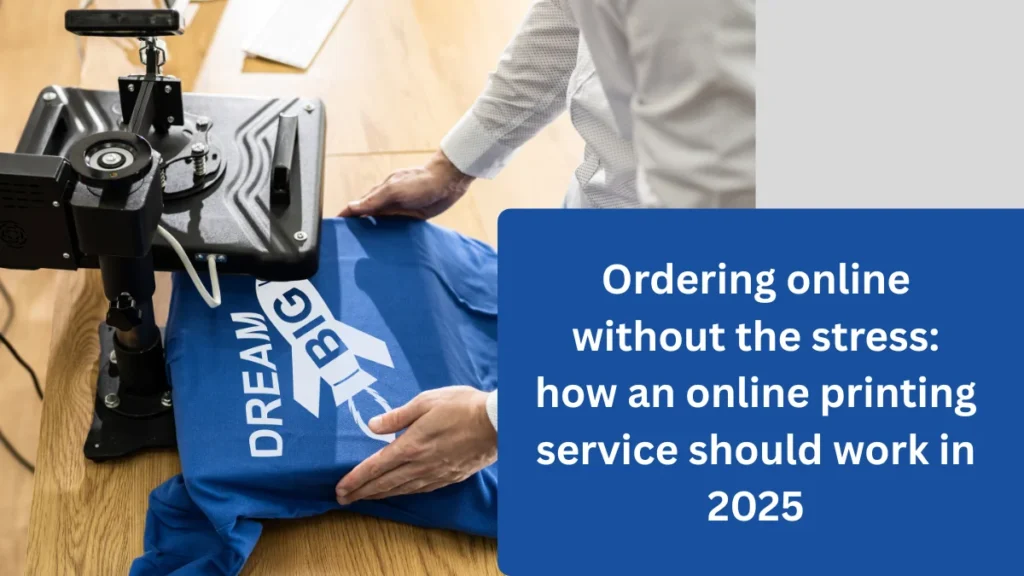
An online printing service should feel like a guided experience, not a guessing game. Convenience matters, but clarity matters more.
Here’s what “good” looks like for online ordering:
- Clear templates or size guidance
- A simple way to share files and notes (not 20 WhatsApp messages)
- Proof approval that’s easy to understand
- A transparent timeline—especially for urgent jobs
- Options for bulk printing services when you’re scaling
The “calm checklist” before you click submit
- Is the size correct (final trimmed size)?
- Did you include bleed and keep text in the safe area?
- Are images sharp at print size?
- Is your phone number / URL / location correct?
- Did you check spelling in both English and Arabic?
This is also the moment to think about the environment the print will face: heat, handling, outdoor placement, repeated touch. A menu in a busy café needs protection; an event handout needs readability; a retail tag needs durability.
If you like seeing fresh examples—like seasonal campaigns, signage, and print applications—Unitec shares a lot of visual work on Instagram.
A Dubai-specific note: timing, approvals, and logistics
Dubai work moves fast, and print often sits inside bigger deadlines: event builds, store openings, product drops, client presentations.
To protect your timeline:
- Build in time for fast printing turnaround only when the file is ready
- Keep one person responsible for final approval
- Avoid “one more tiny change” after approval—those add days, not minutes
If you ever want to verify location details or visit in person for a sample check, you can use this Google Maps listing for Unitec Advertising L.L.C to confirm directions and timing.
FAQs (People Also Ask style)
1) What is the best printing service for small businesses in Dubai?
The best printing service is the one that matches your goal and budget, then guides you through paper, proofing, and finishing. Small businesses usually benefit from digital runs first, then scale into offset when designs are proven and quantities grow.
2) What’s the difference between a professional printing service and a regular print shop?
A professional printing service helps you choose the right materials, checks files before production, and offers proofing and finishing guidance. A regular shop may simply print what you send—so mistakes in size, bleed, or resolution can slip through.
3) When should I choose a digital printing service?
Choose a digital printing service when you need fast turnaround, small quantities, or multiple versions (like language changes or seasonal pricing). Digital is ideal for flyers, short-run brochures, and quick event materials where flexibility matters most.
4) What does a custom printing service usually include?
A custom printing service typically includes selecting the right size, paper, and finishing (like lamination), plus proofing support. It’s especially useful for brochure printing, business card printing, and premium materials where the feel and durability influence trust.
5) Is an online printing service reliable for bulk orders?
An online printing service can be reliable for bulk printing services if it offers clear proofs, file checks, and predictable timelines. Ask how color consistency is handled across batches and whether samples can be approved before the full run is produced.
6) How can I avoid common mistakes in business printing solutions?
Avoid mistakes by confirming the final size, adding bleed, keeping text inside safe margins, and reviewing a proof carefully. For business printing solutions like flyer printing and banner printing, double-check phone numbers, QR codes, and contrast so everything reads instantly.