
In the highly visual world of modern product packaging, corporate branding, and storefront marketing, small design choices dictate consumer perception. When an organization decides to produce custom labels or window graphics, they immediately face a critical design question regarding its base material.
Evaluating the differences between transparent and white vinyl stickers is an essential step for any business looking to optimize its physical presentation. The right choice ensures that your logos remain perfectly legible, your colors print with absolute accuracy, and the final graphic integrates seamlessly with the underlying surface.
Choosing the wrong substrate can completely change the visual impact of your artwork. For instance, a beautifully designed corporate logo can completely disappear when printed on the wrong background or applied to a dark surface.
By understanding the functional and aesthetic characteristics of transparent vs white vinyl stickers, brand managers, retail operators, and packaging designers can make informed decisions that maximize their marketing return on investment. This guide explores the mechanical differences, design advantages, and specialized commercial applications of these two prominent sticker options to help you select the ultimate canvas for your corporate graphics.
The Core Visual Differences in Base Substrates
To understand how to choose between transparent and white vinyl stickers, one must first analyze how light interacts with each base material. The foundational variance lies in the presence or complete absence of an opaque backing material.
When you look at white vinyl, you are dealing with a solid, completely opaque background. This substrate acts as a blank white canvas, completely isolating the printed inks from the surface underneath.
No matter what color wall, window, or product container you apply the graphic to, the colors look identical to the original design file. White vinyl blocks 100% of the light passing through it, ensuring maximum color contrast and absolute visibility for fine text and complex corporate color palettes.
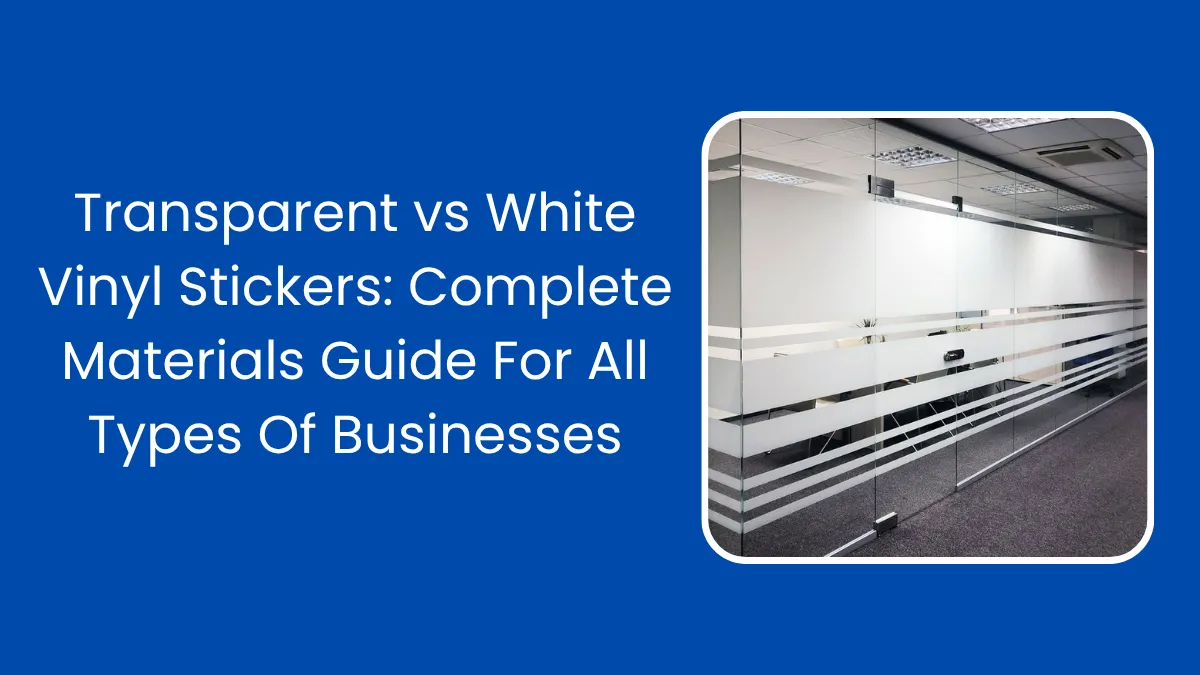
On the flip side, transparent vinyl features a completely clear, glass-like base film. Instead of hiding the surface underneath, clear vinyl allows the color and texture of the mounting surface to show through the unprinted areas of the design. This creates a highly elegant “floating graphic” look, where the printed letters or logos appear to be directly painted onto the object.
However, because the film is clear, standard printing inks can appear translucent. Understanding how to manage this transparency is the true secret to masterfully navigating the choice between transparency and white vinyl stickers for premium brand presentation.
Material Science: Opacity, Inks, and the White Ink Factor

A common pitfall that businesses encounter when evaluating transparent vs white vinyl stickers is assuming that digital printing presses handle clear vinyl the same way they handle white paper or vinyl bases. Standard commercial printing inks are naturally semi-transparent because they are designed to rely on a solid white background to reflect light back to the viewer.
When you print directly onto a clear substrate without any specialized backing, the ambient light passes right through both the vinyl and the ink.
- If you apply that sticker onto a clear glass window, the graphic can look washed out or hard to see when daylight shines behind it.
- If you apply it to a dark container, the dark background will bleed through the ink, altering your brand colors completely.
This is why white vinyl is the traditional standard for absolute color accuracy; its solid base ensures that every hue remains rich, solid, and opaque.
To overcome this limitation on clear material and preserve the core benefits of transparent vs white vinyl stickers, modern printing facilities utilize advanced white ink printing technology. By laying down a precise, high-density layer of white ink underneath your colored graphics on clear vinyl, the printer creates a localized canvas.
This process gives you the best of both worlds: the unprinted background remains perfectly clear and invisible, while your corporate logo remains completely solid, bright, and easy to read. Recognizing when to deploy white ink backing is a major milestone in mastering the application of transparent vs white vinyl stickers.
Core Pillars of Sticker Applications: Informational and Commercial Types
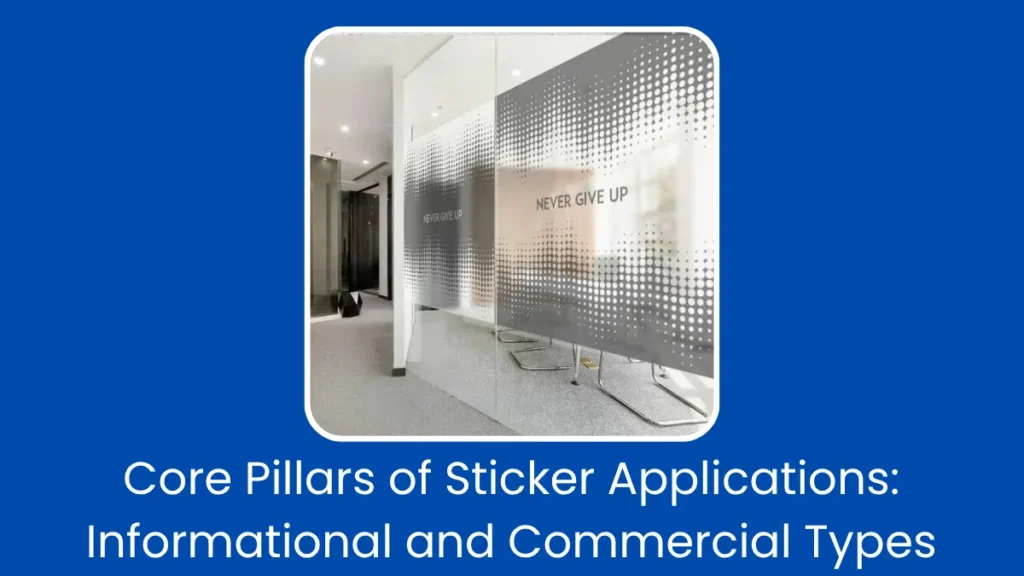
To fully capitalize on the unique properties of your chosen material, you must understand how these base films function across different product formats. The commercial value of exploring transparent vs white vinyl stickers becomes evident when you break down the four essential sticker pillars used by modern businesses.
1. Custom Stickers

Custom stickers represent the ultimate standard for personalized corporate giveaways, promotional event branding, and localized marketing campaigns. When companies look to distribute individual decals at trade shows or insert them into customer delivery boxes, they must consider how the background material influences usability.
Choosing white vinyl for custom stickers ensures that the decal can be stuck anywhere—on a laptop, a notebook, a car bumper, or a water bottle—while maintaining 100% of its visual contrast and design integrity. The solid backing creates a bold, definitive border around the artwork, making the brand emblem pop out aggressively against any background.
Conversely, choosing a transparent base for custom stickers gives the end-user a highly premium, sleek decal that blends into their personal items without an awkward white square framing the artwork.
It allows the shape of the logo to take center stage, making the promotional piece look less like a cheap label and more like a high-end, integrated product accessory. Balancing these visual outcomes is a key factor when evaluating transparent vs white vinyl stickers for promotional products.
2. PVC / Transparent Sticker
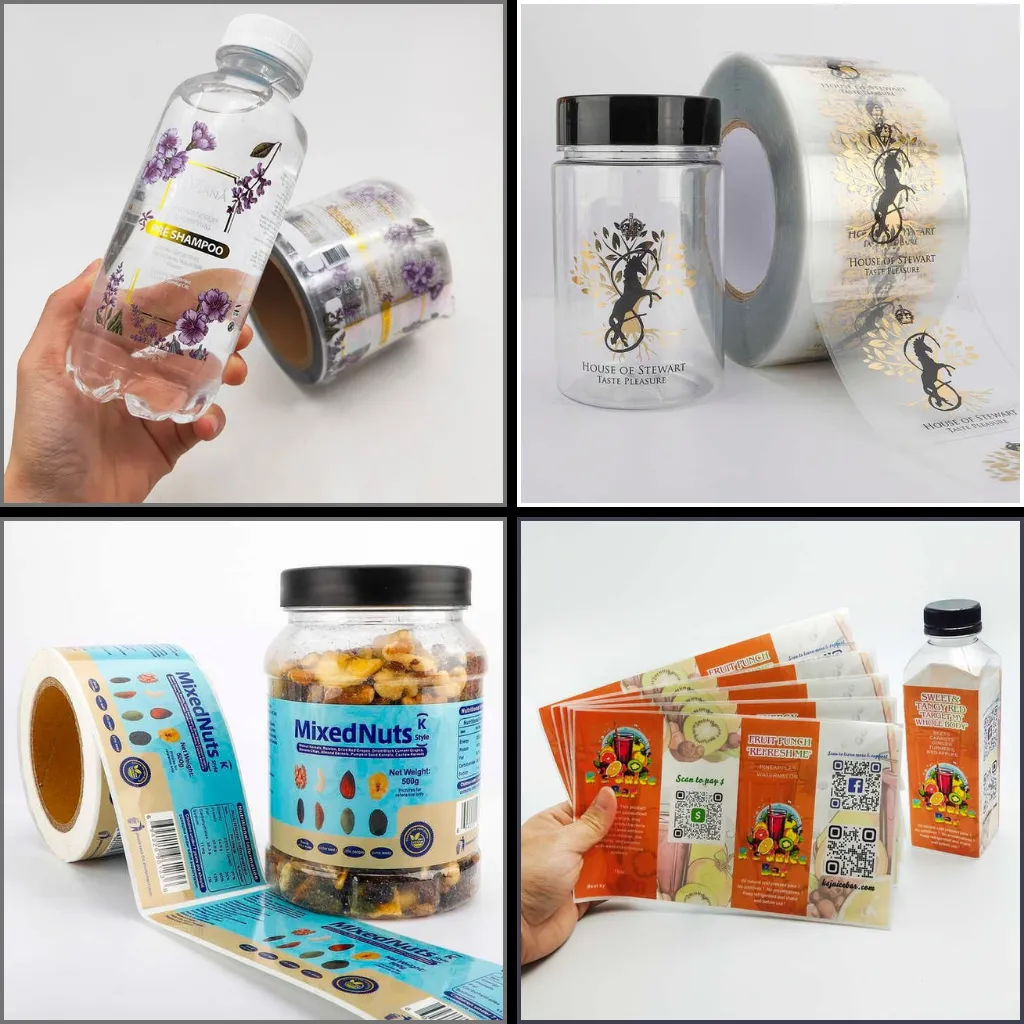
The PVC / transparent sticker category focuses heavily on achieving a seamless, high-end minimalist appearance across smooth surfaces. This format is highly valued by industries that want to showcase the contents of a container or maintain a completely clean architectural look on glass panels.
When evaluating transparent vs white vinyl stickers for product packaging, clear labels allow the natural color of a cosmetic liquid, a gourmet oil, or a premium beverage to serve as the visual backdrop for your text. This creates a beautiful, professional appearance that mimics expensive direct-to-bottle screen printing.
Furthermore, high-grade transparent stickers are manufactured from durable polyvinyl chloride (PVC) films that offer excellent water resistance, flexibility, and elasticity. This ensures the clear label can wrap tightly around contoured bottles or curved glass partitions without bubbling or lifting at the edges.
However, designers must ensure that the typography contrast is carefully managed, as thin dark text on a clear sticker can easily become unreadable if the container is filled with a dark product, highlighting the critical importance of comparing transparent vs white vinyl stickers before mass production.
3. Diecut Sticker
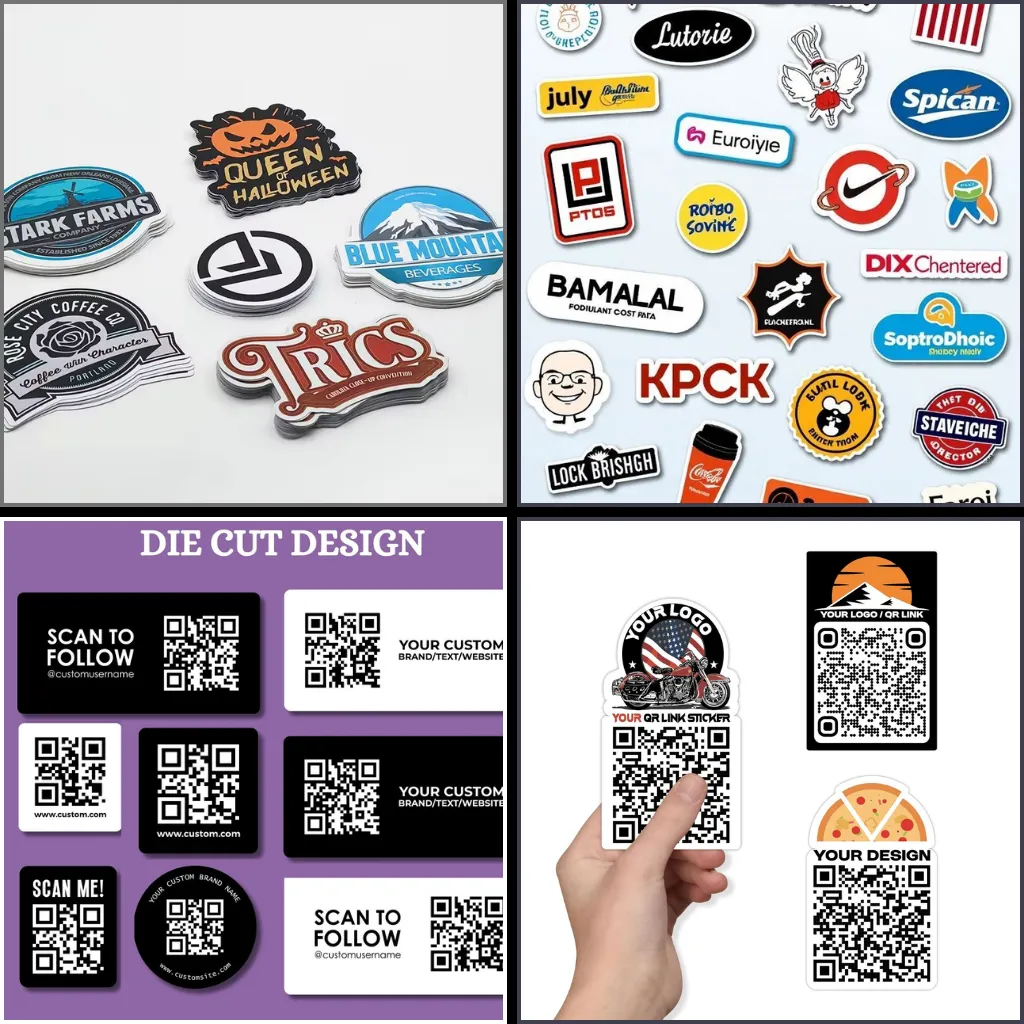
A die-cut sticker is a premium product format where both the sticker material and its underlying paper backing are cut precisely to the exact contour shape of the artwork. This eliminates any excess waste material, resulting in a clean, professional, and visually engaging piece of branding.
When applying the logic of transparent vs white vinyl stickers to die-cutting, white vinyl serves as an exceptional base for creating thick, bold, and high-impact dimensional shapes. The die-cutter can trace the outer silhouette of a logo, leaving a small, uniform white border that frames the graphic beautifully and provides maximum structural strength during application.
When you apply die-cutting to clear vinyl, you achieve an ultra-premium product where the clear film extends just a few millimeters beyond the ink line. This gives the installer an easy-to-handle shape while completely removing the visual weight of a solid background once applied.
This format is widely used for premium tech labels, window decals, and luxury merchandise branding, where the presence of a solid square or circle background would disrupt the clean architectural lines of the product, showcasing how transparent vs white vinyl stickers influence dimensional graphic design.
4. Shop Vinyl Outdoor Branding Stickers
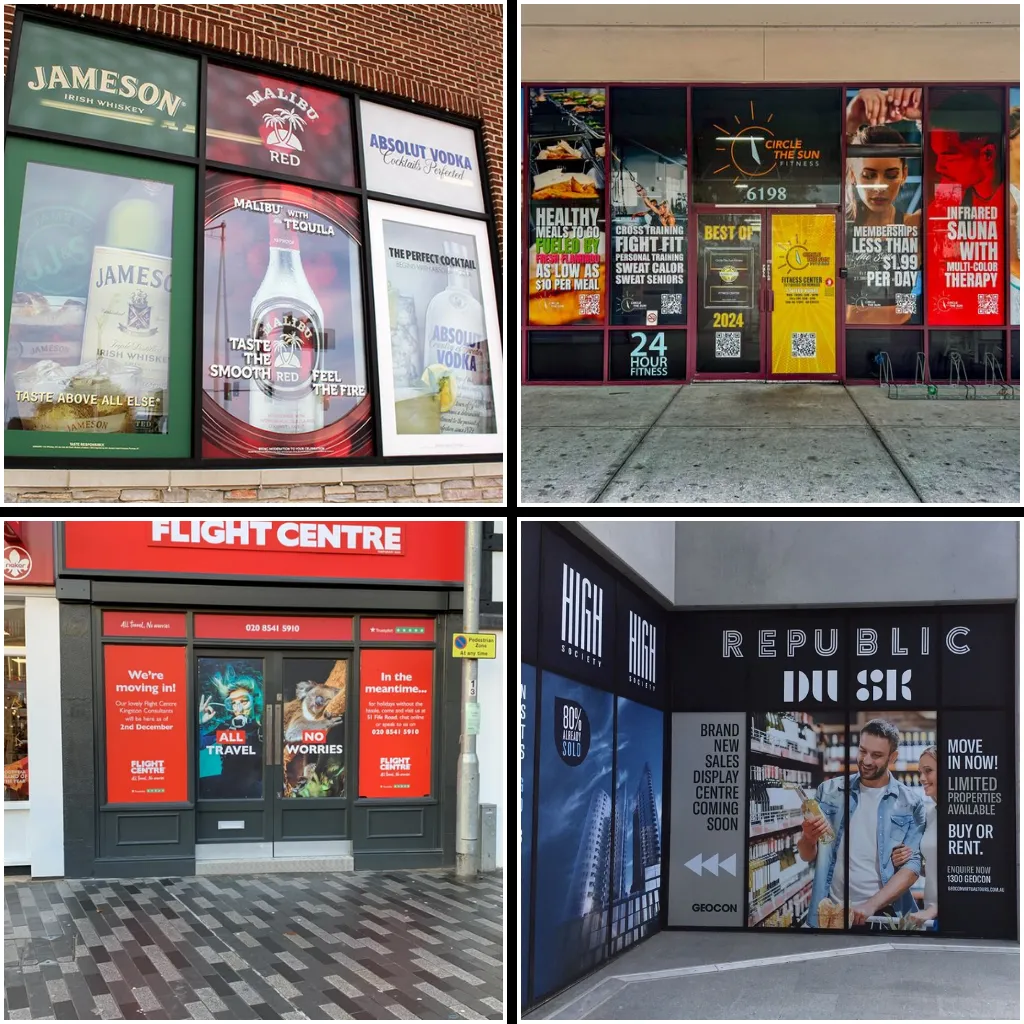
For retail storefronts, commercial offices, and public showrooms, large-scale window graphics are essential tools for capturing foot traffic and defining the business environment. Shop vinyl outdoor branding stickers are large-format displays applied directly to exterior glass facades, main entrance doors, and large windows.
When navigating the complexities of transparent vs white vinyl stickers for large-scale retail windows, the choice dictates how your store interacts with passing shoppers. Applying massive white vinyl graphics across your storefront windows creates a completely solid, high-visibility barrier.
This format is perfect for blocking the sun, masking ongoing interior renovations, or creating a massive, high-contrast promotional display that can be read from far across a highway or parking lot.
However, solid white blocks all natural light from entering your store and prevents pedestrians from seeing your interior displays. By choosing clear vinyl for shop vinyl outdoor branding stickers, you can display large brand logos, operational hours, and elegant patterns while keeping the glass transparent.
This allows valuable natural light to flood your showroom while permitting passing shoppers to look directly inside your retail space to view your products, beautifully proving how the strategic evaluation of transparent vs white vinyl stickers directly shapes the retail customer experience.
Step-by-Step Selection Framework for Your Business

To ensure your final order delivers the absolute best visual and functional performance, apply this simple, step-by-step decision framework before sending your designs to print.
Analyze the Mounting Surface Color
Look closely at the exact object where the label will be stuck. If the surface is black, dark charcoal, or raw dark wood, look toward white vinyl or clear vinyl backed with high-density white ink layers. Standard printing on a basic transparent sticker without white ink will sink into dark backgrounds and become completely invisible.
Evaluate Product Translucency Needs
If you are labeling a glass container filled with a colorful product—like a bright honey or a clear cosmetic serum—clear vinyl lets the natural beauty of your product shine through. If the product inside is a dark, uniform liquid, white vinyl provides a guaranteed, high-contrast background that keeps your text legible regardless of the contents.
Determine Viewing Distance and Speed
Consider how fast your audience is moving when they look at your graphics. For fast-moving outdoor roadside storefronts, solid white vinyl branding provides the massive contrast and bold presence needed for instant scanning. For close-up interior retail corridors or product shelves, clear vinyl offers the refined touch that sophisticated shoppers appreciate.
Review Regulatory and Lighting Conditions
For retail mall spaces with strict tenant fit-out handbooks, check if solid window blocks are permitted. Clear vinyl graphics often pass mall inspections easily because they preserve architectural transparency while still delivering impactful corporate branding to the front facade.
Operational Durability and Environmental Factors
Investing in high-performance graphics means choosing materials that can survive real-world wear and tear. When evaluating transparent vs white vinyl stickers, both base options utilize premium polymeric or monomeric compounds that resist water, smudging, and mild abrasions.
However, outdoor environmental exposure requires a careful look at your material selections. Outdoor signs and window branding face continuous exposure to high temperatures, intense ultraviolet radiation, and blowing dust. High-grade white vinyl reflects a significant portion of sunlight and heat, protecting the underlying adhesive layer from breaking down prematurely.
Transparent vinyl allows heat to pass through, but if it is manufactured using low-grade films, prolonged UV exposure can cause the clear margins to turn yellow or become brittle over time. To preserve the long-term benefits of transparent vs white vinyl stickers, always ensure your clear graphics are produced using premium, UV-stabilized, non-yellowing clear casting films coated with heavy-duty acrylic adhesives that prevent edge-curling during seasonal weather changes.
Precision Printing Solutions with Unitec Advertising
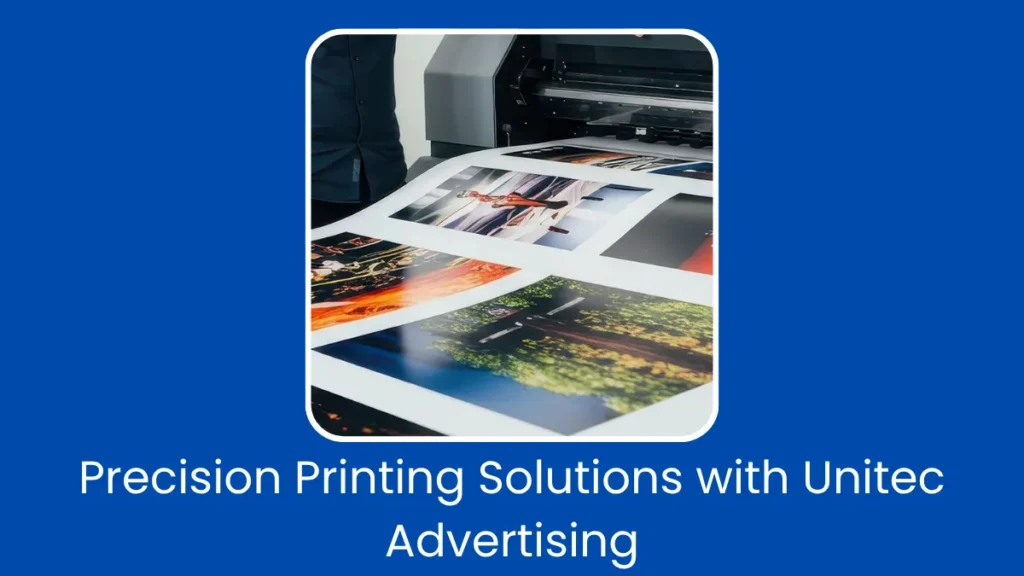
Transforming complex artwork into flawless physical decals requires a production partner with deep technical expertise, advanced multi-layer ink systems, and an understanding of commercial presentation. At Unitec Advertising, we specialize in delivering top-tier solutions across the entire spectrum of transparent vs white vinyl stickers, ensuring your brand graphics are produced with absolute visual precision.
Our production facility is equipped with state-of-the-art digital printers that cut custom shapes and feature advanced white-ink management systems. This allows us to produce clear stickers with rich, completely opaque color layers that maintain absolute color accuracy on dark or transparent surfaces. Whether your business requires a high-volume run of custom die-cut white stickers for a new product rollout, premium clear labels for boutique packaging, or massive shop vinyl outdoor branding stickers for a luxury retail storefront, our team provides comprehensive, end-to-end support. We guide you through file preparation, ink density configuration, material grade matching, and professional on-site application, ensuring your final display stands out day and night.
Need the Right Solution for Your Business?
Are you ready to elevate your product packaging, secure high-visibility window graphics, and tap into the powerful branding advantages of custom transparent vs white vinyl stickers? Contact Unitec Advertising today to request a comprehensive, free quote, share your design dimensions, and consult with our printing experts about the optimal material finishes, ink densities, and precision die-cutting options for your business. Let us build a flawless visual presence for your brand.
So contact us at 971589412091.
Find us on Google Maps.
Get a free quote now: https://unitecadvertising.ae/request-a-quote/
Note: Read Our Latest Blogs Also
- LED Advertising Screens in Dubai: A Complete Guide for Business Visibility
- Premium House Name Plate Guide: Materials & Styles for Dubai Homes
- The Complete Guide to Reflective Stickers Benefits for Dubai Businesses
- Premium Outdoor Flags Printing Guide: Types & Styles for Dubai Brands
- Promotional Roll-Up Banners for Business: A Smart Dubai Guide for Better Visibility
What is the main structural difference when comparing transparent vs white vinyl stickers?
The primary difference when evaluating transparent vs white vinyl stickers is the backing material. White vinyl provides a completely solid, opaque background that blocks all light, while transparent vinyl features a perfectly clear, glass-like base that lets the underlying surface show through unprinted areas.
Do colors look different when printed on transparent vs white vinyl stickers?
Yes, standard inks can appear semi-translucent on clear vinyl because light passes directly through them. To achieve the same vibrant color accuracy found on a solid white vinyl base, a specialized layer of high-density white ink must be printed directly beneath the graphics on transparent film.
When should a retail brand choose white vinyl for storefront windows?
A brand should choose solid white vinyl for shop vinyl outdoor branding stickers when they need to block out strong sunlight, completely conceal ongoing interior work, or create a massive, high-contrast promotional display that needs to be read from long viewing distances.
Is clear vinyl a good choice for modern product packaging and labels?
Absolutely. Clear vinyl is highly favored for premium cosmetic, beverage, and gourmet food containers because it delivers a seamless look that makes graphics appear painted directly onto the bottle, allowing consumers to view the natural color of the product inside.
Can transparent vinyl stickers withstand intense outdoor weather and UV exposure?
Yes, provided you choose premium materials. High-performance clear stickers must be fabricated using UV-stabilized, non-yellowing PVC films paired with heavy-duty adhesives to prevent the clear margins from turning yellow, cracking, or curling over time.
What is a die-cut sticker format, and how does it affect clear vinyl designs?
Adie-cutt sticker is cut precisely to the outer contour shape of your graphic design file. When applied to clear vinyl, it removes any excess background material, giving the final applied graphic a highly professional look with zero visible boundary frames.
Why is white ink technology important when printing on transparent vinyl stickers?
Because standard printing inks are translucent, white ink technology is vital for creating a solid, localized backing layer on clear film. This prevents the color of a dark mounting wall or window from bleeding through your corporate logo and altering your brand colors.
How do I clean and maintain large vinyl branding stickers on retail windows?
You can easily maintain both transparent and white vinyl window graphics by gently wiping the surface with a soft microfiber cloth and a mild soap-and-water solution. Avoid abrasive scrubbing pads, high-pressure washers, or harsh chemical solvents that could lift the edges or scratch the print.