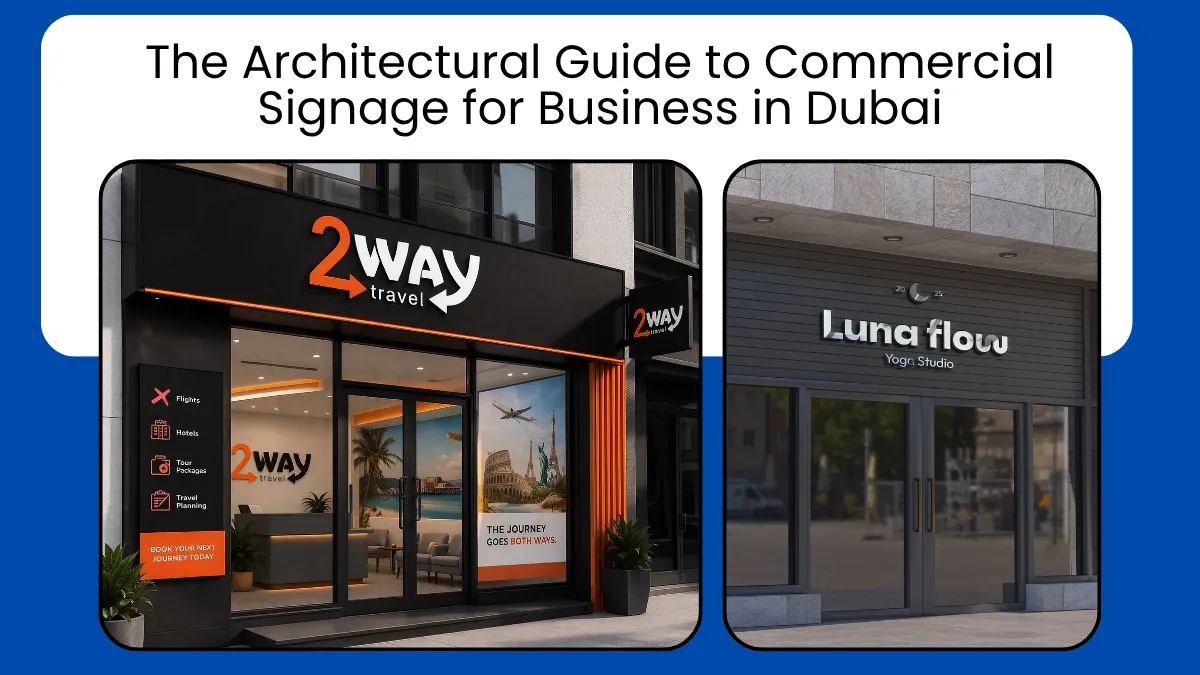
Selecting the correct branding elements for a commercial space in the UAE extends far beyond graphic design. Property developers, retailers, and corporate entities must solve a fundamental physical challenge: how to maintain structural integrity and brand visibility in a highly demanding environment.
From the intense UV radiation to fine particulate dust and coastal humidity, every physical asset must be engineered to survive. This guide deconstructs the material science and operational mechanics behind commercial branding solutions, helping B2B buyers select the correct substrate and illumination for their specific architectural context.
The Mechanics of Material Durability and Visibility, for Signage for Business
Before examining individual substrates, it is critical to understand the operational variables that dictate performance. Viewing distance dictates the scaling of typography and the requisite lumen output for illuminated displays. High-traffic environments, such as storefronts along Sheikh Zayed Road, require materials that prevent glare while offering high-contrast legibility during daylight hours and uniform light dispersion at night.
Technical Specifications for Core Branding Substrates
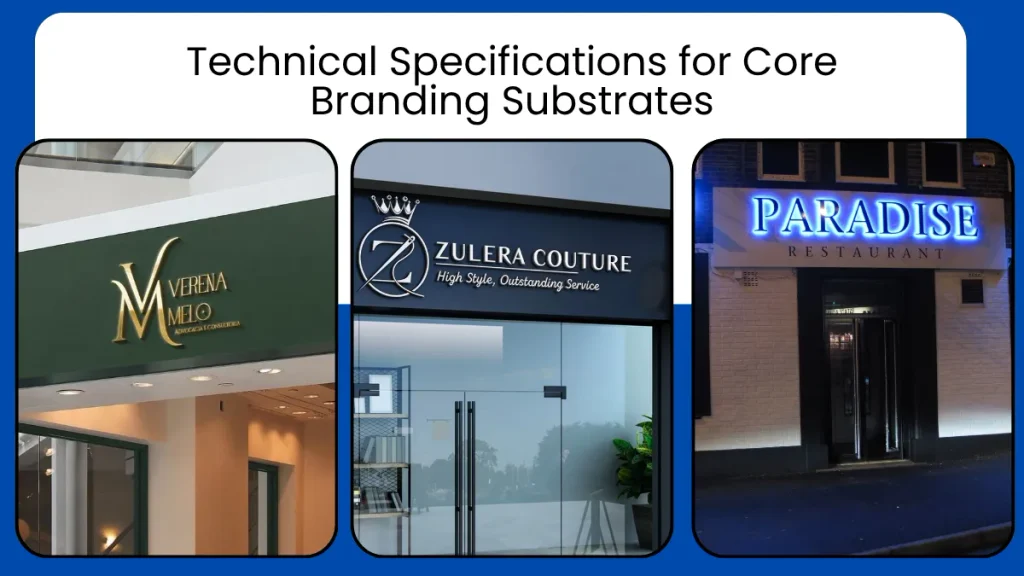
The selection of materials directly impacts the lifespan and maintenance cycles of your commercial installation. Here is a technical breakdown of eight primary configurations:
Acrylic Wall Letters

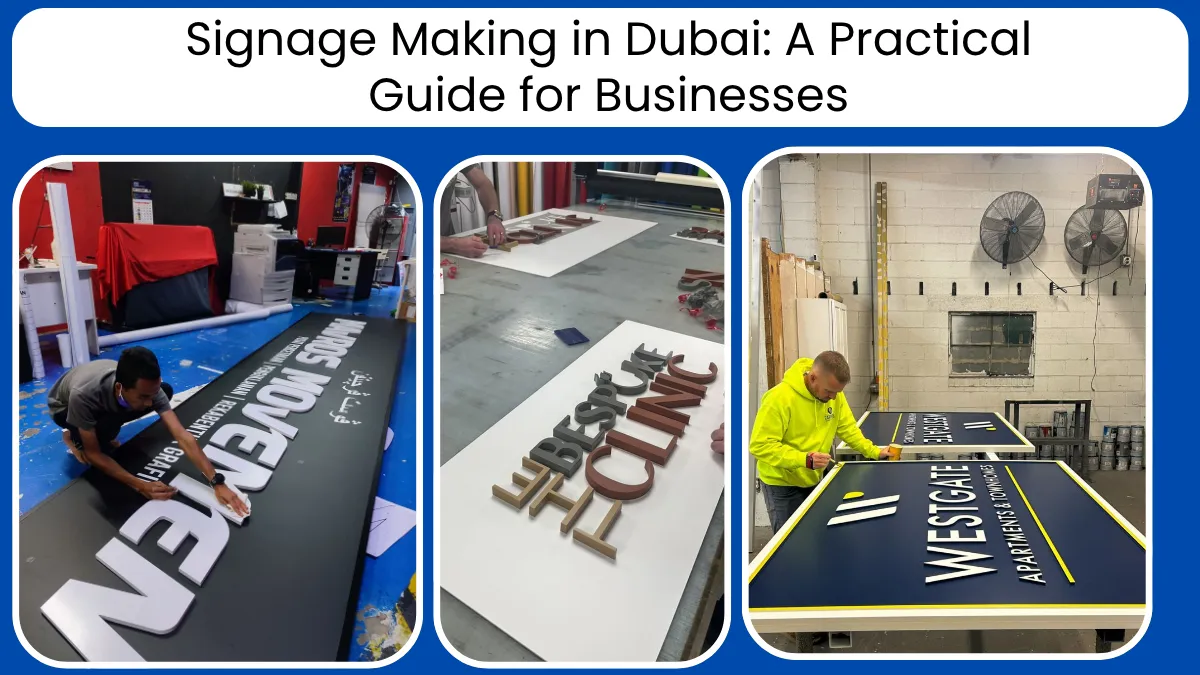
Manufactured from high-density cast acrylic, these elements offer exceptional optical clarity and dimensional stability. It allows for precise laser processing without heat warping, making it ideal for sharp, corporate typography indoors and outdoors.
LED Sign Boards
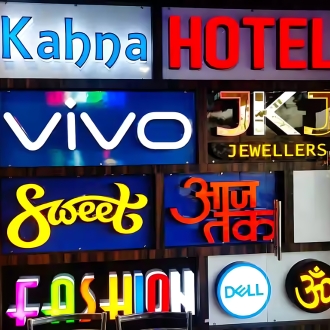
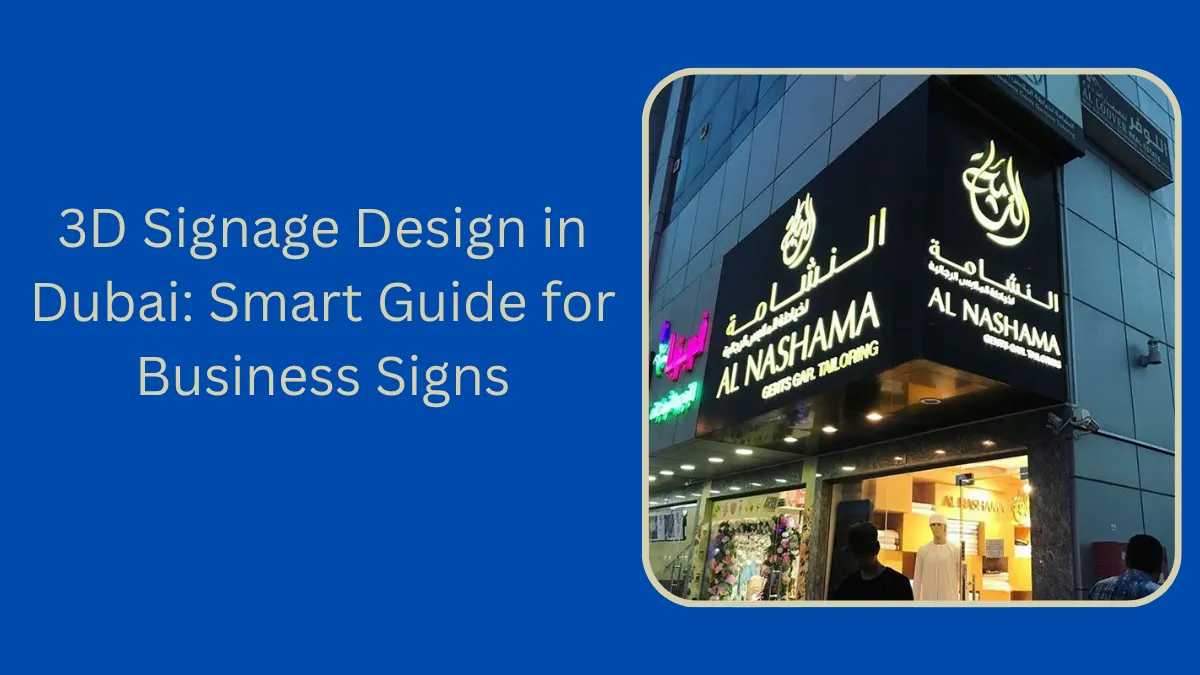
Engineered for maximum luminous efficacy, these systems utilize highly efficient diodes to push light through translucent substrates. Proper internal aluminum tracking ensures the LEDs do not overheat, maintaining a consistent output.
Flex Signs
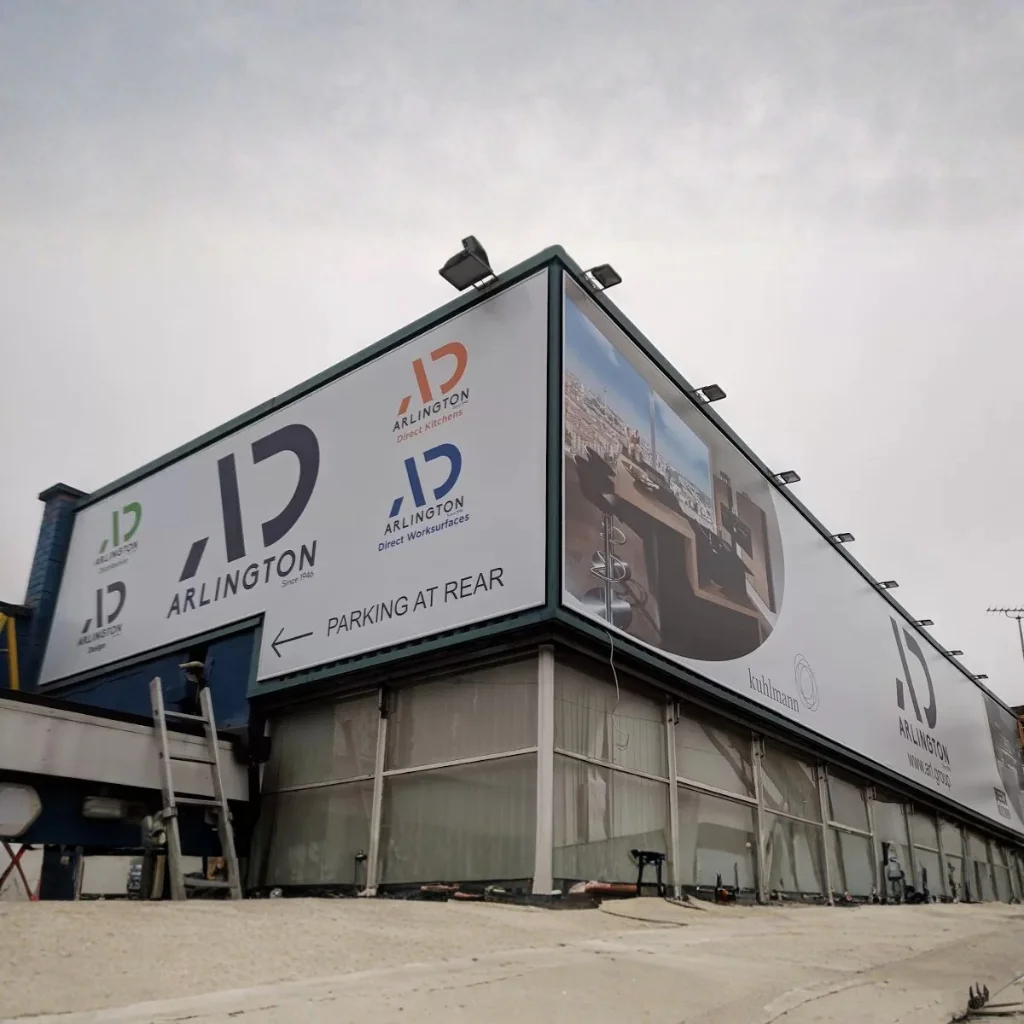
Utilizing a tensioned PVC substrate, this is the standard for large-scale, cost-effective outdoor shopfronts. Drum-tight tensioning across the frame prevents wind-whip and sagging.
Reception Signages
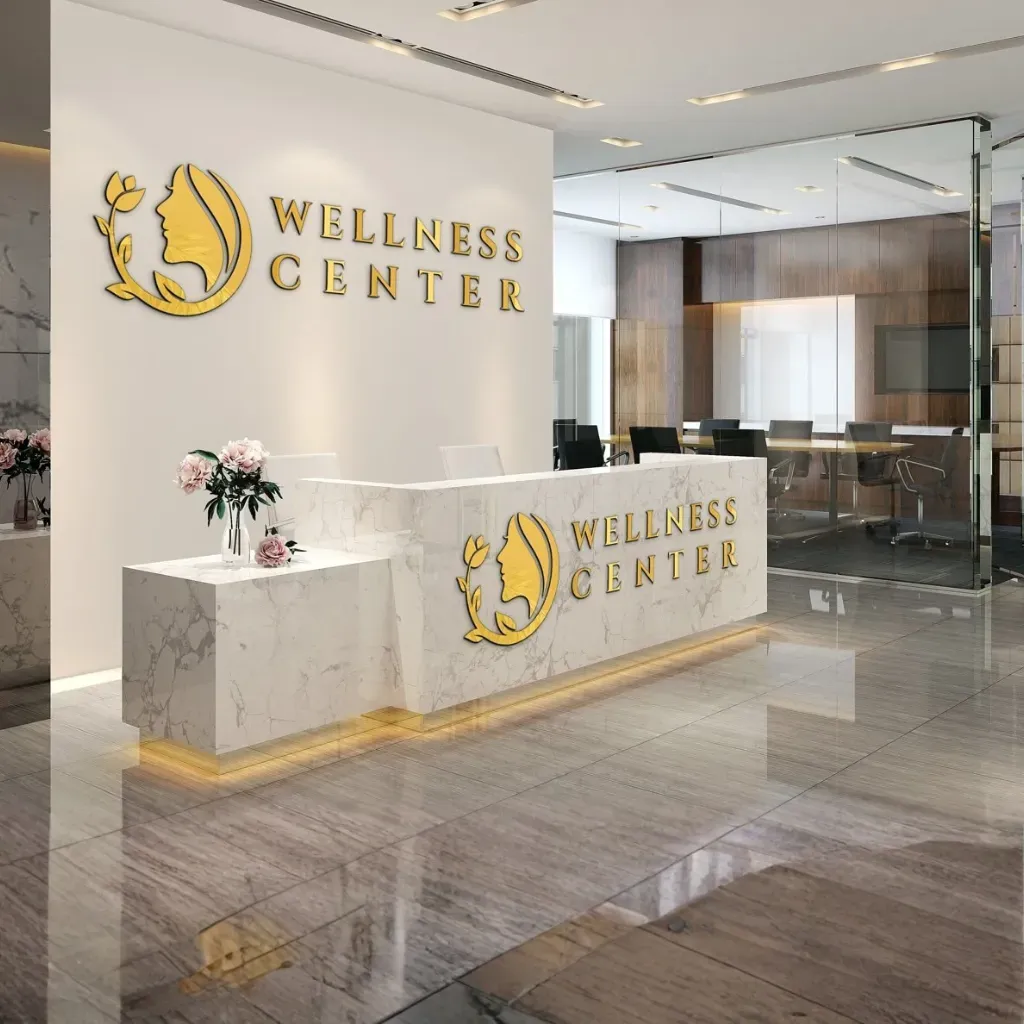
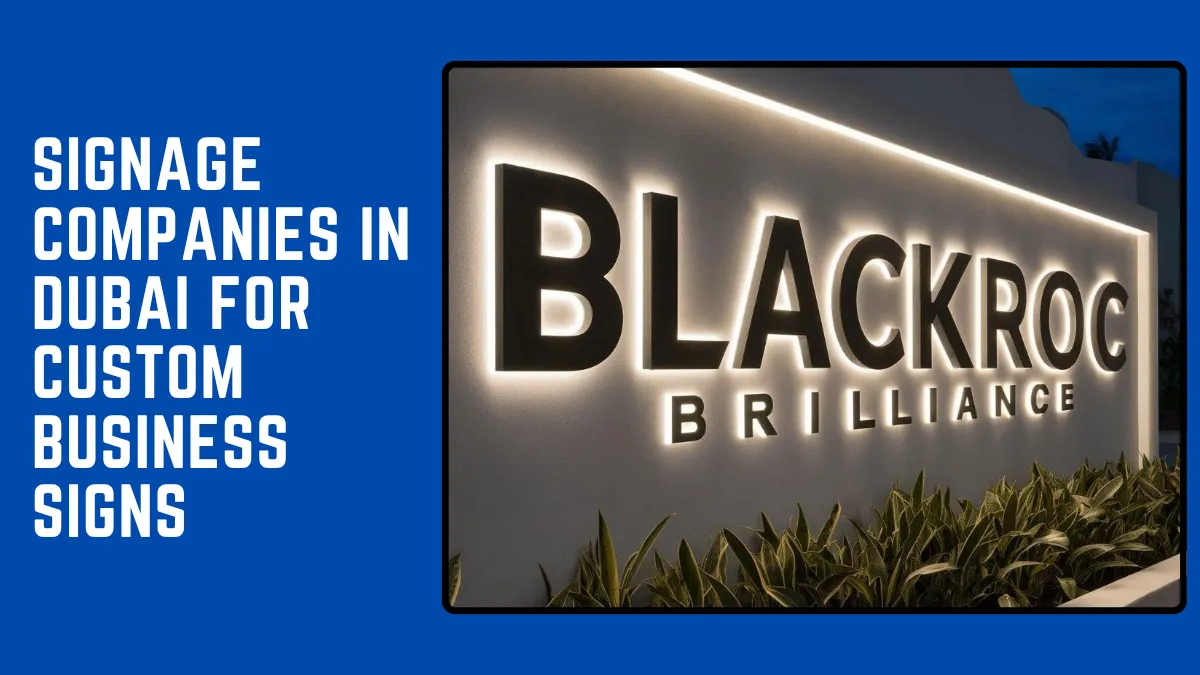
Interior applications require sophisticated dimensional contrast. Multilayered substrates paired with rear-mounted standoff pins and halo LED illumination project immediate corporate authority.
Stainless Steel Sign Boards
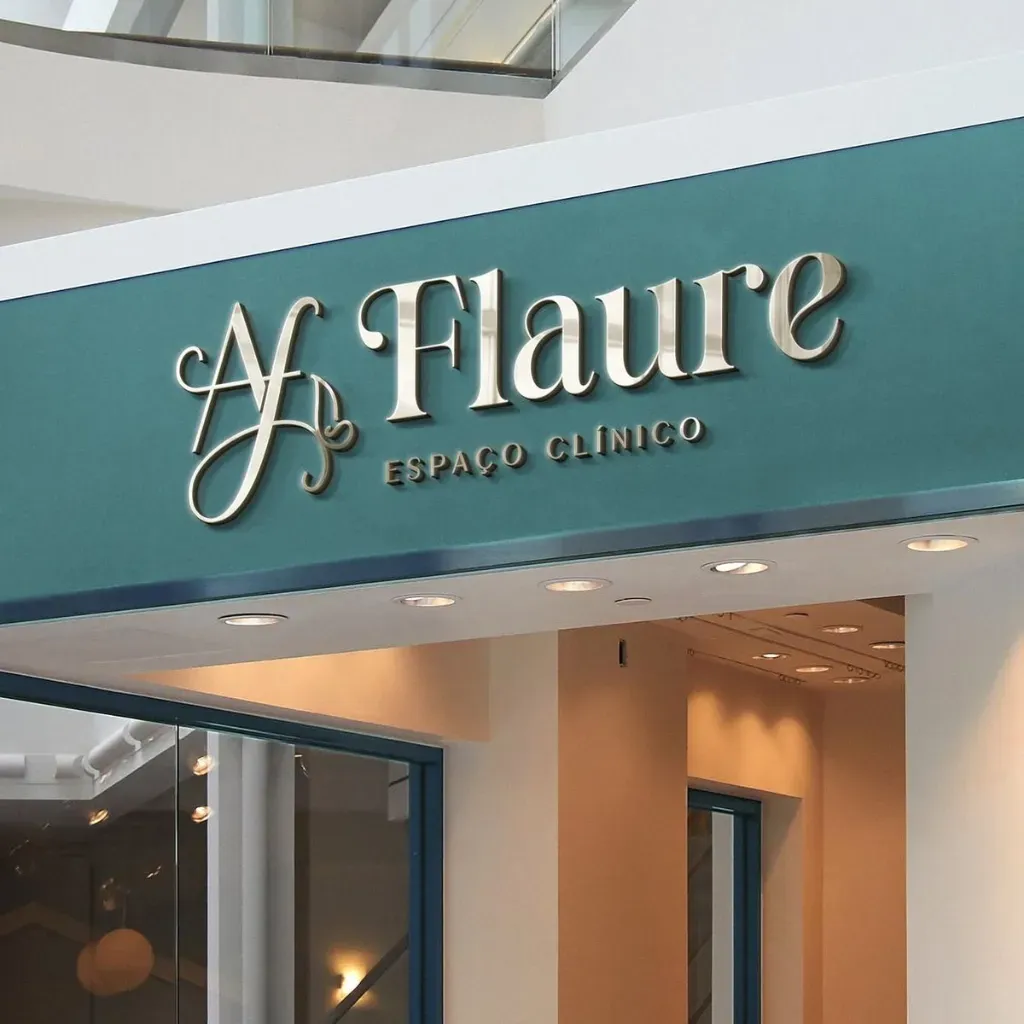
When coastal humidity is a concern, 316-grade stainless steel is the definitive choice. Highly resistant to oxidation, it provides an unyielding, premium aesthetic for exteriors.
Aluminium Metal Signs
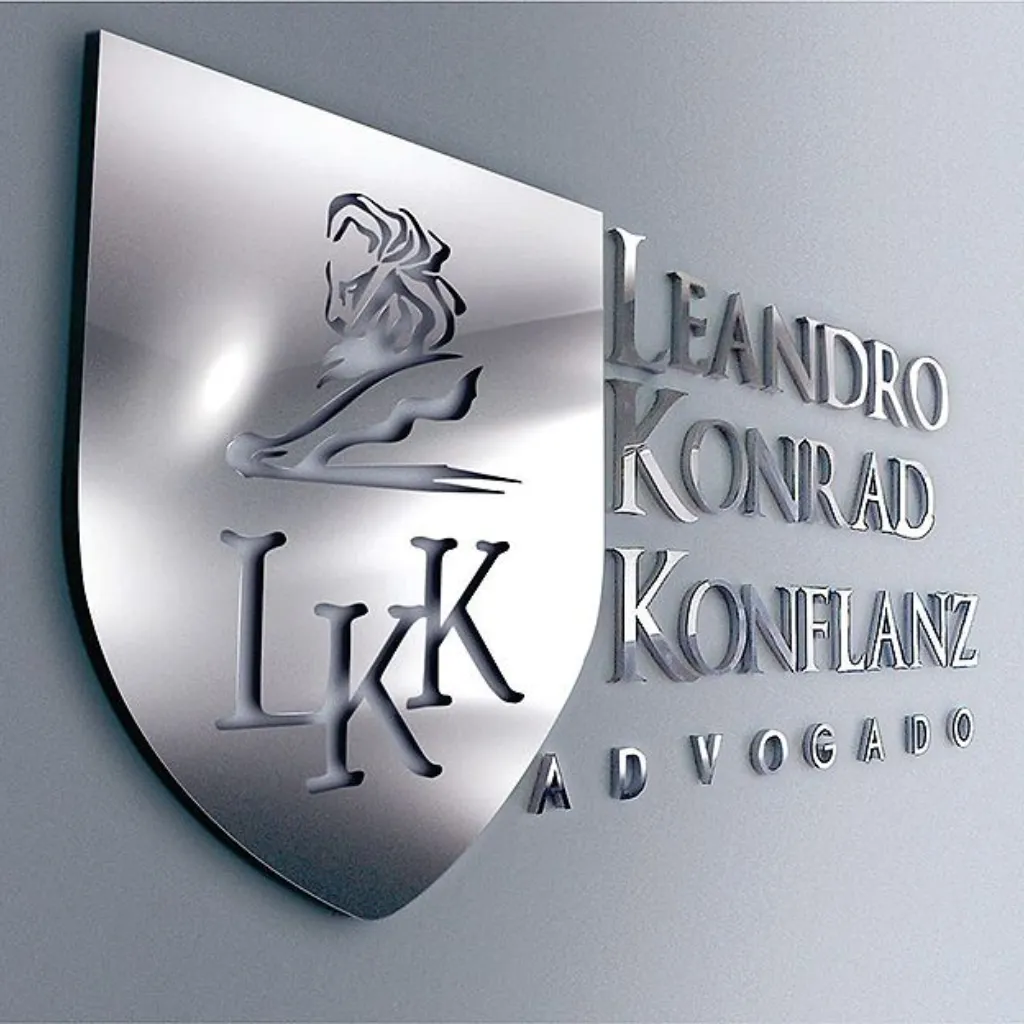
Aluminum is fundamentally oxidation-resistant and significantly lighter than steel, making it the superior structural choice for large facade installations where weight load is a concern.
Neon Signs
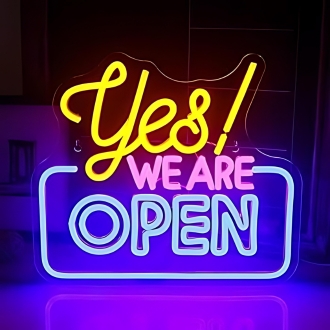
Traditional fragile glass has been replaced by LED neon flex. It uses a UV-resistant silicone extrusion that is shatterproof, cool to the touch, and highly energy-efficient.
Light Box Signs Boards
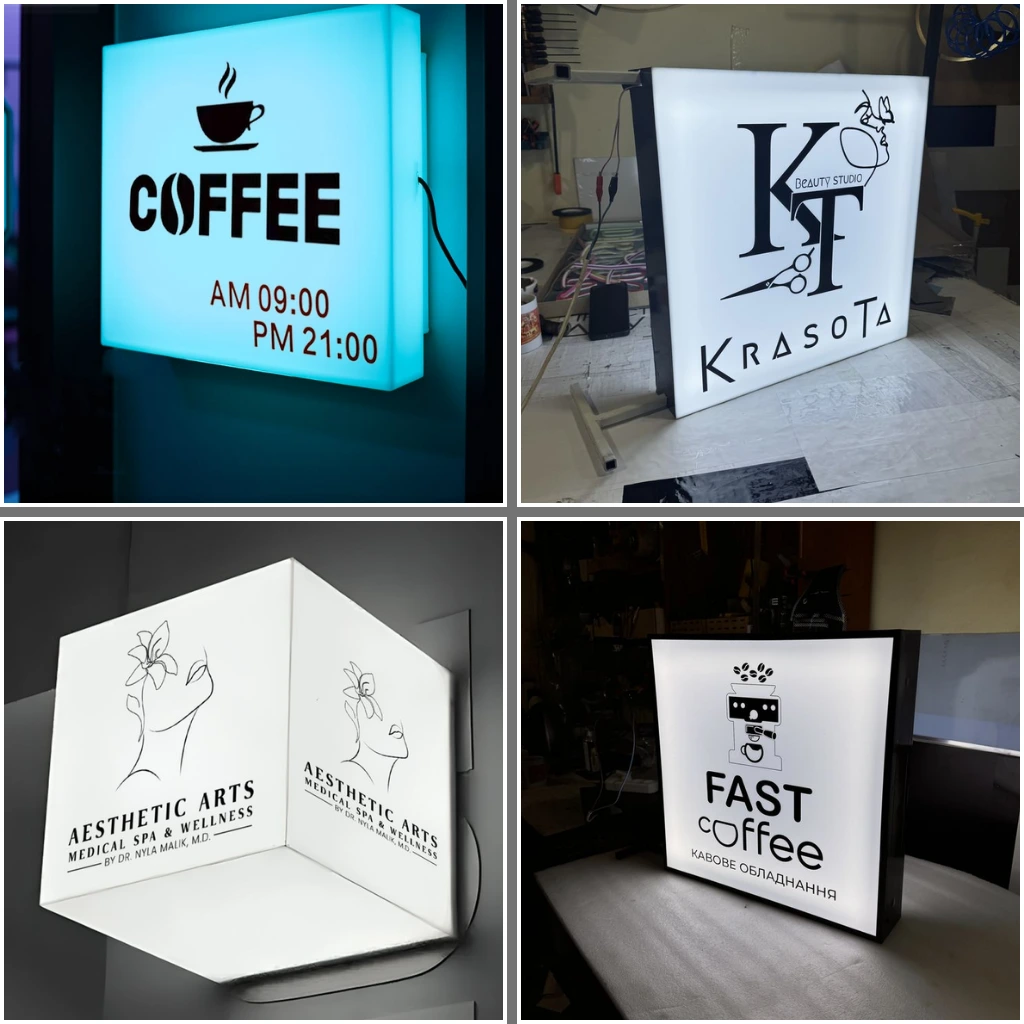
Constructed with a rigid aluminum profile and a translucent acrylic or tension-fabric face, the internal geometry is calculated to prevent hotspots and deliver a fully saturated brand message.
Practical Decision Framework for Installation
The structural integrity of any installation depends heavily on the mounting surface. Flushing high-tack structural adhesives on smooth glass differs entirely from mechanical anchor bolting on porous concrete.
Furthermore, ambient lighting conditions dictate contrast choices; highly reflective surfaces can become unreadable if placed opposite powerful floodlights, whereas matte finishes offer superior legibility in complex lighting environments.
Engineered Fabrication with Unitec Advertising
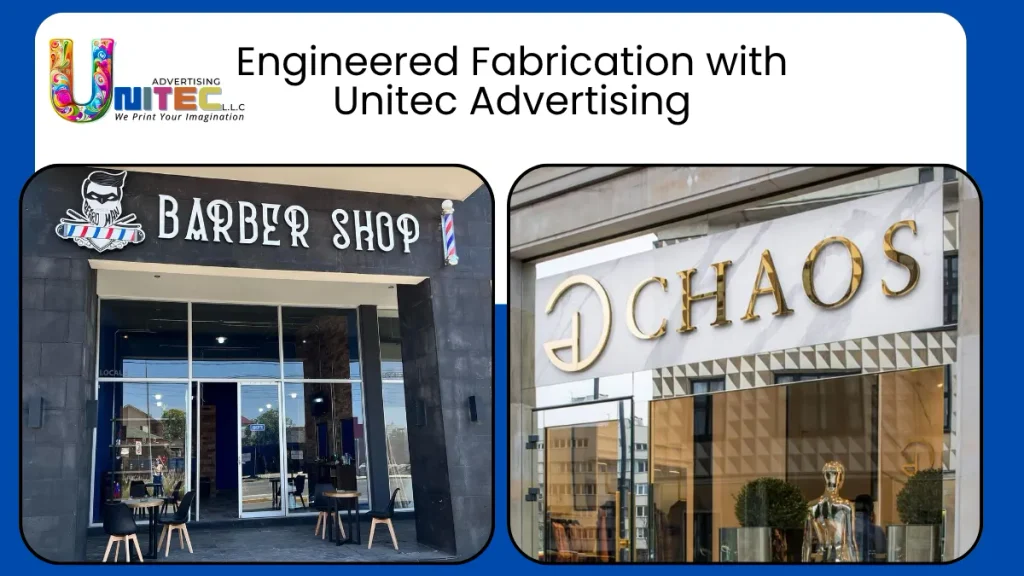
Execution requires precise engineering. Unitec Advertising functions as a consultative partner for businesses in Dubai, managing the structural fabrication, municipal compliance, and architectural integration of these systems. By aligning specific environmental challenges with exact material tolerances, we ensure your commercial installation delivers long-term durability.
Contact us at 971589412091.
Find us on Google Maps.
Get a free quote now: https://unitecadvertising.ae/request-a-quote/
Note: Read Our Latest Blogs Also
- LED Advertising Screens in Dubai: A Complete Guide for Business Visibility
- Premium House Name Plate Guide: Materials & Styles for Dubai Homes
- Choosing the Best Signage for Retail Shops in Dubai: The Complete Guide For All Types Of Businesses
- Premium Outdoor Flags Printing Guide: Types & Styles for Dubai Brands
- Promotional Roll-Up Banners for Business: A Smart Dubai Guide for Better Visibility
- The Complete Guide to Premium Metal Sign Board Designs for Modern Spaces
- Reception Signage: Types, Benefits, and Design Ideas for Offices
- Fabric Straight Pop-Up Guide for Dubai Businesses
- House Name Plate Design Ideas for Dubai Homes
- Signage Companies in Dubai for Custom Business Signs
Which outdoor business signage materials best withstand Dubai’s summer heat and UV exposure?
Extruded aluminium, marine-grade 316 stainless steel, and UV-stabilized cast acrylic are the most resilient materials for Dubai’s climate. Aluminium naturally resists oxidation while dissipating heat efficiently. 316 stainless steel contains molybdenum to prevent chloride corrosion from coastal humidity, and UV-grade acrylic resists discoloration and molecular degradation under intense solar radiation.
What is the structural difference between 304 and 316-grade stainless steel signage in coastal UAE environments?
Grade 316 stainless steel contains 2–3% molybdenum, offering significantly higher resistance to pitting, chlorides, and salt spray than Grade 304. For commercial properties near coastal Dubai (such as Dubai Marina, Jumeirah, or Palm Jumeirah), 316-grade prevents brown tarnishing and corrosion, whereas 304 is best restricted to inland or climate-controlled interior reception areas.
How do commercial LED sign boards prevent overheating during extreme Dubai summers?
LED sign boards prevent thermal degradation through integrated aluminium heat-sink backplates and industrial constant-current power supplies. High-grade aluminium profiles conduct heat away from the diodes, preventing lumen decay, color-temperature shifting, and diode burnout when ambient outdoor temperatures exceed 45°C.
Why is cast acrylic preferred over extruded acrylic for laser-cut corporate signs?
High-density cast acrylic has a higher molecular weight that produces clean, flame-polished edges without micro-cracking or melting during laser cutting. Extruded acrylic has a lower melting point, making it prone to edge-burring, internal stress fractures, and surface hazing when exposed to mechanical tension or heat.
What structural design keeps large flex sign boards stable against high desert wind loads?
Flex signs utilize heavy-gauge aluminium tensioning profiles paired with 500+ g/m² high-denier PVC substrates. The internal tension clips distribute wind load evenly across the entire perimeter frame, eliminating wind-whip, surface sagging, and fabric tearing during sudden seasonal dust storms.
How does modern LED neon flex compare to traditional glass neon for indoor commercial branding?
LED neon flex uses shatterproof, UV-resistant silicone or PVC extrusions operating at low voltage (12V or 24V), consuming up to 80% less power than glass neon. It produces uniform, continuous illumination, emits zero radiant heat, and poses no electrical arcing or gas-leakage hazards in high-traffic office reception spaces.
What formula determines proper letter height for roadside commercial signage?
The industry standard for vehicular readability requires approximately 1 inch (2.54 cm) of letter height for every 10 meters of viewing distance. For high-speed arterial roads such as Sheikh Zayed Road, typography must be scaled up to ensure legibility within a 3-to-5-second driver reaction window, combined with high-contrast luminance.
How do light box sign boards eliminate internal LED hotspots and uneven illumination?
Hotspots are eliminated by maintaining an optical depth ratio of 100mm–150mm between wide-angle LED lenses and high-transmission opal acrylic or backlit fabric. The wide beam angles overlap internally, diffusing the light uniformly across the front graphic without visible diode outlines.
What mounting methods ensure secure installation of dimensional metal letters on building facades?
Heavy 3D metal letters are mounted using threaded rear stainless steel studs set into masonry with structural chemical anchors. Mechanical standoff sleeves are placed between the letter and the substrate, providing structural support while allowing rainwater drainage and back-lit halo illumination.
What regulatory and structural compliance factors apply to commercial signage in Dubai?
Commercial outdoor signage in Dubai requires technical approval from Dubai Municipality, civil defense compliance for electrical components, and alignment with master developer guidelines. Structural engineering calculations must verify wind-load resistance, while electrical systems require IP65 or IP67 weatherproof ratings and safety isolator switches.
Can custom frosted films be integrated with 3D acrylic signs in corporate office interiors?
Yes, corporate interior fit-outs frequently combine plotter-cut frosted privacy vinyl with stud-mounted dimensional cast acrylic lettering. This hybrid setup delivers acoustic and visual privacy for glass partitions while projecting a high-contrast, premium 3D brand presence at the entryway.
How does Unitec Advertising engineer turnkey commercial signage for durability in the UAE?
Unitec Advertising engineers custom signage using climate-tested substrates (Grade 316 steel, anodized aluminium, cast acrylic) integrated with IP-rated LED modules and heavy-duty structural anchors. Every installation is designed to meet local architectural requirements, wind-load standards, and long-term thermal endurance across Dubai.