
Deploying digital signage in the United Arab Emirates is fundamentally an engineering challenge before it is a marketing initiative. Corporate buyers, retailers, and property developers must navigate a harsh operational reality: ambient temperatures exceeding 45°C, intense direct UV radiation, and highly abrasive desert dust.
Attempting to run standard consumer-grade screens in these conditions results in rapid diode burnout, thermal throttling, and critical hardware failure. This guide deconstructs the hardware specifications, thermal mechanics, and luminous intensity requirements necessary to deploy a resilient advertising screen in the UAE, ensuring maximum return on your physical branding investment.
Understanding Diode Physics and Environmental Hardware
Before selecting a digital display, one must understand the core mechanics that dictate its survival and visibility. Luminous intensity (measured in nits) determines if a screen can compete with the 100,000-lux brightness of direct Dubai sunlight.
An outdoor screen must output between 5,000 and 10,000 nits to remain legible. Conversely, indoor screens require tighter pixel pitch and optical resolution (often P0.9 to P2.5) to ensure near-HD clarity for viewers standing just meters away.
Equally critical is encapsulation. SMD LED encapsulation must be protected by robust IP65 or IP68 weatherproof digital signage cabinets. These cabinets utilize heavy-gauge aluminum heat-sink backplates and constant-current power supplies to dissipate heat passively, eliminating the need for bulky external air conditioning units even in peak summer.
Technical Breakdown of Core LED Display Systems
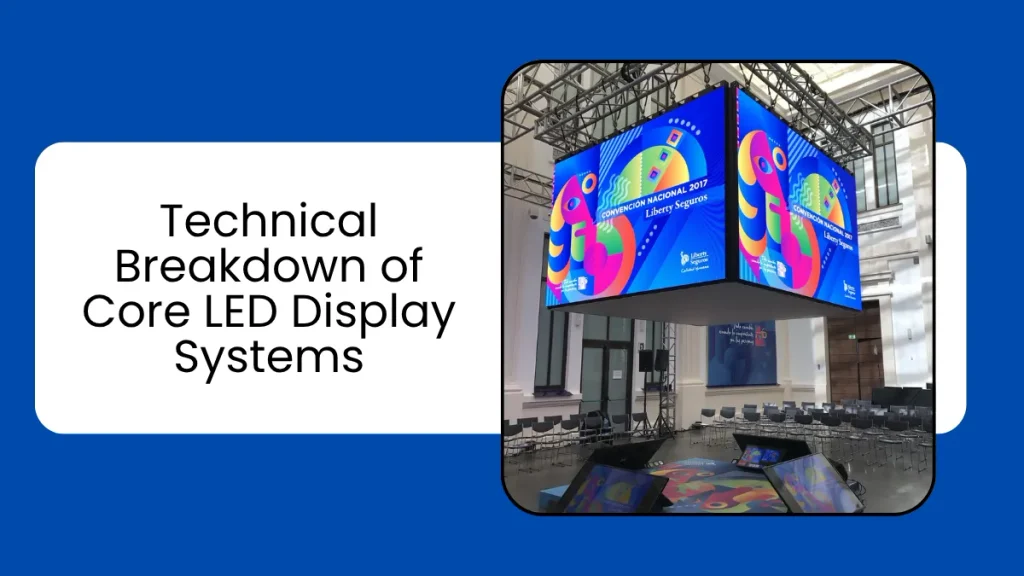
Different architectural spaces demand specialized digital hardware. Here is the technical breakdown of eight core display systems configured for the local market:
1. Indoor LED Screens
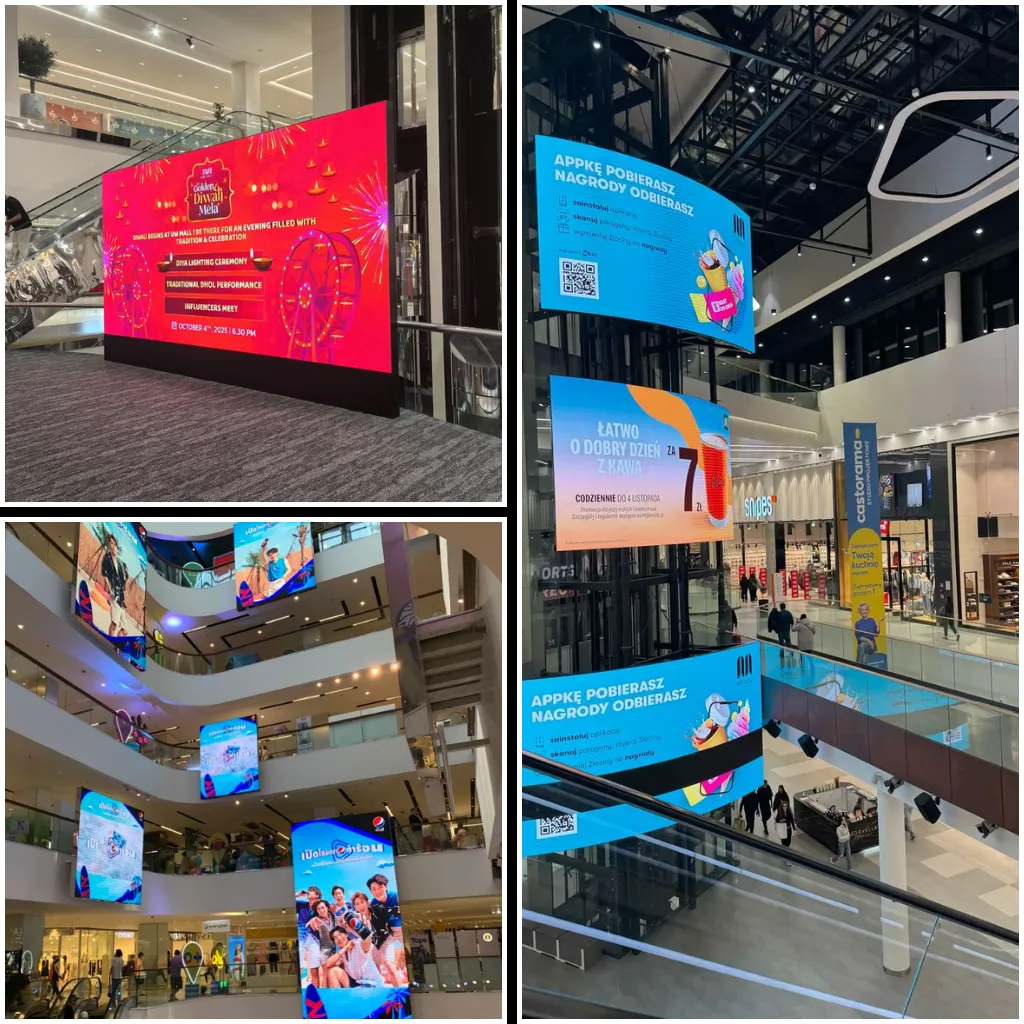
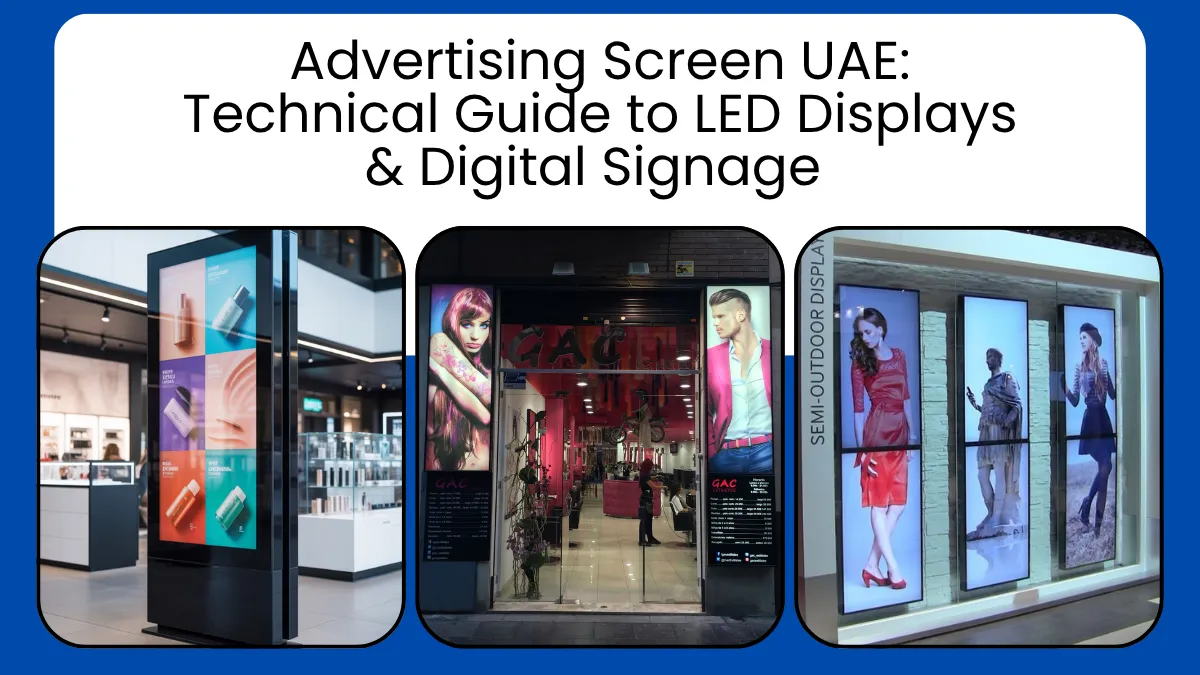
Engineered for close-proximity viewing in corporate lobbies and premium malls. They utilize ultra-fine pixel pitches (down to P0.9) and operate at 500 to 1,000 nits, focusing on color saturation, deep contrast ratios, and high refresh rate video walls rather than extreme brightness.
2. Outdoor LED Screens
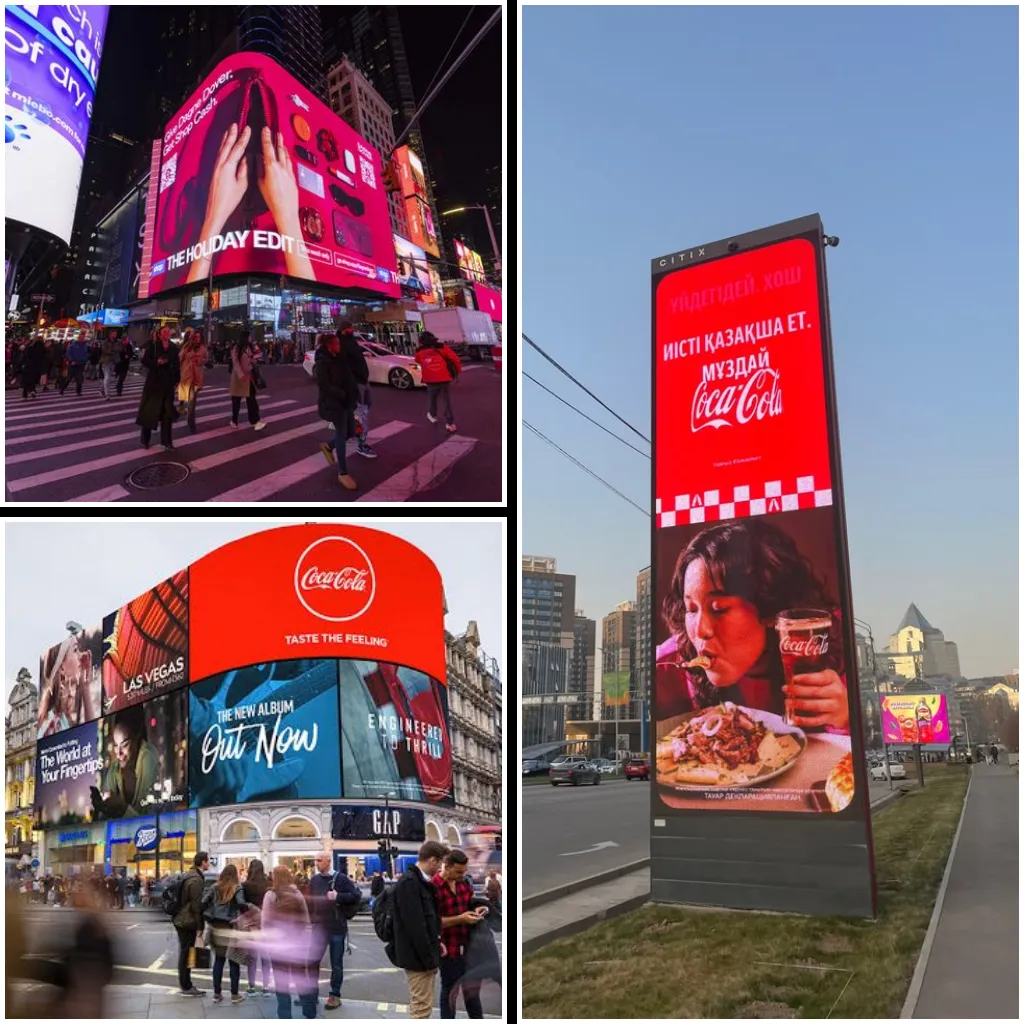
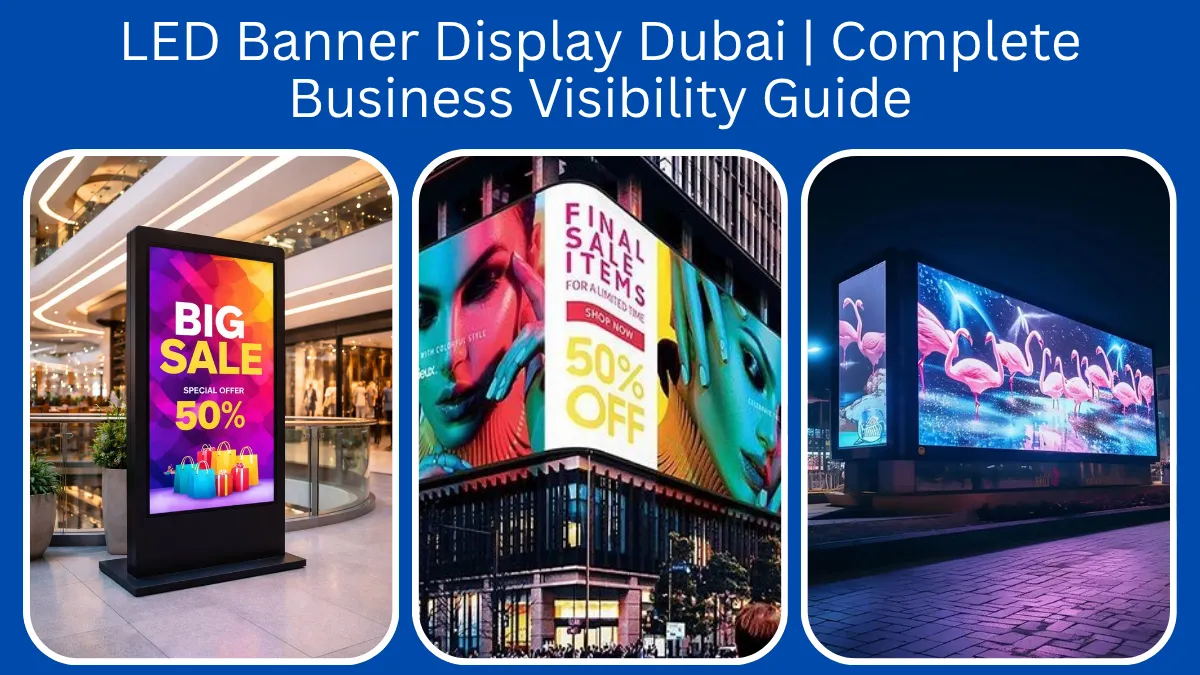
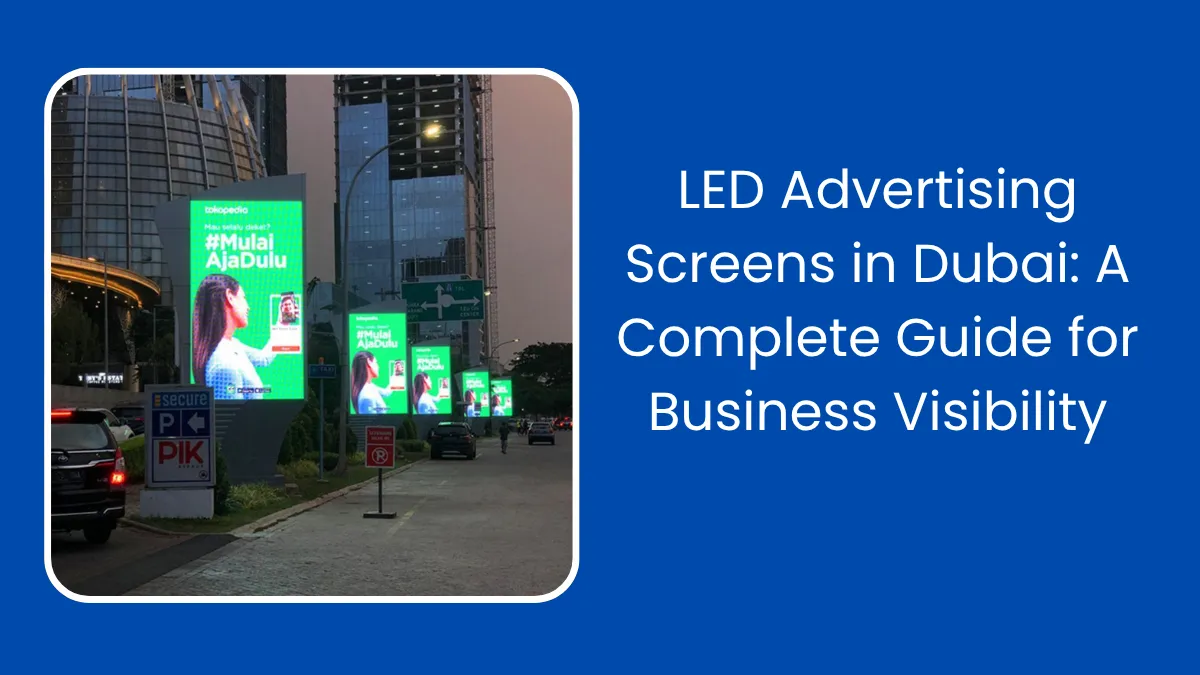
Built for structural facade integration and roadside billboards. These units feature aggressive thermal management for LED screens, waterproof gasketed seams, and high-lumen diodes capable of pushing up to 10,000 nits to cut through canopy shadows and direct afternoon glare.
3. Transparent LED Screens
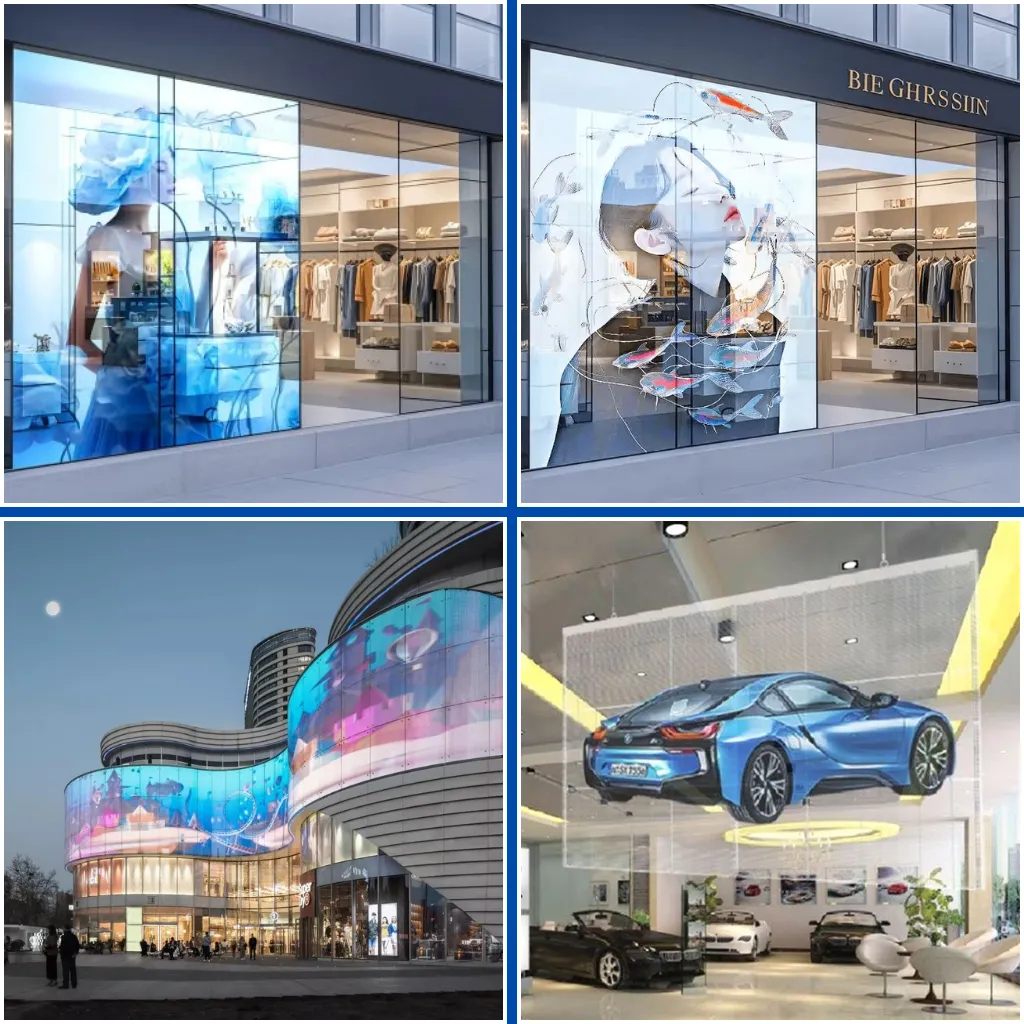
Designed for retail shop windows, transparent LED glass displays offer 70% to 80% transparency. The diodes are mounted on micro-louvers, allowing natural light into the store while projecting a high-brightness image outward to pedestrian traffic.
4. Flexible LED Screens
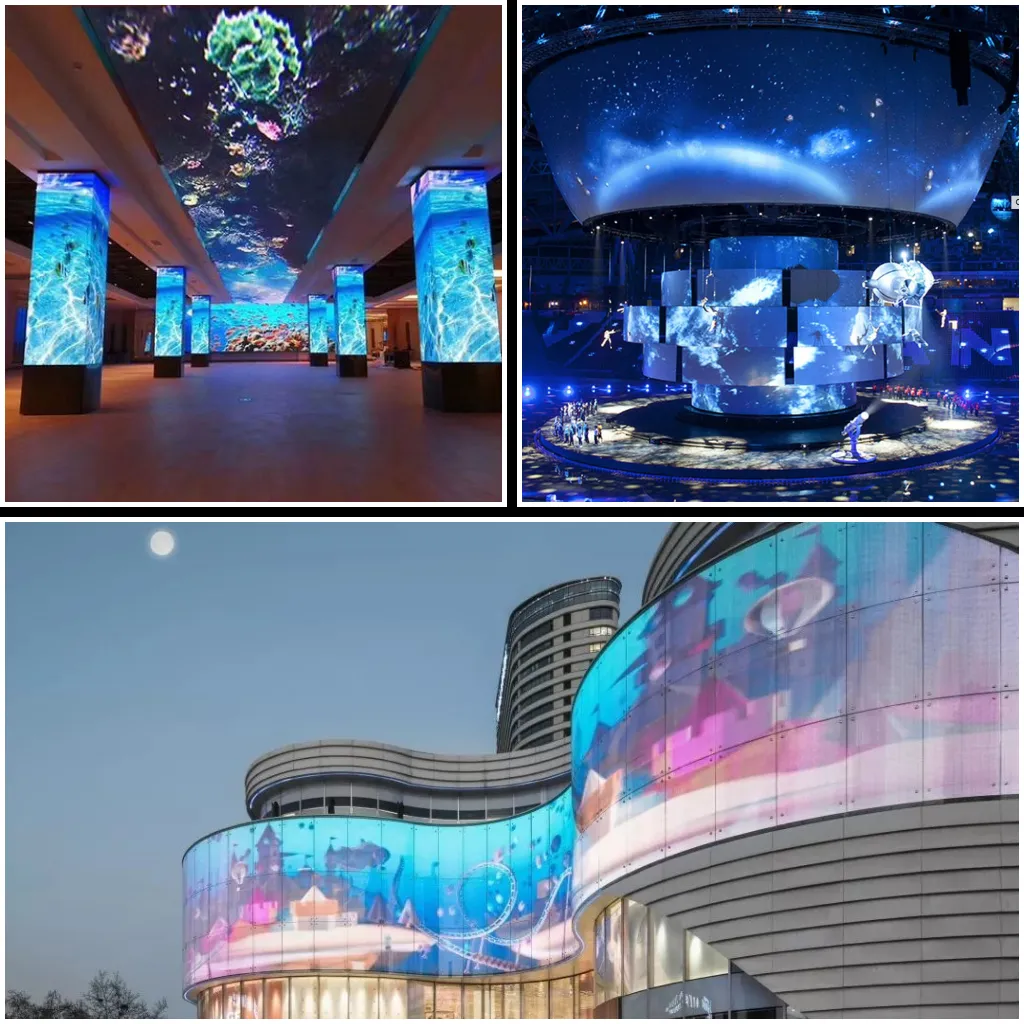
Utilizing soft PCB (Printed Circuit Board) modules, flexible LED screens can wrap around structural architectural pillars or form seamless curved waves in exhibition spaces, overcoming the rigid limitations of standard die-cast cabinets.
5. LED Poster Displays
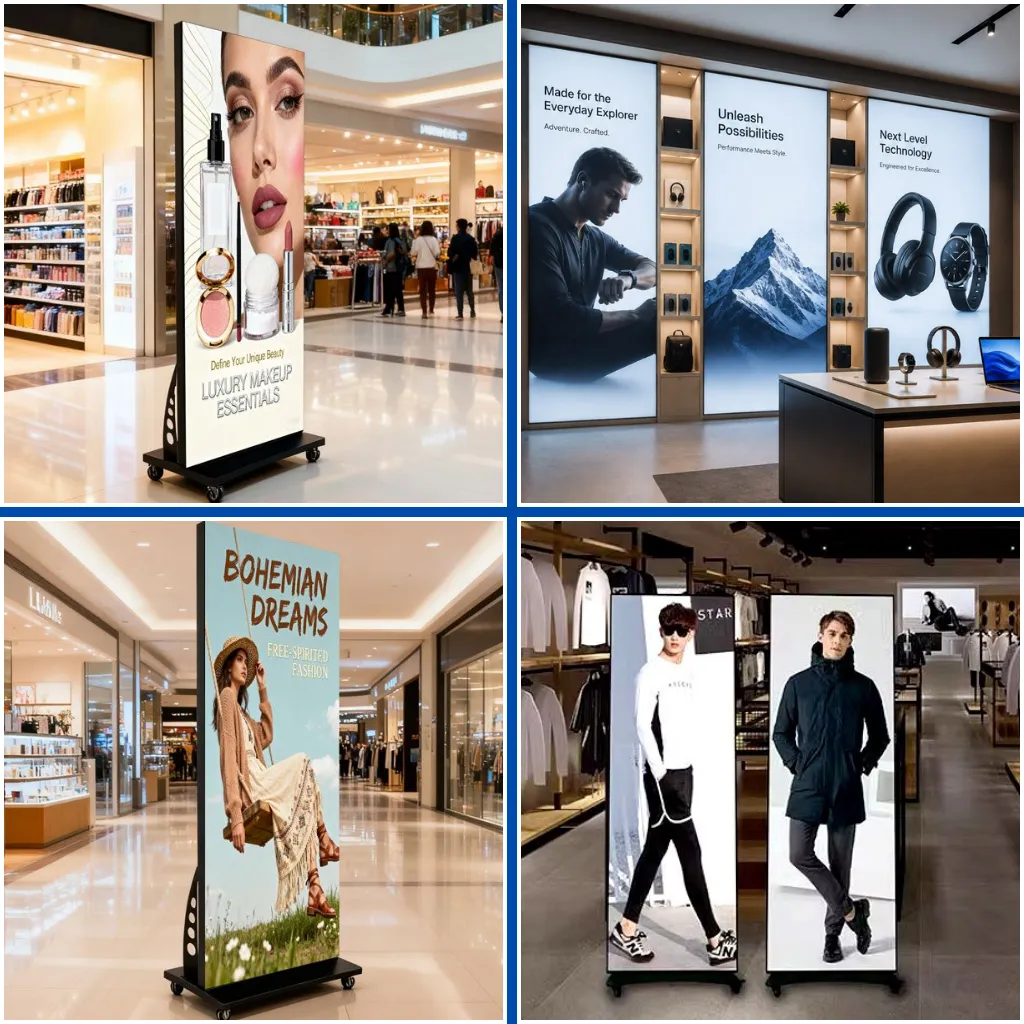
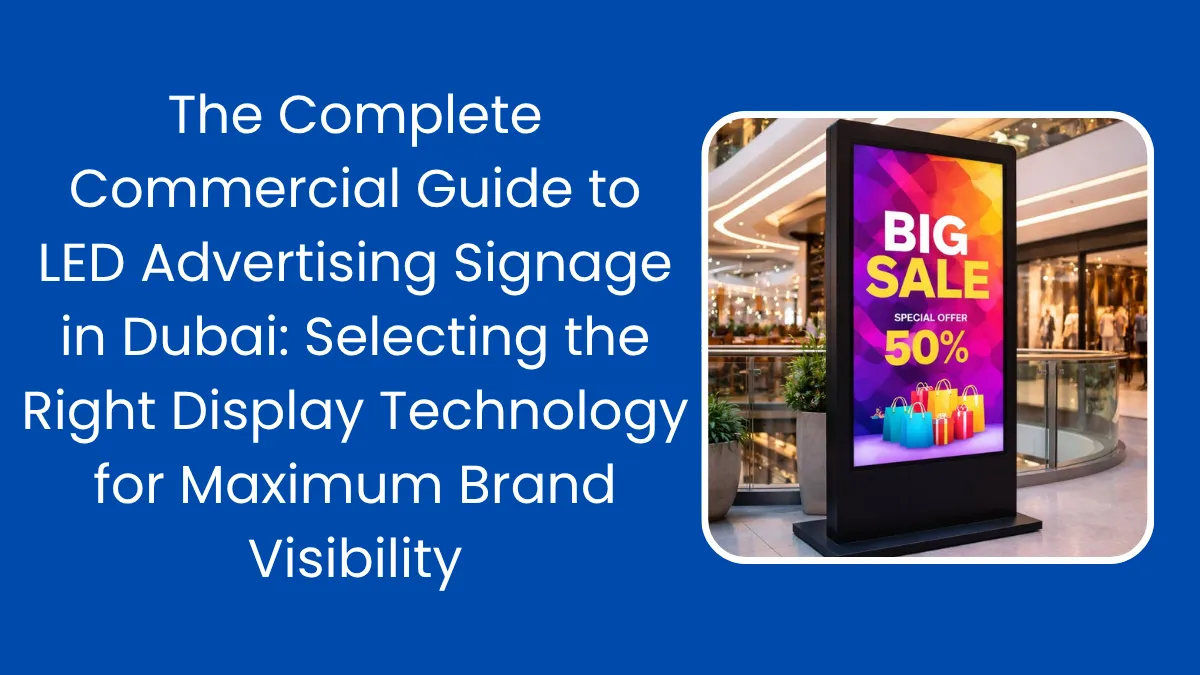
A plug-and-play digital standee utilizing a rigid frame and built-in asynchronous media players. Ideal for high-traffic retail entrances where fast, localized content updates are required without complex structural rigging.
6. Mesh LED Curtains
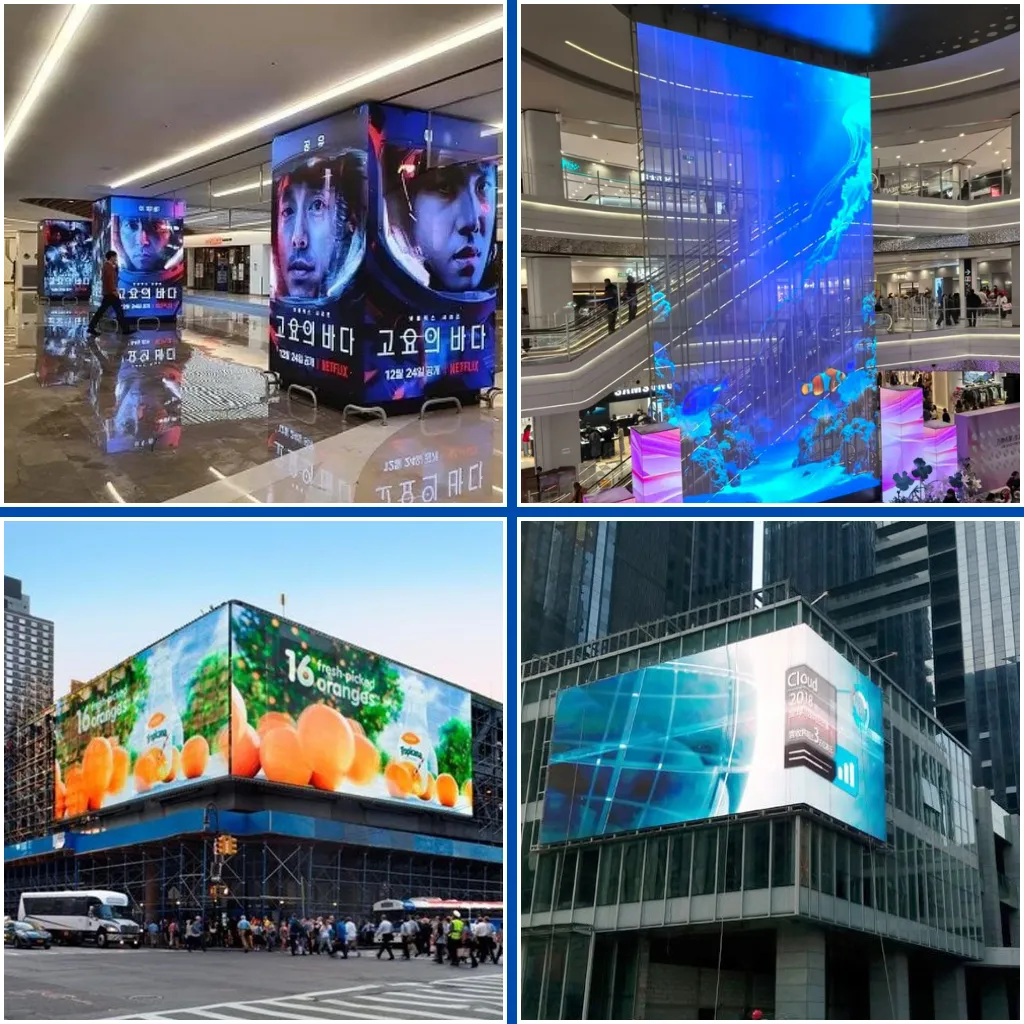
When wrapping massive skyscraper facades, wind load becomes a structural threat. Mesh curtains are ultra-lightweight and feature a porous design that allows wind to pass through, reducing structural stress while delivering massive, low-resolution visual impact from a distance.
7. LED Video Walls
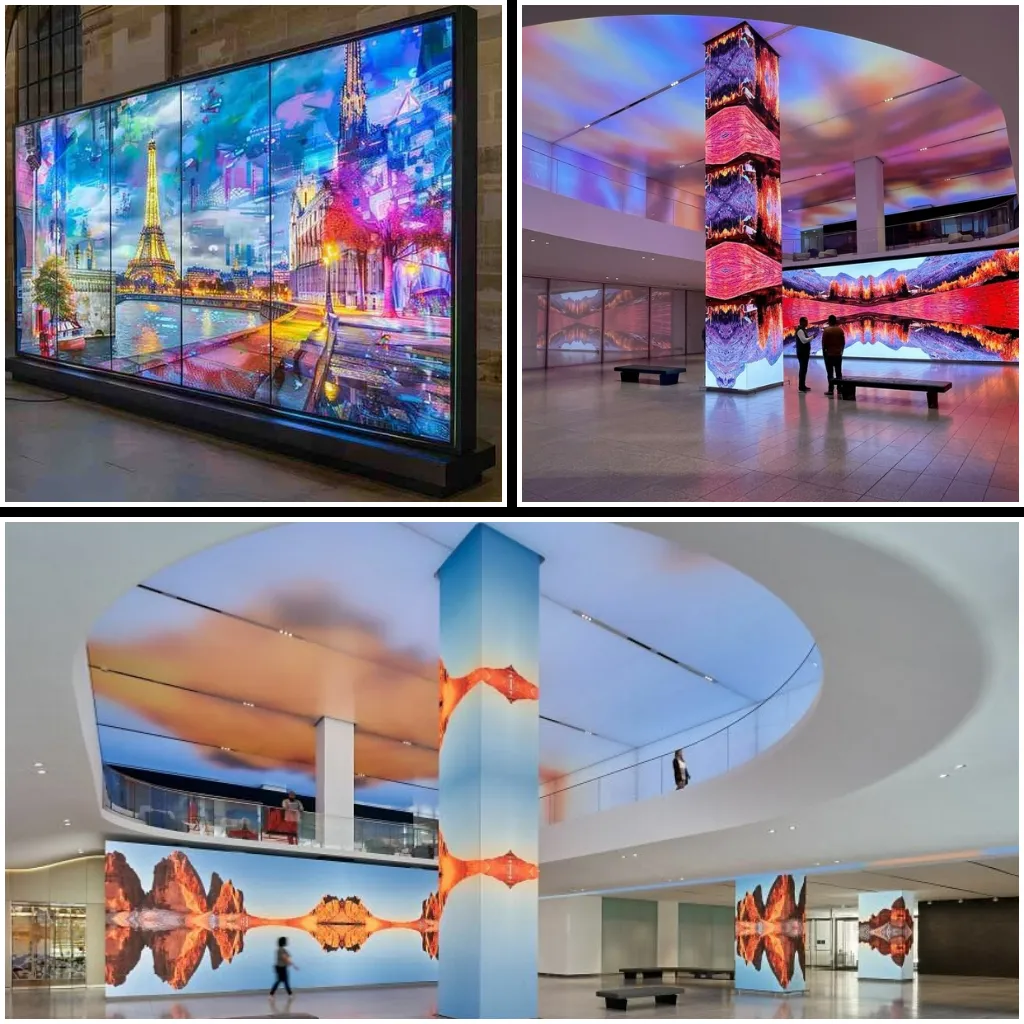
High-precision, zero-bezel configurations used in control rooms or event staging. They feature die-cast aluminum cabinets for perfect micro-alignment and operate at 3,840 Hz to 7,680 Hz refresh rates to prevent scan-line artifacts on broadcast cameras.
8. Digital Menu Boards
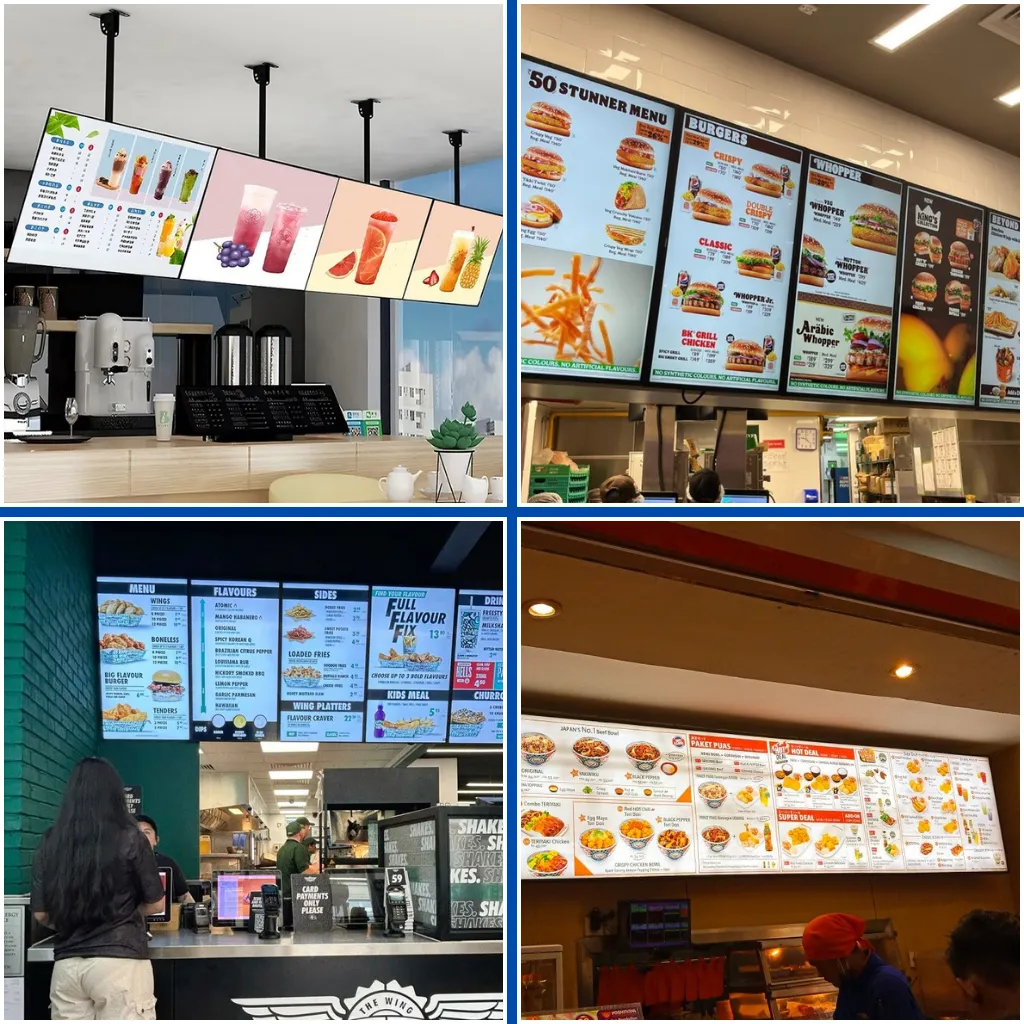
Deployed in QSR (Quick Service Restaurant) environments, these displays focus on interior ambient light contrast, utilizing anti-glare surface treatments and high-endurance components designed for 24/7 constant on-time reliability.
Systems Integration and Content Architecture
Hardware is only as effective as the data driving it. A commercial-grade digital network pairs the physical LED modules with specialized sending/receiving cards (like NovaStar) and a centralized Cloud CMS (Content Management System). This allows operators to push 4K content to an outdoor billboard on Sheikh Zayed Road instantly via 4G, while monitoring real-time cabinet temperatures and power supply stability remotely.
Practical Decision Framework for Digital Signage
To avoid over-specifying or under-equipping your project, evaluate these three variables:
- Viewing Distance: The rule of thumb is 1mm of pixel pitch for every 1 meter of viewing distance. A P3 screen is flawless at 3 meters, while a massive P10 screen is perfectly acceptable for highway traffic viewed from 20+ meters.
- Ambient Illumination: Never install a 1,000-nit indoor screen in a sun-facing glass atrium; it will wash out completely. Sun-facing units require a minimum of 5,500 nits.
- Structural Load: Solid outdoor cabinets are heavy. If the existing facade cannot support the weight, transition to a lightweight Mesh LED Curtain.
Common Installation and Specification Mistakes
The most frequent point of failure in local installations is thermal throttling caused by inadequate cabinet ventilation. Trapped heat degrades the diodes, causing color shifting and dead pixels. Additionally, failing to specify true IP65 ingress protection for rear-access cabinets leads to immediate short circuits during rare, but heavy, seasonal rainstorms.
Precision Execution with Unitec Advertising
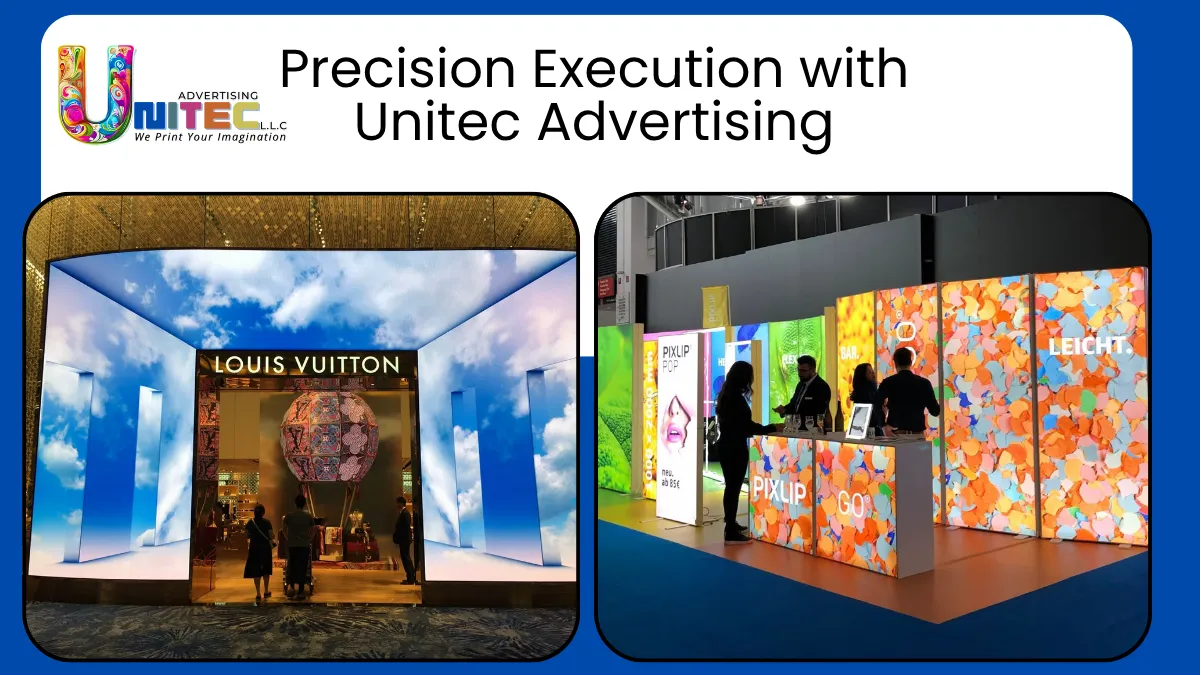
Deploying an advertising screen in the UAE is an architectural project requiring precise AV engineering. Unitec Advertising acts as your technical and structural partner, navigating the complex matrix of pixel pitch, heat dissipation, structural fabrication, and municipal compliance. By aligning our hardware specifications exactly to your site’s environmental reality, we deliver digital assets that perform flawlessly year after year.
Contact us at 971589412091.
Find us on Google Maps.
Get a free quote now: https://unitecadvertising.ae/request-a-quote/
Note: Read Our Latest Blogs Also
- LED Advertising Screens in Dubai: A Complete Guide for Business Visibility
- Premium House Name Plate Guide: Materials & Styles for Dubai Homes
- Choosing the Best Signage for Retail Shops in Dubai: The Complete Guide For All Types Of Businesses
- Premium Outdoor Flags Printing Guide: Types & Styles for Dubai Brands
- Promotional Roll-Up Banners for Business: A Smart Dubai Guide for Better Visibility
- The Complete Guide to Premium Metal Sign Board Designs for Modern Spaces
- Reception Signage: Types, Benefits, and Design Ideas for Offices
- Fabric Straight Pop-Up Guide for Dubai Businesses
- House Name Plate Design Ideas for Dubai Homes
- Signage Companies in Dubai for Custom Business Signs
What is the required brightness (nits) for an outdoor advertising screen in the UAE?
An outdoor LED screen exposed to direct UAE sunlight requires a minimum brightness of 5,000 to 7,000 nits to maintain high-contrast legibility, whereas shaded or indoor screens only require 500 to 1,000 nits.
How do outdoor digital displays survive extreme Dubai summer temperatures?
Commercial-grade LED cabinets prevent thermal failure by utilizing heavy-gauge aluminum heat-sinks, industrial constant-current power supplies, and passive airflow designs that dissipate heat without requiring external air conditioning.
What does IP65 and IP68 mean for outdoor digital signage?
IP (Ingress Protection) ratings define environmental sealing. IP65 ensures the screen is completely protected against blowing desert dust and low-pressure water jets, while IP68 offers maximum hermetic sealing for the most extreme outdoor conditions.
How do I determine the correct pixel pitch for a digital display?
The industry standard formula dictates that the minimum optimal viewing distance in meters roughly equals the pixel pitch in millimeters (e.g., a P2.5 screen is clear from 2.5 meters away, while a P10 screen requires 10 meters).
What is the structural advantage of a Mesh LED Curtain over a standard LED cabinet?
Mesh LED Curtains feature a porous, lightweight design that drastically reduces wind resistance (wind load) and structural weight, making them the only viable engineering option for covering massive glass skyscrapers.
Can transparent LED screens be installed in retail shop windows without blocking sunlight?
Yes, transparent LED glass displays utilize micro-louvers to achieve 70% to 80% transparency, allowing natural light into the store while simultaneously displaying high-brightness digital content to pedestrians outside.
Why is a high refresh rate important for indoor LED video walls?
Indoor event and control room screens require high refresh rates (typically 3,840 Hz to 7,680 Hz) to ensure seamless, flicker-free performance when recorded by broadcast cameras or smartphones, eliminating visible scan-line artifacts.
How are flexible LED screens integrated into architectural interior fit-outs?
Unlike rigid die-cast cabinets, flexible LED modules use soft Printed Circuit Boards (PCBs) that can bend, allowing AV engineers to seamlessly wrap structural pillars, create concave walls, or build custom wave-shaped digital displays.
What is an LED Poster Display and where is it best utilized?
An LED Poster is a freestanding, plug-and-play digital standee with an integrated media player. It requires zero structural rigging and is best utilized at premium retail entrances or exhibition booths for rapid, localized content deployment.
Do outdoor LED billboards in Dubai require specialized content management systems (CMS)?
Yes, professional digital signage networks use centralized Cloud CMS platforms paired with NovaStar or Colorlight receiving cards, allowing operators to instantly update content via 4G/5G and monitor hardware telemetry remotely.
What causes LED diodes to undergo premature color shifting or burnout?
Diode degradation is primarily caused by thermal throttling inside poorly ventilated cabinets or by utilizing low-tier SMD encapsulation that cracks under prolonged exposure to high ambient UV radiation.
How does Unitec Advertising ensure municipal compliance for outdoor screens?
Unitec Advertising manages the end-to-end engineering process, ensuring structural wind-load calculations, appropriate IP weatherproof ratings, and civil defense electrical compliance meet all local master developer and municipal regulations.