
Deploying commercial branding in the Middle East is fundamentally an engineering challenge before it is a marketing initiative. Corporate buyers, retail managers, and property developers must navigate a harsh operational reality: ambient temperatures exceeding 45°C, intense ultraviolet (UV) radiation, and highly abrasive coastal humidity.
Attempting to deploy standard consumer-grade materials in these conditions results in rapid thermal degradation, color shifting, and structural failure. When evaluating the best signage companies in uae, it is critical to look beyond graphic design capabilities and focus heavily on material science, thermal mechanics, and municipal architectural compliance.
The Mechanics of Material Durability and Visibility For Signage Companies in UAE
Before selecting a specific substrate or illumination method, one must understand the operational variables that dictate physical survival. Viewing distance dictates the scaling of typography and the requisite lumen output for digital elements.
High-traffic environments, such as storefronts along Sheikh Zayed Road, require materials that prevent daytime glare while offering high-contrast legibility and uniform light dispersion at night. A premium manufacturer will calculate wind load, substrate expansion rates, and galvanic corrosion risks before recommending a structural solution.
Technical Specifications for Core Branding Substrates By Signage Companies in UAE

The selection of structural materials directly impacts the lifespan and maintenance cycles of your commercial installation. Here is the technical breakdown of eight primary configurations utilized in the region:
Acrylic Wall Letters

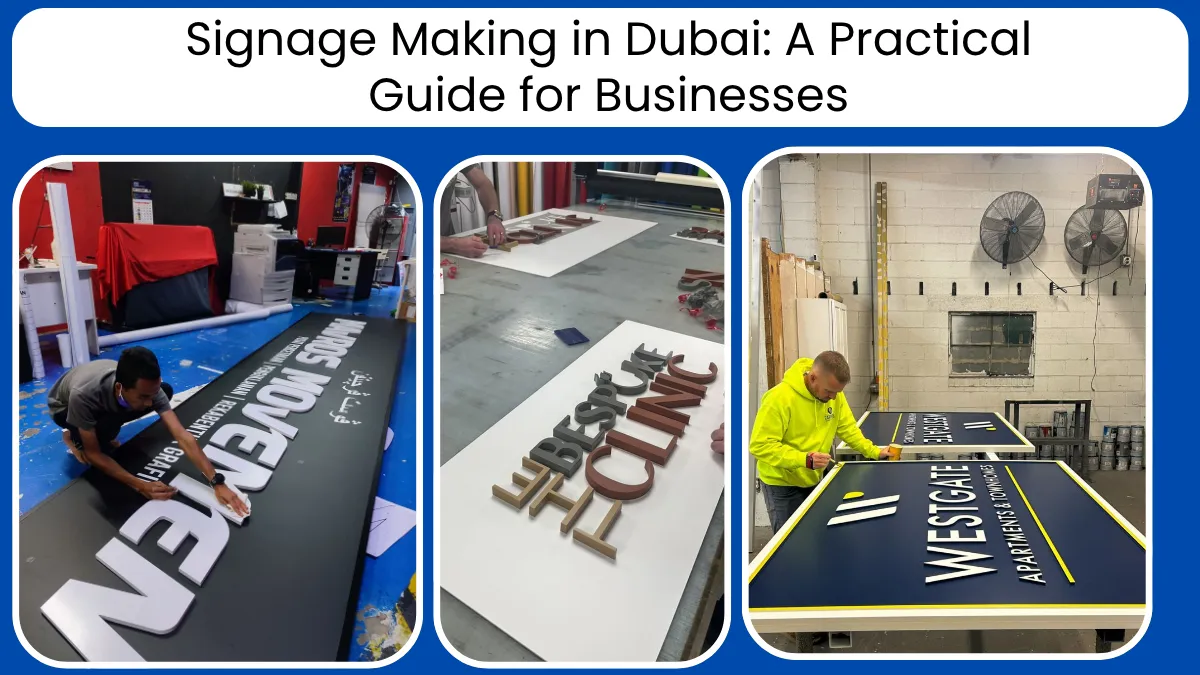
Manufactured from high-density cast acrylic, these architectural elements offer exceptional optical clarity and dimensional stability. Unlike cheaper extruded plastics, cast acrylic allows for precise laser processing without heat warping, making it ideal for sharp, corporate typography that resists UV yellowing under direct sunlight.
LED Sign Boards
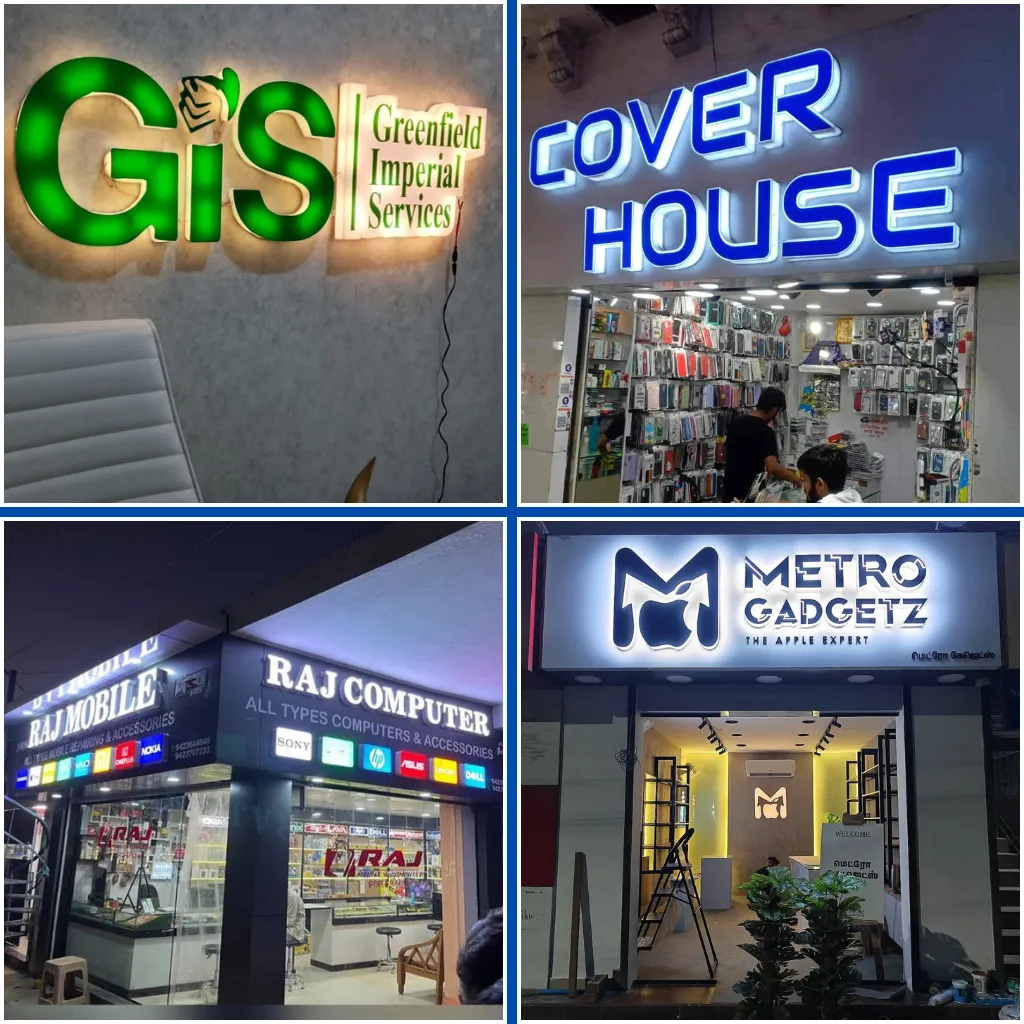
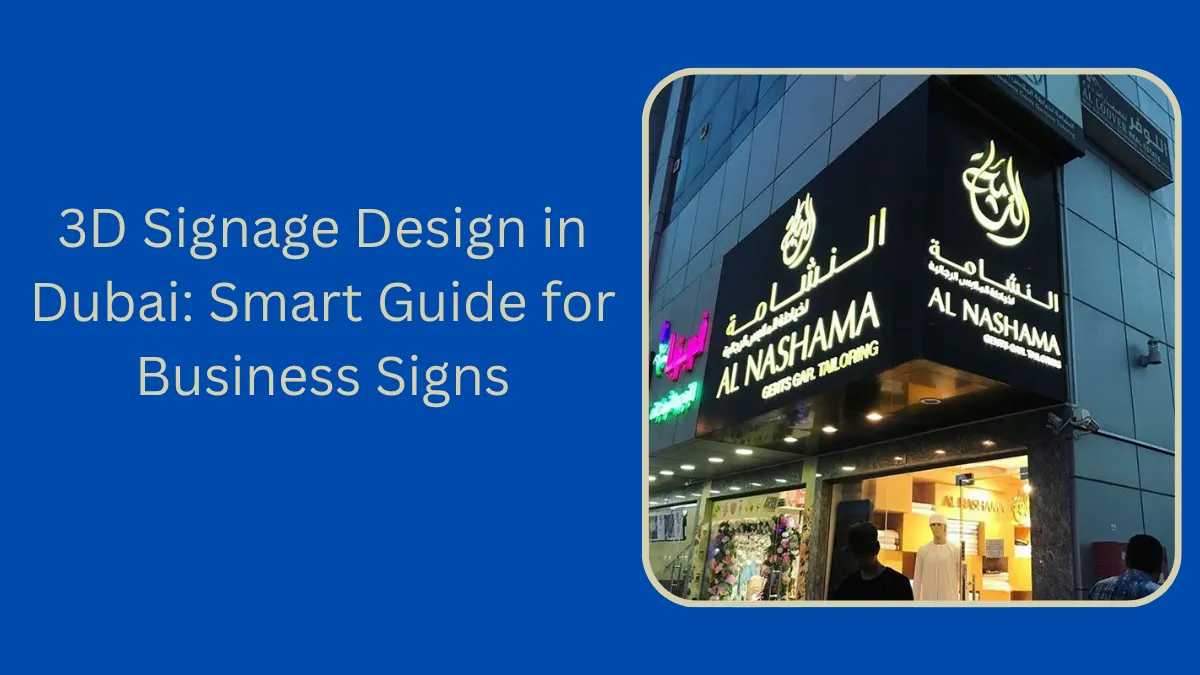
Engineered for maximum luminous efficacy and 24/7 brand visibility, these digital systems utilize highly efficient diodes to push light through translucent substrates. Proper internal heavy-gauge aluminum tracking ensures the LEDs do not overheat, maintaining a consistent high-nit output during extreme summer peaks without diode burnout.
Flex Signs
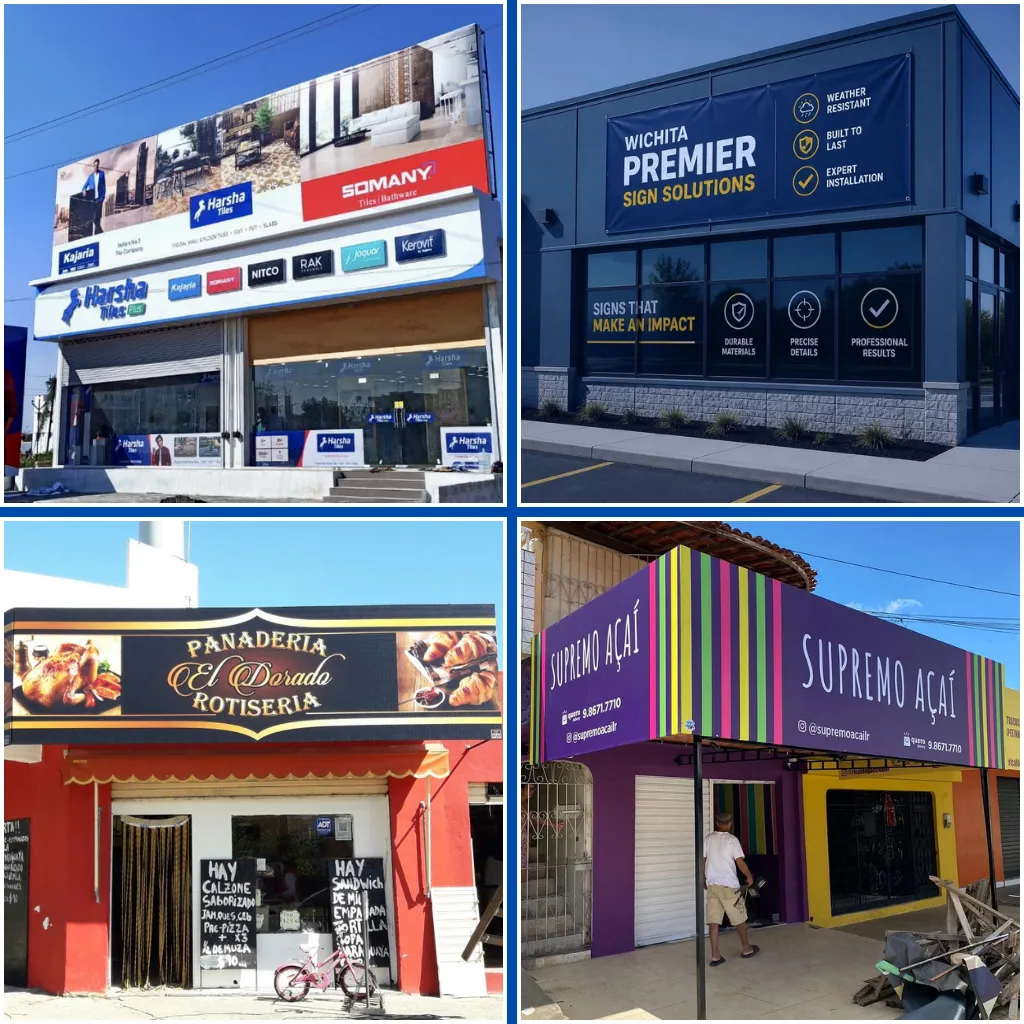
Utilizing a tensioned PVC substrate, this remains the structural standard for large-scale, cost-effective outdoor shopfronts. Heavy-duty drum-tight tensioning across an aluminum perimeter frame prevents wind-whip, surface sagging, and fabric tearing during sudden seasonal dust storms.
Reception Signages

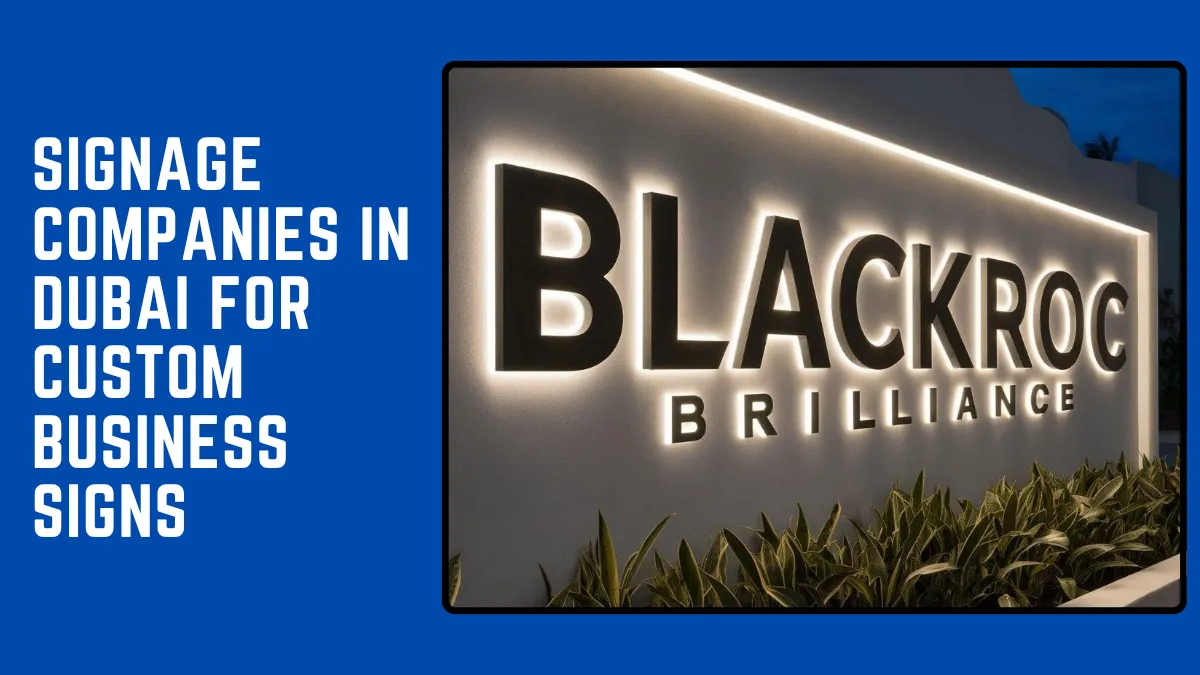
Interior corporate applications require sophisticated dimensional contrast rather than aggressive brightness. Multilayered substrates—such as brushed metal standoff pins mounted over plotter-cut frosted acrylic—are frequently paired with subtle halo LED illumination to project immediate corporate authority the moment a client enters the lobby.
Stainless Steel Sign Boards
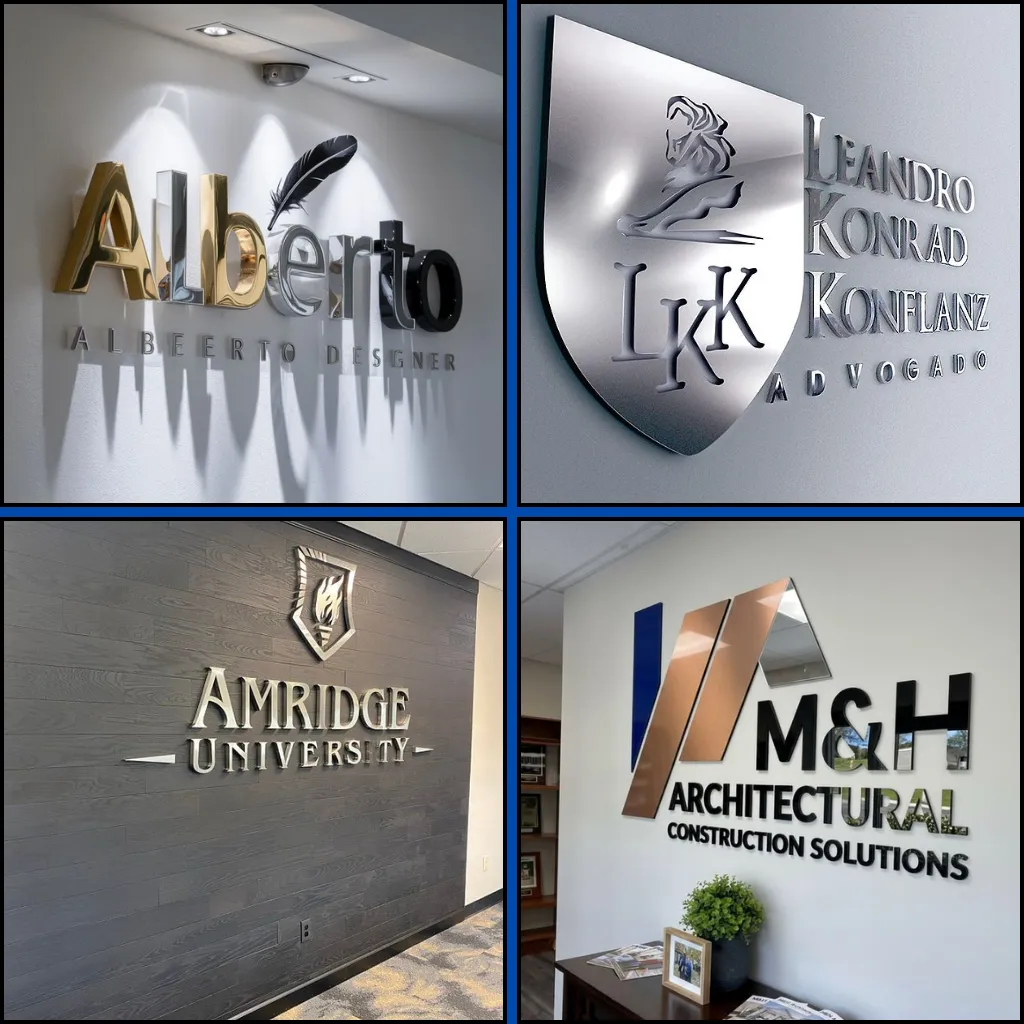
When coastal humidity is a primary concern, marine-grade 316 stainless steel is the definitive choice. Containing molybdenum to prevent chloride corrosion and pitting, it provides an unyielding, highly premium aesthetic—often finished in brushed or mirror-polished textures—that survives heavy weathering.
Aluminium Metal Signs
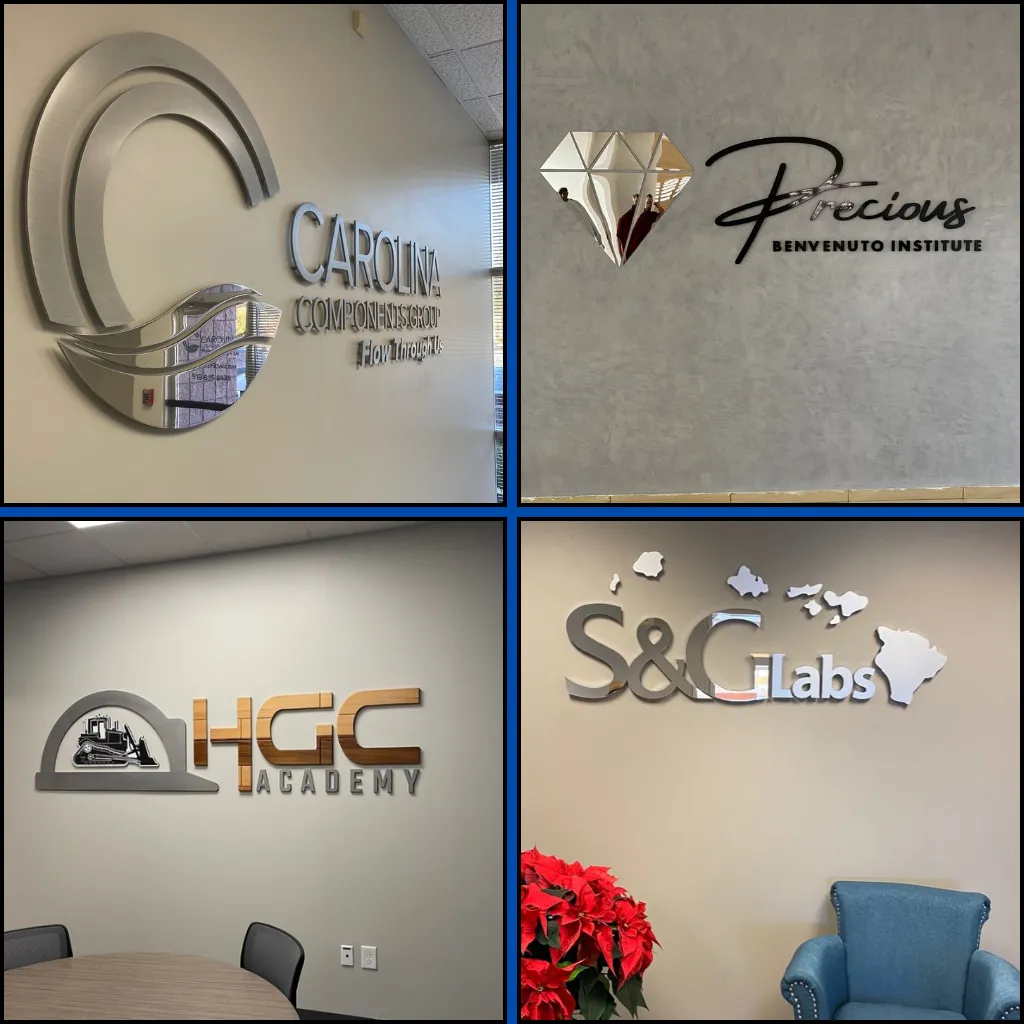
Aluminum is fundamentally oxidation-resistant and significantly lighter than steel. This makes it the superior structural choice for massive building facade installations where reducing the dead-weight load on the architectural cladding is a critical safety requirement.
Neon Signs
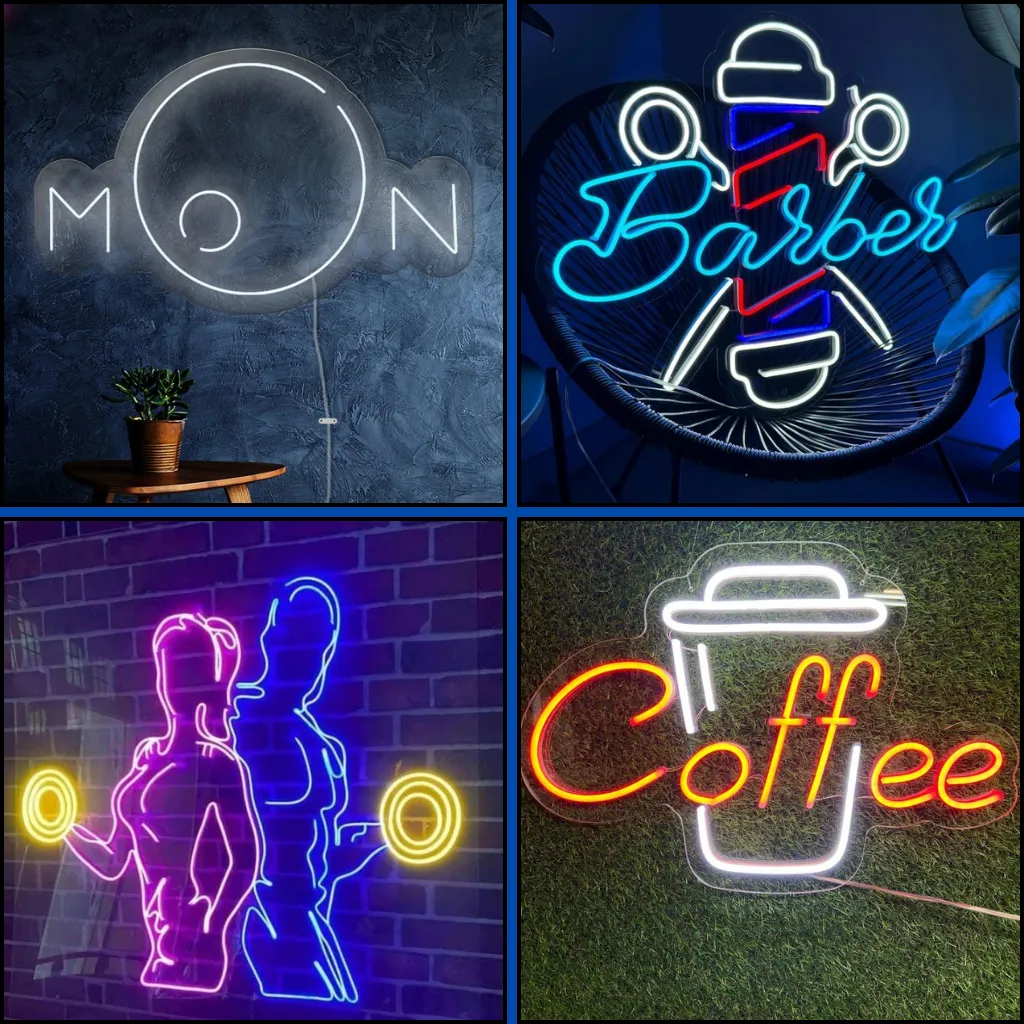
Traditional, highly fragile glass tubing has been entirely replaced by modern LED neon flex. This technology utilizes a UV-resistant, shatterproof silicone extrusion that remains cool to the touch, poses zero gas-leakage hazards, and cuts energy consumption drastically while delivering perfectly uniform continuous illumination.
Light Box Signs Boards

Constructed with a rigid aluminum profile and a high-transmission translucent acrylic or tension-fabric face. The internal geometry and depth ratios are precisely calculated to overlap the wide-angle LED lenses, thereby preventing visible diode hotspots and delivering a fully saturated, perfectly even brand message.
Practical Decision Framework for Installation
To ensure you specify the exact correct treatment for your structural space, utilize this evaluation matrix:
- Determine the Mounting Substrate: Applying high-tack structural adhesives on smooth interior glass requires a completely different engineering approach than mechanical anchor bolting heavy steel letters onto porous exterior concrete.
- Evaluate Viewing Distance: Typography size must scale appropriately. The industry standard requires approximately 1 inch of letter height for every 10 meters of viewing distance for vehicular traffic.
- Assess Lighting Imbalance: Highly reflective mirror-finish materials can become completely unreadable if placed opposite powerful floodlights or direct sunset glare. In high-glare environments, matte or brushed finishes offer vastly superior legibility.
Precision Engineered Fabrication with Unitec Advertising

Deploying commercial branding in the UAE is an architectural project requiring precise execution. As one of the premier signage companies in uae, Unitec Advertising acts as your technical and structural partner.
We manage the complex matrix of custom design, structural fabrication, thermal endurance testing, and rapid professional installation. By aligning our hardware specifications exactly to your site’s environmental reality, we deliver custom weather-resistant signage that performs flawlessly year after year as one your Signage Companies in UAE.
Contact us at 971589412091.
Find us on Google Maps.
Get a free quote now: https://unitecadvertising.ae/request-a-quote/
Note: Read Our Latest Blogs Also
- LED Advertising Screens in Dubai: A Complete Guide for Business Visibility
- Premium House Name Plate Guide: Materials & Styles for Dubai Homes
- Choosing the Best Signage for Retail Shops in Dubai: The Complete Guide For All Types Of Businesses
- Premium Outdoor Flags Printing Guide: Types & Styles for Dubai Brands
- Promotional Roll-Up Banners for Business: A Smart Dubai Guide for Better Visibility
- The Complete Guide to Premium Metal Sign Board Designs for Modern Spaces
- Reception Signage: Types, Benefits, and Design Ideas for Offices
- Fabric Straight Pop-Up Guide for Dubai Businesses
- House Name Plate Design Ideas for Dubai Homes
- Signage Companies in Dubai for Custom Business Signs
What makes marine-grade 316 stainless steel superior for outdoor commercial use?
Grade 316 stainless steel contains molybdenum, which drastically increases its resistance to chloride corrosion, pitting, and oxidation. This makes it the only viable metal choice for permanent outdoor installations in high-humidity coastal environments across the UAE.
How do outdoor LED sign boards prevent overheating during Dubai’s peak summer?
Professional-grade LED installations prevent thermal failure by utilizing heavy-gauge aluminum heat-sink backplates and industrial constant-current power supplies. This passive airflow design efficiently dissipates heat away from the diodes, eliminating the need for mechanical cooling.
Why is cast acrylic preferred over extruded acrylic for dimensional wall letters?
High-density cast acrylic features a higher molecular weight that allows for clean, flame-polished laser cuts without edge-burring or micro-cracking. Furthermore, it is highly UV-stabilized, preventing the yellowing and molecular degradation common with cheaper extruded plastics under direct sunlight.
What is the structural advantage of using aluminium metal signs on high-rise facades?
Aluminium is naturally resistant to rust and oxidation while being significantly lighter than steel. This drastically reduces the structural dead-weight load placed on a building’s exterior cladding, ensuring safer installation and full municipal engineering compliance.
How are large outdoor flex signs secured against heavy desert wind loads?
Flex signs utilize heavy-duty, high-denier PVC substrates that are drum-tensioned across a rigid aluminum perimeter frame. Internal tensioning clips distribute the wind load evenly across the entire surface area, preventing fabric tearing or sagging during intense dust storms.
Are modern LED neon signs safe for indoor, high-traffic reception areas?
Yes. Modern LED neon utilizes a low-voltage, shatterproof silicone extrusion that generates virtually zero radiant heat. Unlike traditional glass neon, it completely eliminates the risks of high-voltage electrical arcing, fragile glass breakage, and toxic gas leaks.
How do custom light box sign boards eliminate internal hotspots?
Hotspots are prevented by engineering the correct optical depth ratio between the internal wide-angle LED lenses and the exterior translucent acrylic face. This precise internal geometry allows the light beams to overlap and diffuse uniformly before hitting the graphic surface.
What criteria should be used when evaluating signage companies in UAE?
A top-tier commercial partner must be evaluated on their ability to perform site-specific structural engineering, properly calculate thermal load and UV resistance, provide certified weatherproof IP ratings for electrical components, and manage local municipal compliance.