

Glass is the defining architectural element of modern commercial spaces in Dubai, from the towering skyscrapers of Business Bay to expansive residential villas in Arabian Ranches. However, untreated glass presents severe operational challenges: it amplifies intense solar heat, creates blinding glare, and completely compromises visual privacy.
Property developers, clinic managers, and corporate office directors must solve these physical challenges without sacrificing natural light. This is where high-performance glass treatments, specifically architectural frosted film and solar control film, become critical engineering solutions.
This comprehensive guide deconstructs the material science behind window films, helping B2B and B2C buyers select the correct frosted film or heat-reduction layer for their specific environmental context.
The Mechanics of Solar Energy and Visual Privacy
Glass is an excellent conductor of thermal energy. In the UAE, where solar radiation is exceptionally high, the building envelope is under constant thermal assault, with ambient summer temperatures regularly exceeding 45°C.
When solar energy strikes a standard glass pane, it is reflected, absorbed, or transmitted. The transmitted energy becomes trapped inside the building, severely taxing air conditioning systems. High-performance solar control films alter the physics of the glass pane by increasing the reflection and absorption of infrared radiation before it penetrates the interior space.
Privacy, on the other hand, is achieved through light scattering or reflection. A high-quality frosted film achieves privacy not by blocking light, but by diffusing it. When light hits the micro-textured surface of a frosted film, it scatters in multiple directions, obscuring the view from both sides while maintaining high visible light transmission.
This creates a soft, ambient glow within the room. Whether you are deploying a simple decorative frosted film or a complex nano-ceramic heat reduction layer, the goal is always to optimize the physical branding space and interior climate while adhering strictly to local architectural regulations.
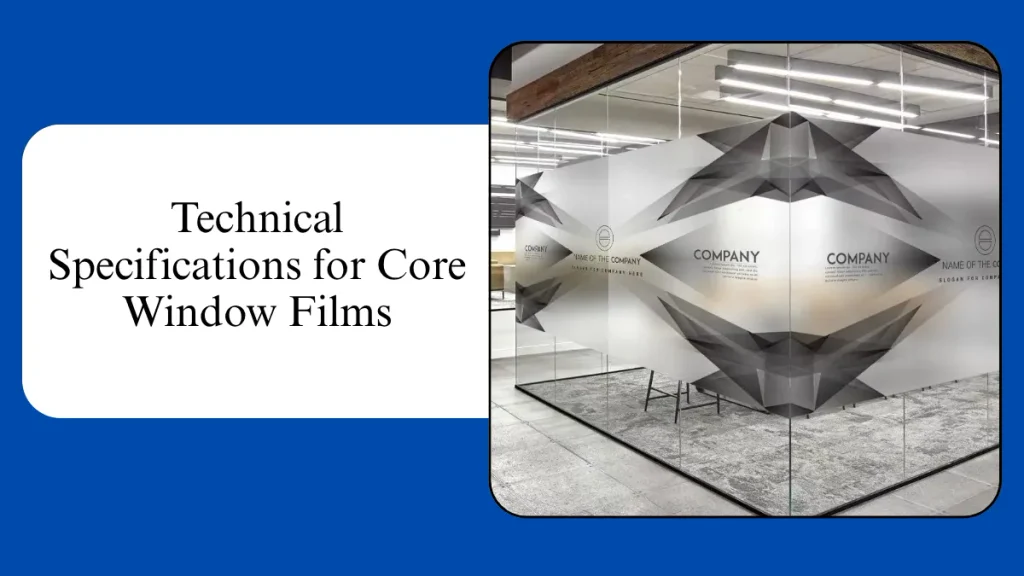
Technical Specifications for Core Window Films
Heat Reduction Film
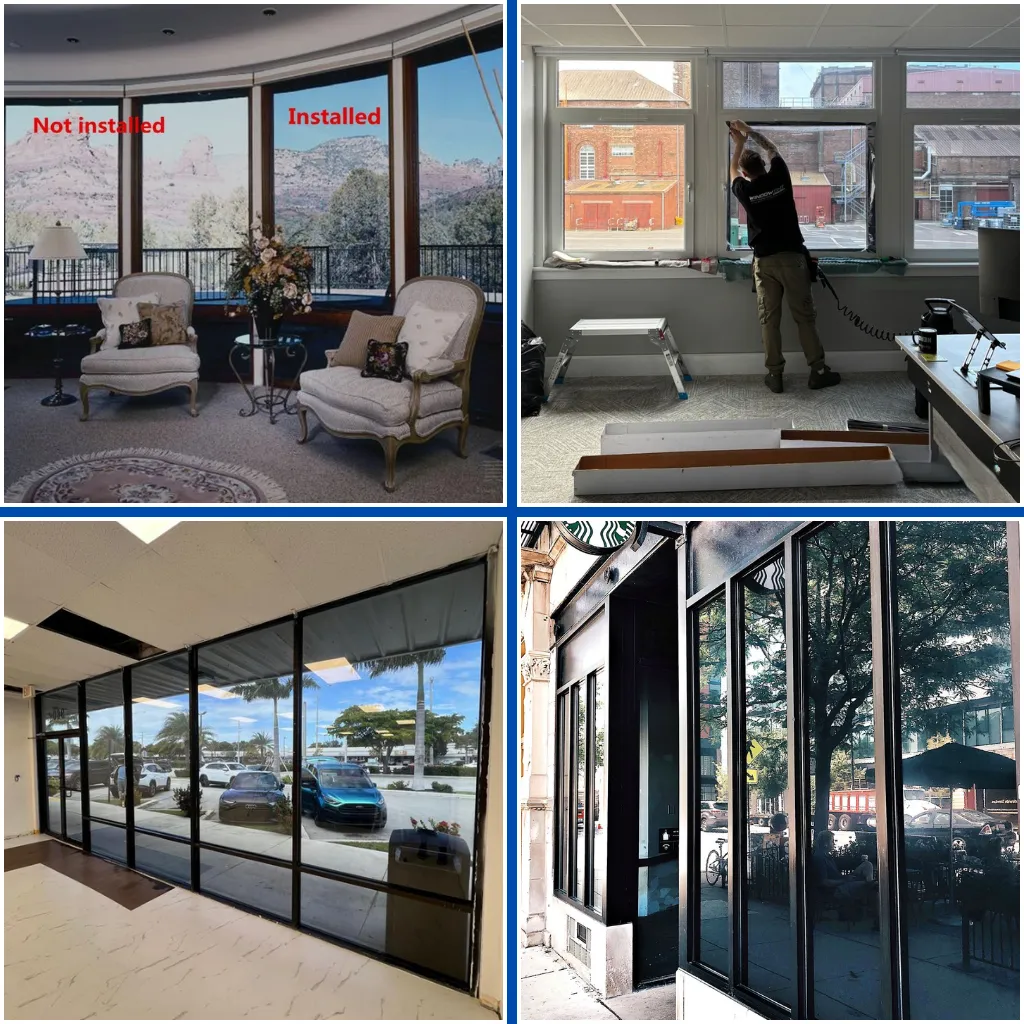
Engineered to combat the scorching Middle Eastern sun, heat reduction films utilize multi-layered nano-ceramic technology. Unlike traditional metallic tints that can interfere with wireless signals in modern offices, these films block up to 96% of infrared heat, dramatically reducing the thermal load on HVAC systems.
Sun Block Window Film
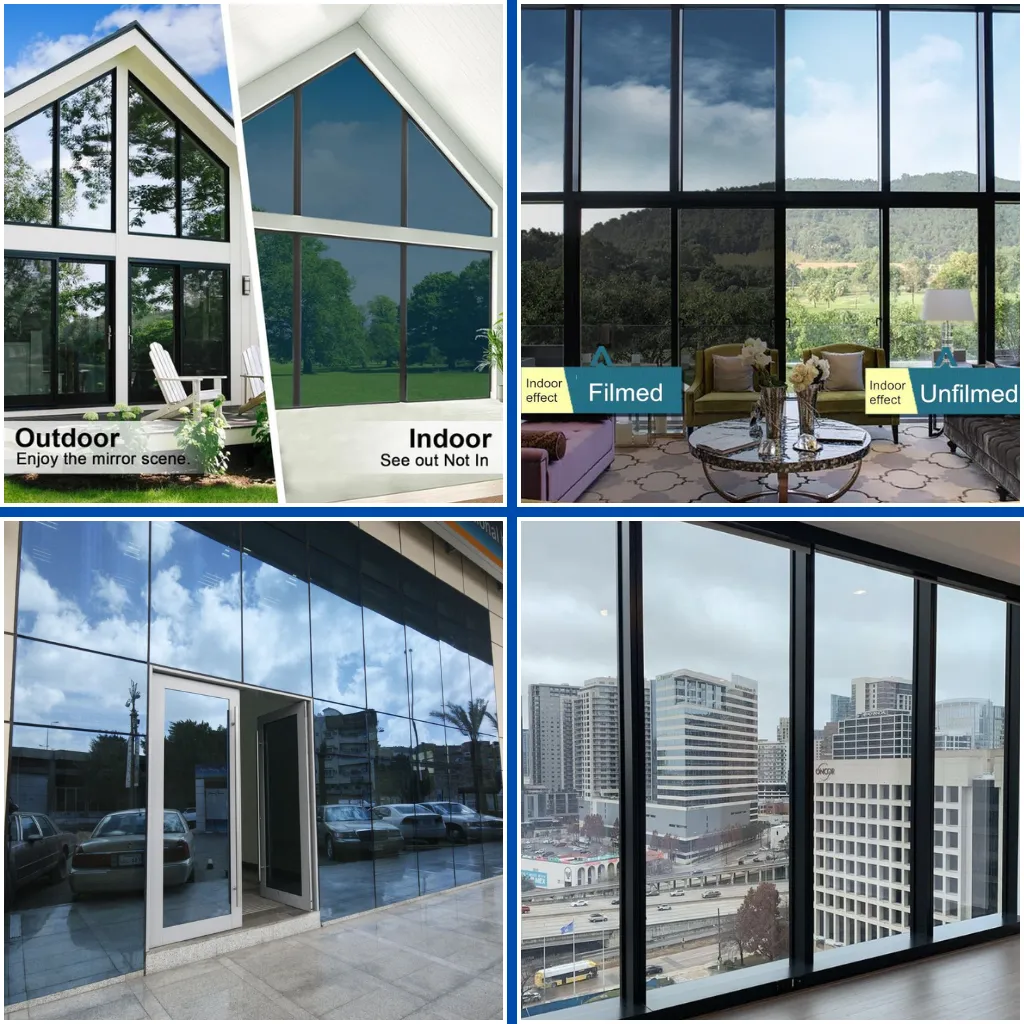
For spaces requiring maximum light mitigation, such as AV presentation rooms or specialized medical storage, sun block films provide near-total opacity. They completely arrest solar energy transfer and stop 99% of UV rays, neutralizing the greenhouse effect entirely.
Privacy Window Film
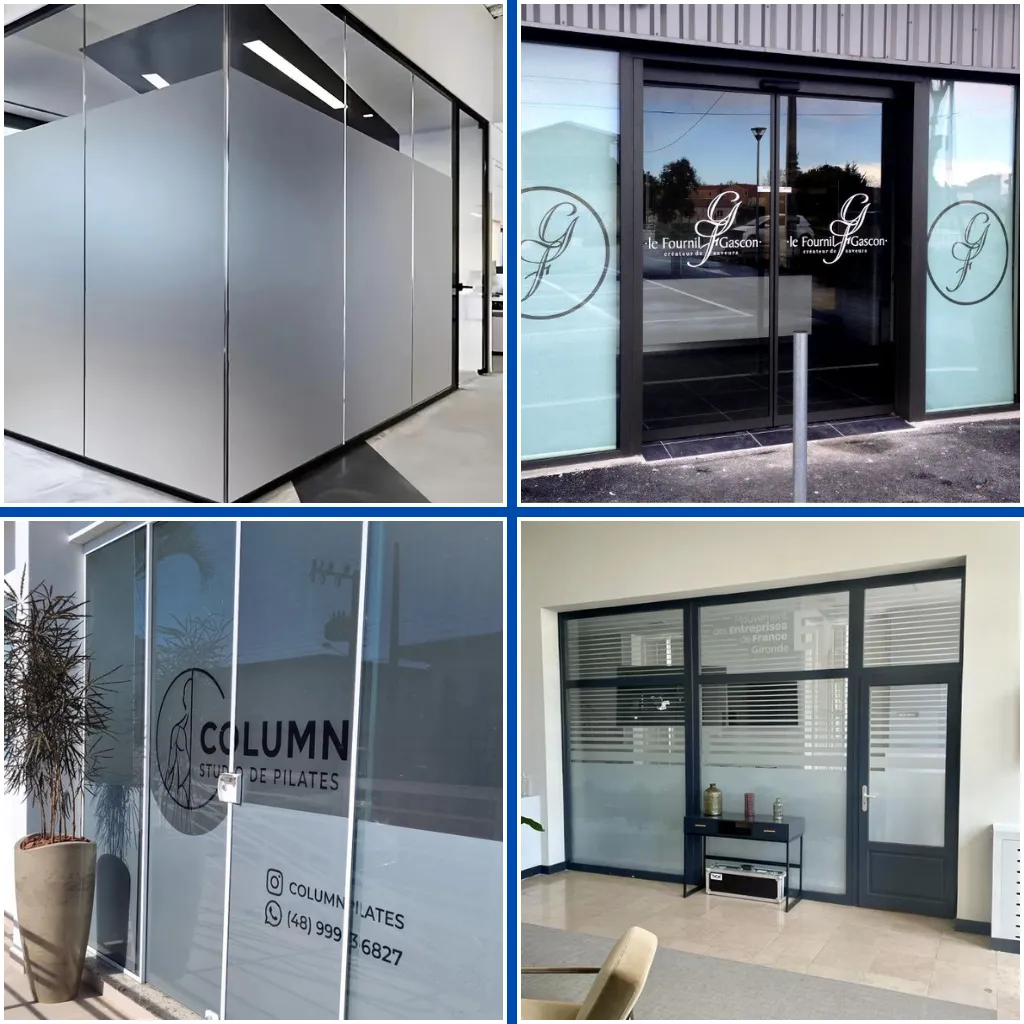
Privacy films come in multiple variants, but the most common commercial application is frosted film. By applying a translucent frosted film to ground-floor windows or meeting room partitions, businesses gain 24/7 visual obscurity without plunging the room into darkness.
Frosted Glass Film
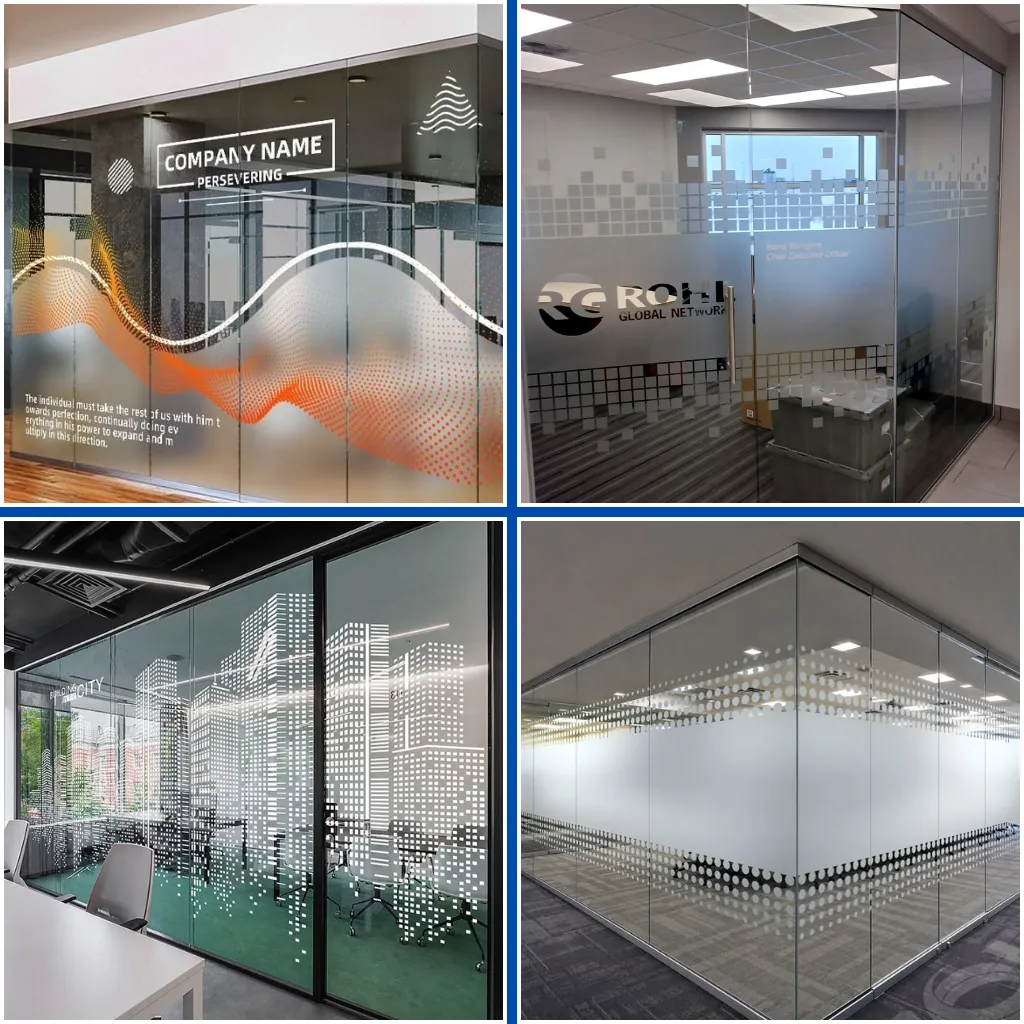
The architectural standard for interior visual separation. Premium frosted film replicates the elegant look of sandblasted or acid-etched glass at a fraction of the structural cost.
- Because frosted film is highly adaptable, it is extensively used in Dubai offices to create semi-private coverage.
- Furthermore, top-tier frosted film is water-resistant and durable, making it an excellent long-term solution for high-moisture environments like luxury villa bathrooms or spa facilities.
Branded Film
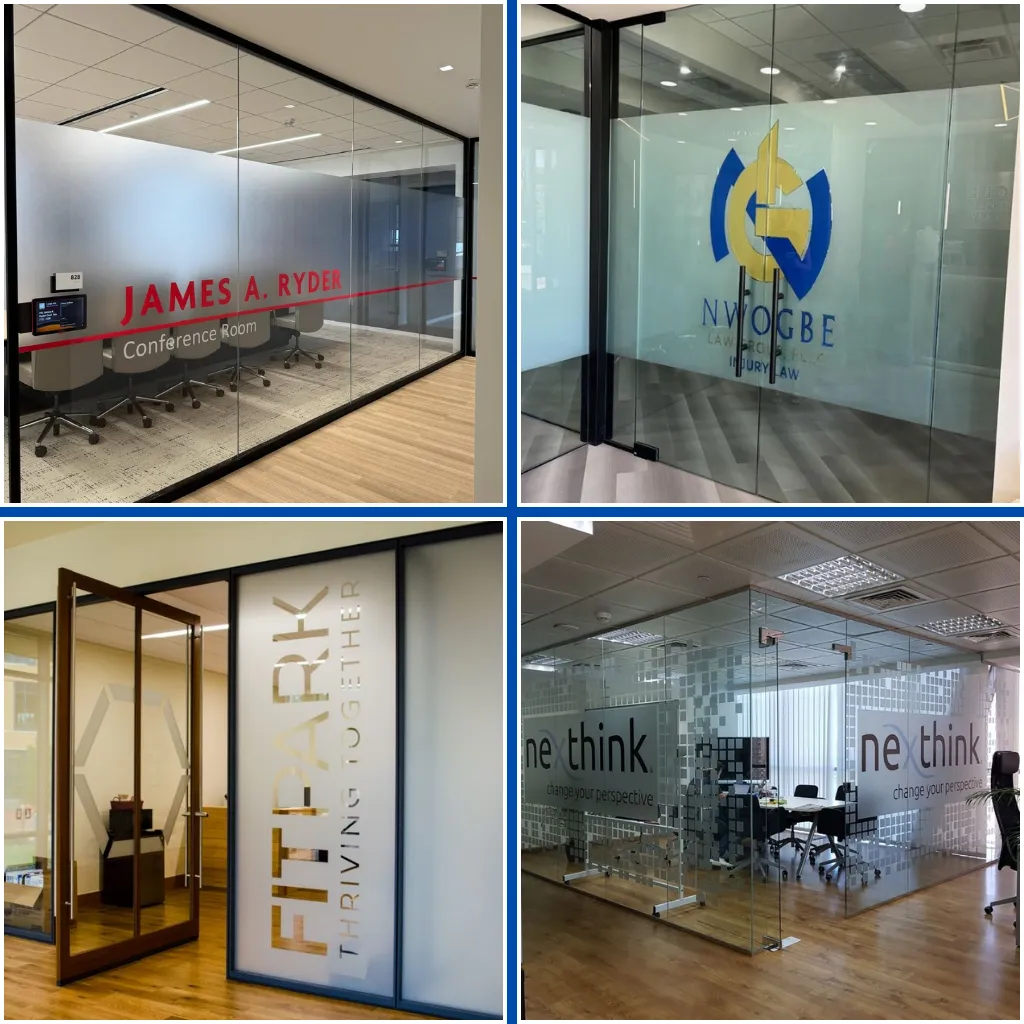
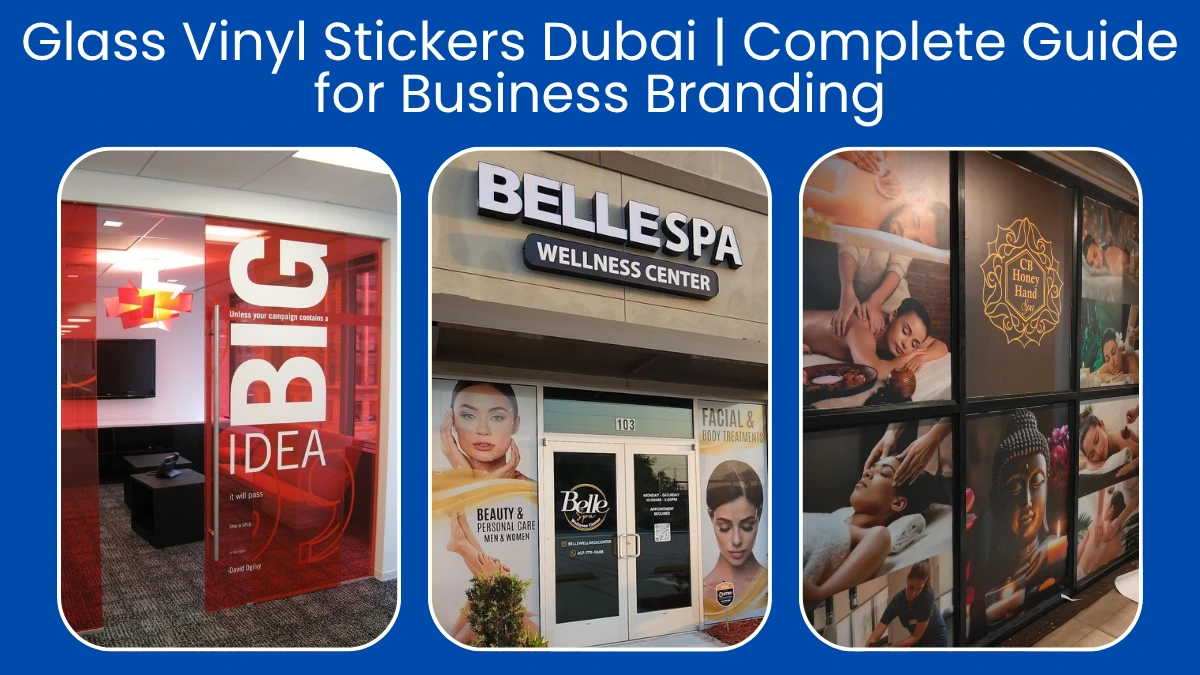
Corporate identity can be seamlessly integrated into glass partitions using plotter-cut frosted film. By precisely cutting logos, geometric patterns, or typographic elements out of a solid sheet of frosted film, companies achieve a sophisticated, dual-tone branding effect. A branded frosted film elevates the prestige of a reception area without the need for bulky physical signage.
Safety & Security Film
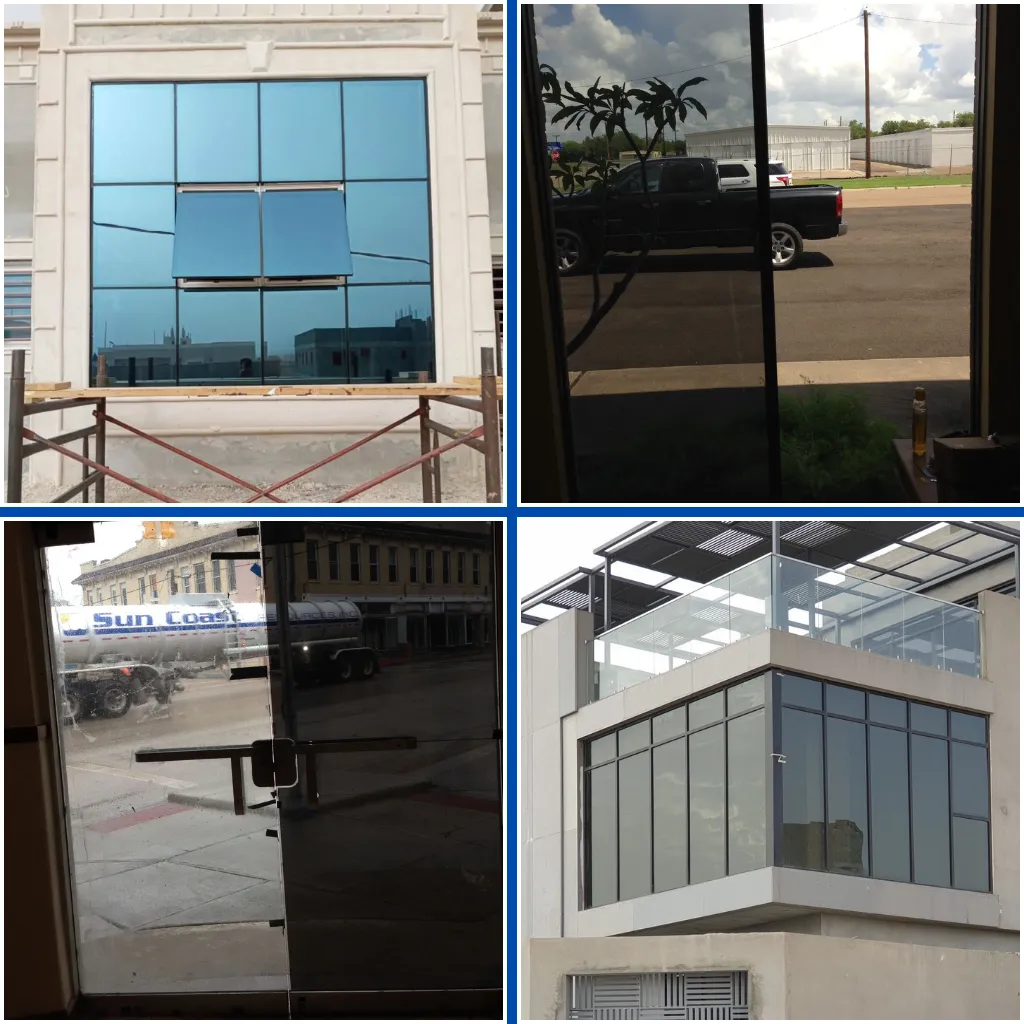
Engineered with heavy-duty polyester micro-layers and aggressive adhesives, security films are designed to hold shattered glass intact. When applied alongside a frosted film for privacy, these treatments protect occupants from high-velocity glass shards in the event of accidental impact or severe weather.
Solar Control Film
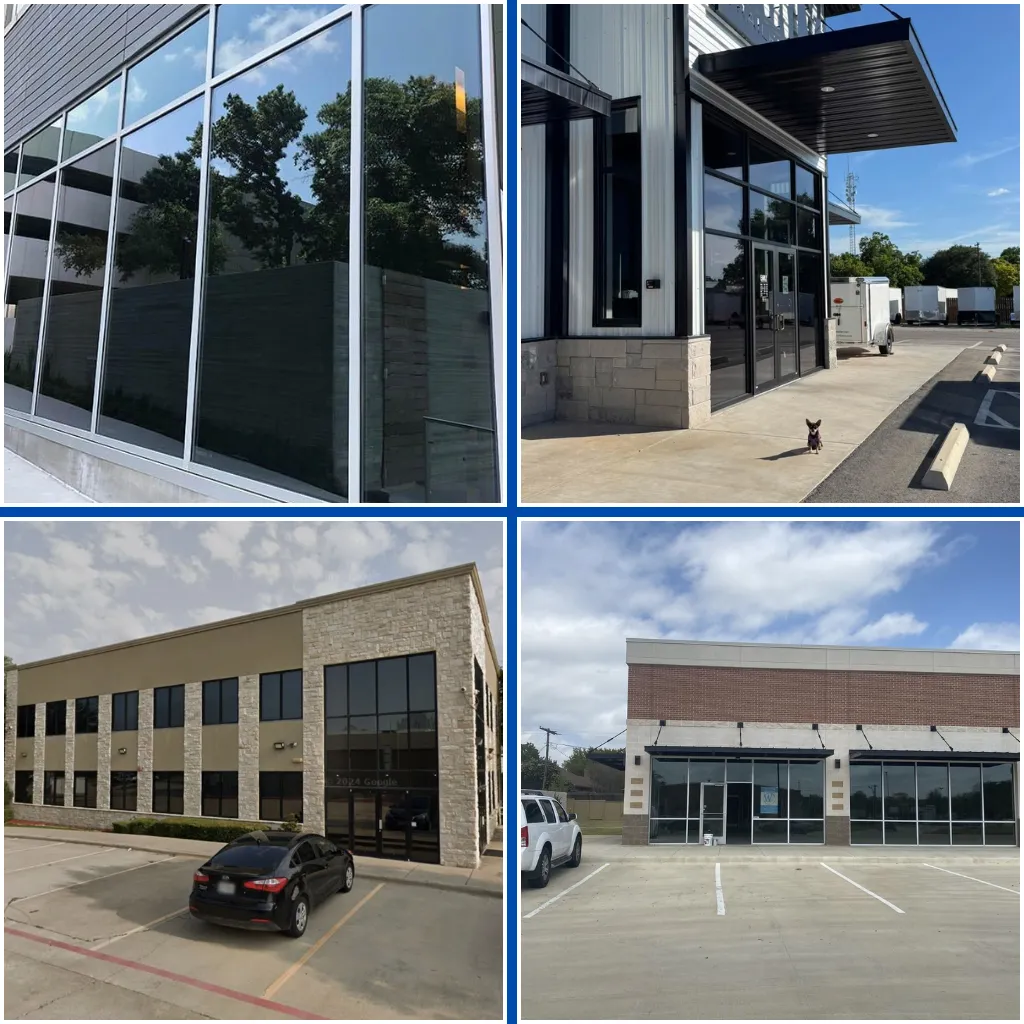
Solar control films are optimized to provide the best balance between maximum light transmission and heat rejection.
- They lower the carbon footprint of a building by reducing the energy consumed for cooling.
- Many spectrally selective solar control films can be combined with an interior layer of frosted film to achieve both thermal efficiency and visual privacy simultaneously.
Anti-Glare Window Film
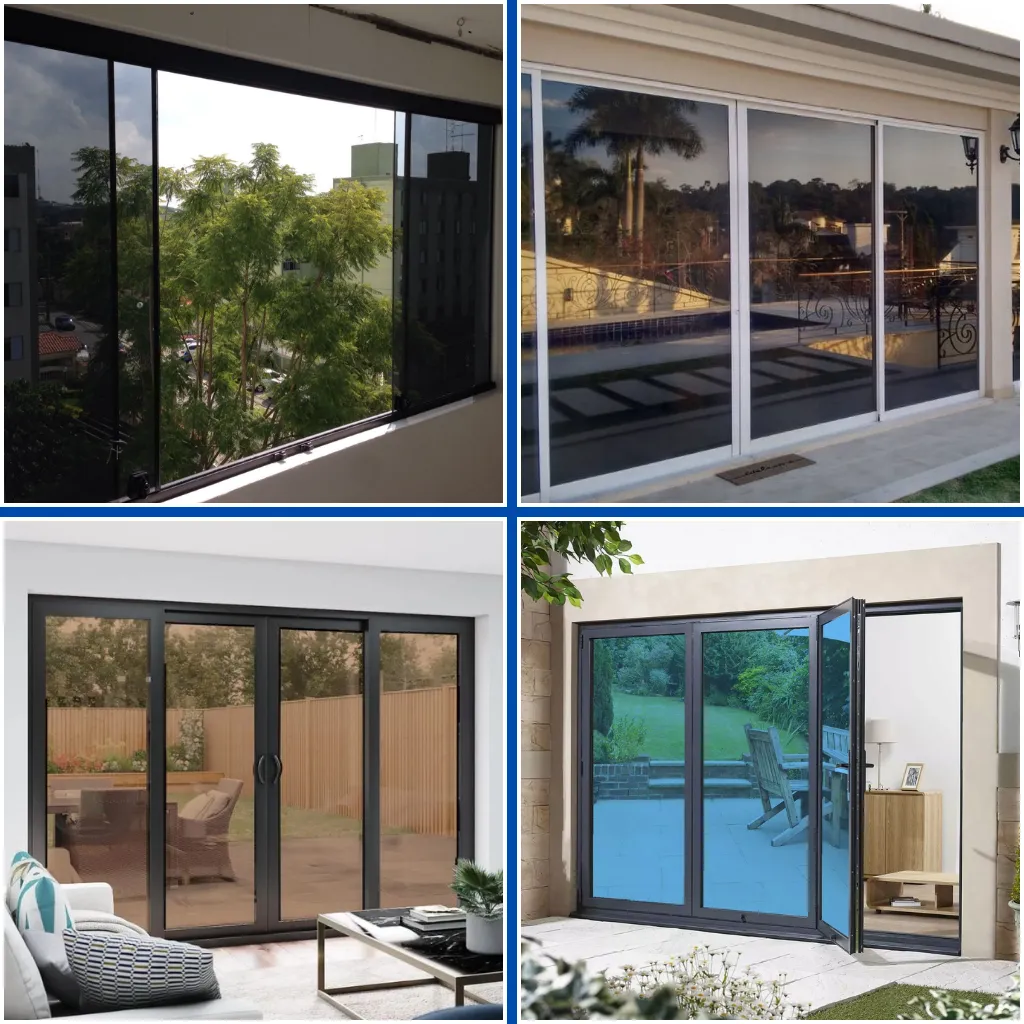
Direct sunlight creates severe screen glare, leading to eye strain and reduced productivity in corporate environments.
- Anti-glare films, which can include matte-finished frosted film variants, filter out the harshest spectrums of light.
- A precisely installed frosted film on an office window diffuses incoming rays, softening the ambient light across computer monitors.
One Way Mirror Film
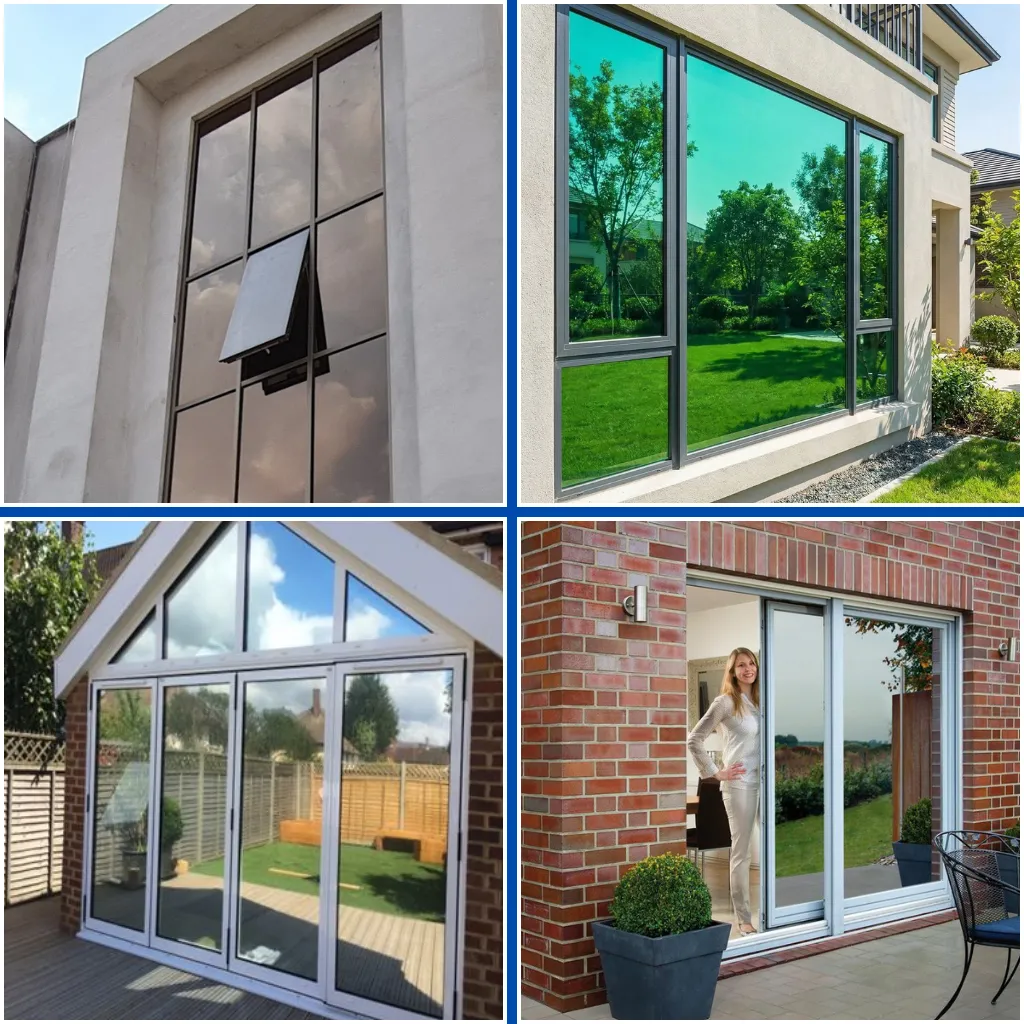
Utilizing reflective physics, one-way mirror films provide daytime privacy.
- The highly reflective exterior surface bounces daylight away, while the interior remains transparent.
- However, at night, when interior lights are brighter than the outside, the effect reverses. For 24/7 privacy, a translucent frosted film is structurally superior to a one-way mirror film.
The Privacy vs. Light Transmission Balance
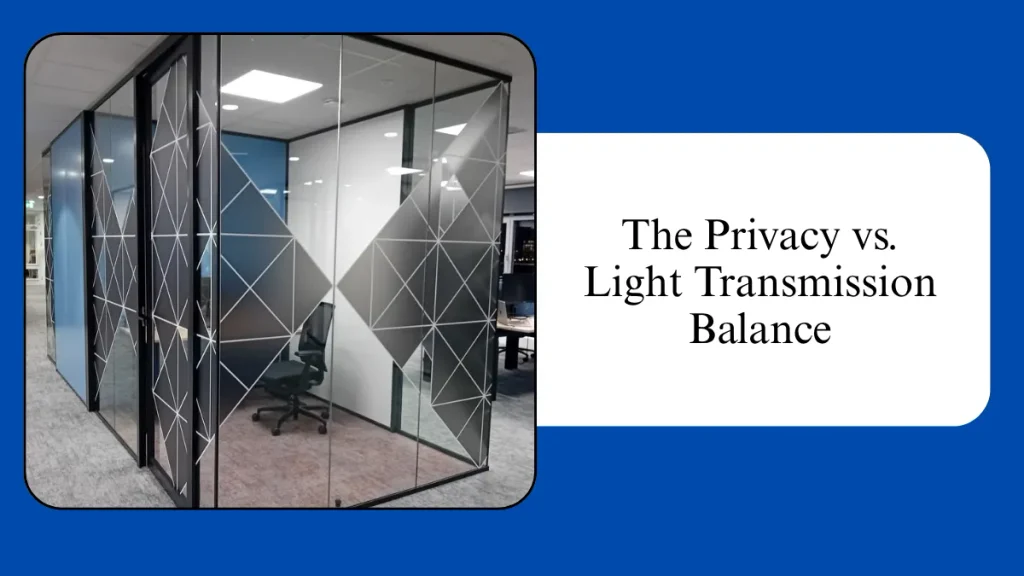
The most critical operational decision for interior glass is balancing privacy with light transmission. Solid drywall partitions block light and make offices feel claustrophobic. Conversely, clear glass offers no visual separation for confidential HR meetings or executive boardrooms.
This is where architectural frosted film excels. A premium frosted film allows a massive volume of visible light to penetrate while completely distorting the shapes and details behind the glass.
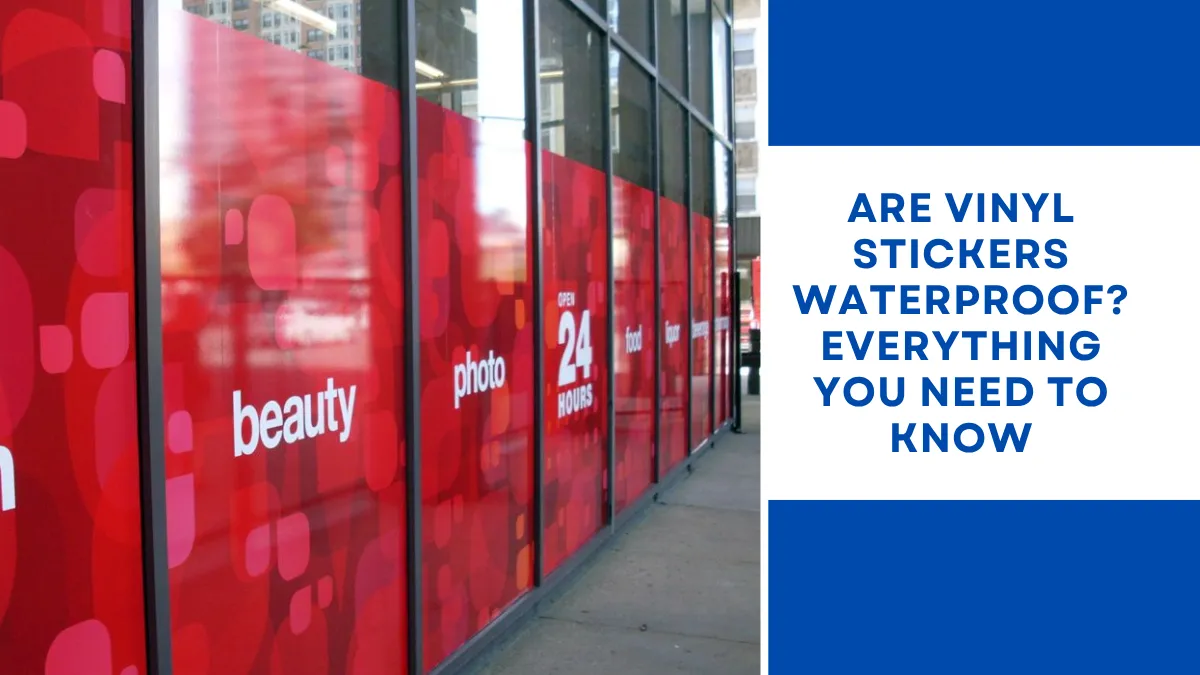
In Dubai’s premium open-plan offices, architects frequently use a “distraction band”—a horizontal strip of frosted film placed at eye level.
- This application of frosted film prevents accidental collisions with clear glass and provides seated privacy, all while allowing light to flow freely through the top and bottom of the partition.
- For bespoke aesthetics, fluted glass film—a specialized, textured variant of frosted film that mimics ribbed architectural glass—is increasingly utilized to add a high-end, tactile dimension to flat glass without the extreme cost of fabricating custom fluted panes.
- It is highly common to see a gradient frosted film—which slowly transitions from opaque to clear—used in luxury office environments to provide discretion at the desk level while leaving the upper glass transparent to preserve the view.
1. Practical Decision Framework
To avoid specifying the wrong material for your project, apply this decision matrix:
- Identify the Primary Threat: If the issue is excessive air conditioning costs, prioritize a multi-layered nanoceramic heat reduction film. If the issue is visual exposure to neighbors or hallway traffic, specify a high-opacity frosted film.
- Evaluate Lighting Conditions: Frosted film glows beautifully when backlit by natural light. Always ensure that the application of frosted film aligns with the path of ambient illumination to prevent the space from feeling enclosed.
- Determine Lifespan and Maintenance: High-grade exterior solar films must withstand UV degradation, while an interior frosted film must resist peeling and bubbling from routine cleaning chemicals.
2. Common Mistakes & Installation Protocols
The most frequent point of failure in glass treatments is adhesive breakdown due to improper surface preparation or cheap material selection.
- Low-tier frosted film will shrink under the intense ambient heat of the UAE, leaving unsightly gaps at the glass edges where dust and moisture accumulate.
- Furthermore, applying the wrong type of dark solar film to double-pane annealed glass can cause thermal stress fractures—a phenomenon where the glass absorbs so much heat that it expands and shatters its own frame.
- Professional installation involves meticulous edge-trimming, structural adhesive curing, and squeegee pressure calibration to ensure the frosted film or solar layer bonds flawlessly without micro-bubbles.
- Chemical decontamination of the glass prior to applying any frosted film is mandatory to ensure a molecular bond that withstands years of aggressive window cleaning and environmental wear.
Engineered Fabrication with Unitec Advertising
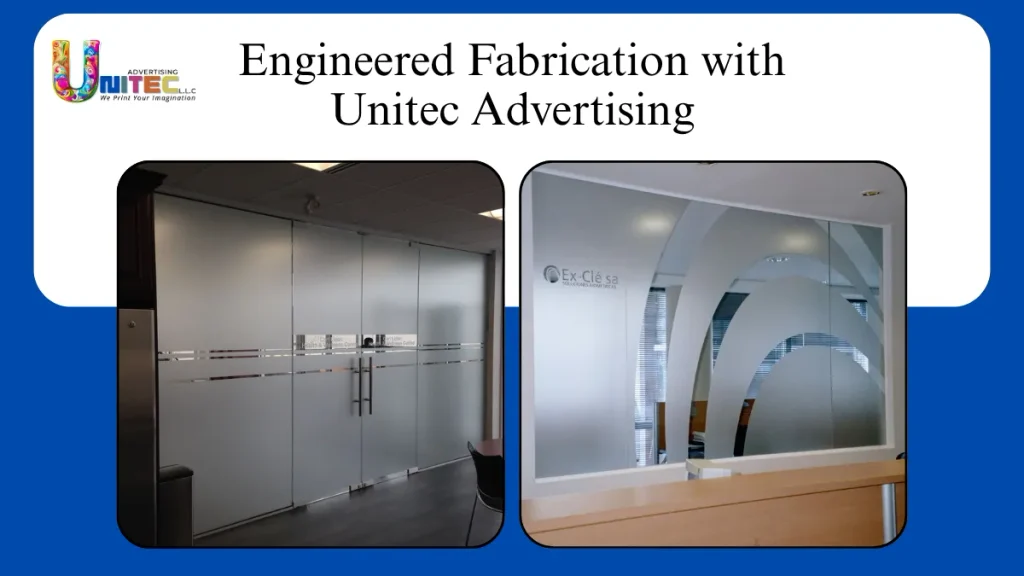
Unitec Advertising operates as your consultative commercial partner in Dubai, specifying and installing high-performance glass treatments. We do not just apply stickers; we engineer visual and thermal solutions.
Whether you require an expansive facade treated with IR-rejecting solar control film, or an entire corporate floor fitted with precision plotter-cut frosted film, we align exact material tolerances with your architectural requirements. We ensure your glass branding and privacy solutions deliver long-term durability, interior climate control, and aesthetic prestige.
Contact us at 971589412091.
Find us on Google Maps.
Get a free quote now: https://unitecadvertising.ae/request-a-quote/
Note: Read Our Latest Blogs Also
- LED Advertising Screens in Dubai: A Complete Guide for Business Visibility
- Premium House Name Plate Guide: Materials & Styles for Dubai Homes
- Choosing the Best Signage for Retail Shops in Dubai: The Complete Guide For All Types Of Businesses
- Premium Outdoor Flags Printing Guide: Types & Styles for Dubai Brands
- Promotional Roll-Up Banners for Business: A Smart Dubai Guide for Better Visibility
- The Complete Guide to Premium Metal Sign Board Designs for Modern Spaces
- Reception Signage: Types, Benefits, and Design Ideas for Offices
- Fabric Straight Pop-Up Guide for Dubai Businesses
- House Name Plate Design Ideas for Dubai Homes
- Signage Companies in Dubai for Custom Business Signs
What is the structural difference between frosted film and sandblasted glass?
Frosted film is an applied vinyl layer that mimics the exact look of sandblasted glass at a fraction of the structural cost. Unlike actual sandblasted glass, frosted film does not permanently weaken the glass pane, does not retain fingerprint oils as aggressively, and can be easily removed or updated during an office rebranding.
Does frosted film block natural sunlight from entering the room?
No. High-quality frosted film is engineered to diffuse light rather than block it. It allows a high percentage of visible light to pass through the glass, keeping the interior bright while completely obscuring the visual details for maximum privacy.
How effective is solar control film at reducing cooling costs in Dubai?
Extremely effective. Premium nanoceramic solar control films can reject up to 96% of infrared heat and 80% of total solar energy. By preventing this heat from entering the building envelope, the HVAC system requires significantly less power to maintain interior temperatures.
Can I print my company logo on a frosted film?
Yes. Frosted film can be customized in two structural ways: it can be plotter-cut to remove the logo from a solid band of frosted film (creating a negative space effect), or it can be directly UV-printed to display colored corporate branding seamlessly integrated into the frosted film surface.
Will window film protect my interior furniture from sun damage?
Yes, both high-grade frosted film and solar block window films are optimized to reject up to 99% of harmful ultraviolet (UV) rays. This prevents molecular degradation, discoloration, and fading of expensive corporate furniture, carpets, and retail merchandise.
Is one-way mirror film effective for privacy at night?
No. One-way mirror films rely on the physics of light contrast. During the day, they reflect the bright sun. However, at night, if the interior lights are on and it is dark outside, the mirror effect reverses, allowing outsiders to see in. For guaranteed 24/7 privacy, frosted film is the correct engineering choice.
How long does commercial frosted film last in a Dubai office environment?
When professionally installed and maintained properly, premium commercial frosted film resists peeling, bubbling, and shrinking, lasting upwards of 5 years even in high-traffic or high-moisture environments like bathrooms and kitchens.
Can safety and security film be combined with frosted glass film?
Yes. Many corporate and government facilities require dual-action glass treatments. An optically clear, micro-layered shatter-resistant security film can be installed on the glass, followed by a decorative or privacy-focused frosted film, delivering both physical blast mitigation and visual confidentiality.