

Deploying large-format graphics in the United Arab Emirates presents a unique set of structural and environmental challenges. Extreme summer temperatures, unrelenting UV radiation, coastal humidity, and dynamic wind loads require more than just basic visual aesthetics. Choosing the correct industrial print substrate—most notably the commercial PVC banner—is a critical operational decision that dictates a campaign’s longevity and structural safety.
When marketing directors, property developers, or event managers require high-visibility branding, understanding the physical mechanics of a PVC banner and its surrounding ecosystem of display hardware prevents costly installation failures.
This guide diagnoses the material science behind wide-format printing, offering a consultative framework to ensure your architectural signage and event displays perform flawlessly in Dubai’s aggressive climate.
The Material Science of PVC Banner

Before specifying a commercial print solution, it is essential to understand the underlying physical mechanics of the materials. A standard PVC banner is not merely a sheet of plastic; it is an engineered composite material designed for specific tensile strengths and weathering conditions.
The foundation of any high-performance display is the base fabric, typically woven from high-tenacity polyester threads. This scrim is then either laminated or knife-coated with liquid polyvinyl chloride. Knife-coated substrates embed the polymer directly into the woven fibers, creating an inseparable bond that dramatically increases tear resistance and dimensional stability.
For the harsh UAE environment, the weight of a PVC banner—measured in Grams per Square Meter (GSM)—dictates its utility. A lightweight 340gsm material may suffice for a temporary indoor promotion, but a heavy-duty 440gsm to 510gsm substrate is mandatory for architectural wraps or long-term billboard installations facing direct thermal expansion and high wind shear.
Furthermore, modern industrial printing utilizes UV-cured inks, which instantly polymerize under ultraviolet light. This chemical process locks the pigment into the PVC banner surface, preventing the sun-bleaching that quickly destroys retail adhesives.
Commercial Display Typologies: A Structural Breakdown

Selecting the correct format requires matching the specific material architecture to the physical environment. Below is a technical evaluation of the core commercial signage and exhibition systems.
1. PVC Banner
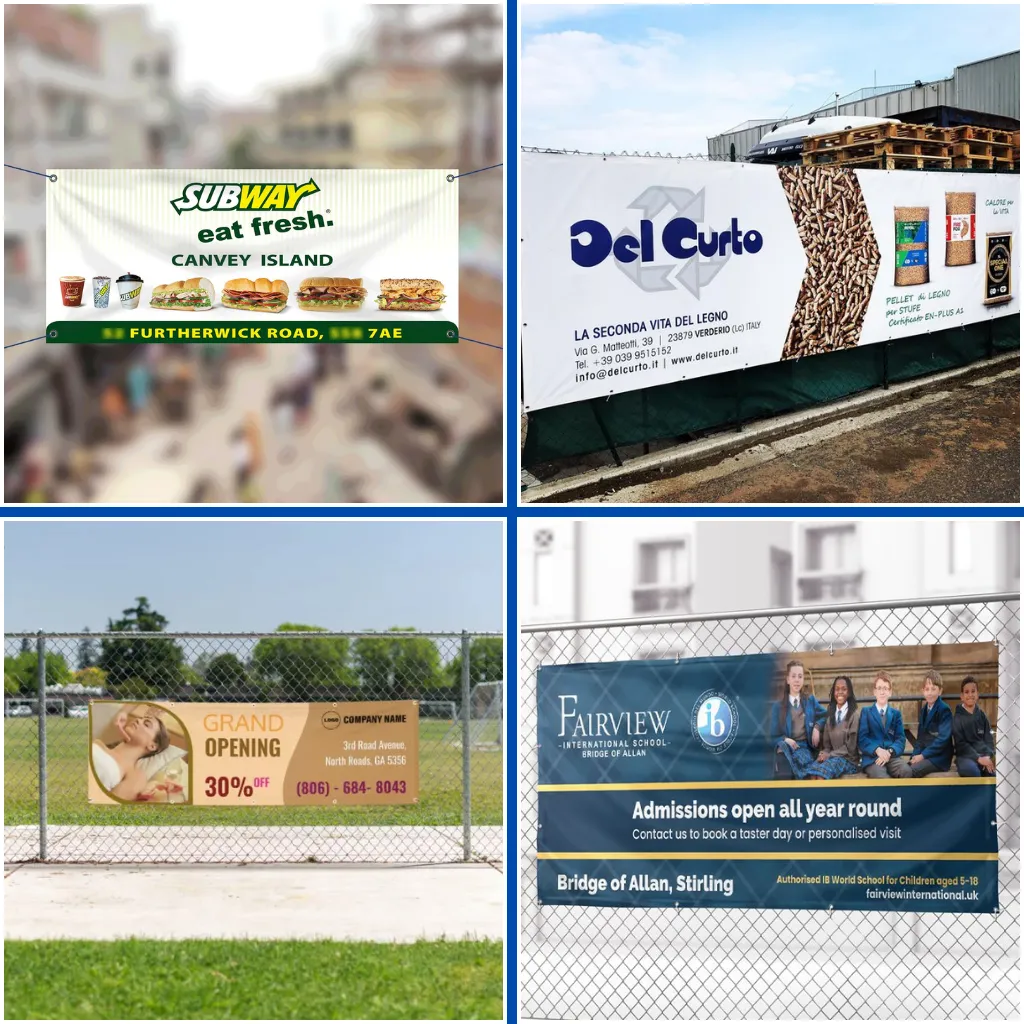
The foundational workhorse of the advertising industry. A heavy-duty PVC banner offers maximum tensile strength and complete opacity. Engineered for long-term outdoor use, these substrates are highly resistant to moisture and structural tearing when properly hemmed. They are the primary choice for building wraps, bridge banners, and large-scale architectural hoarding.
2. Outdoor Banner
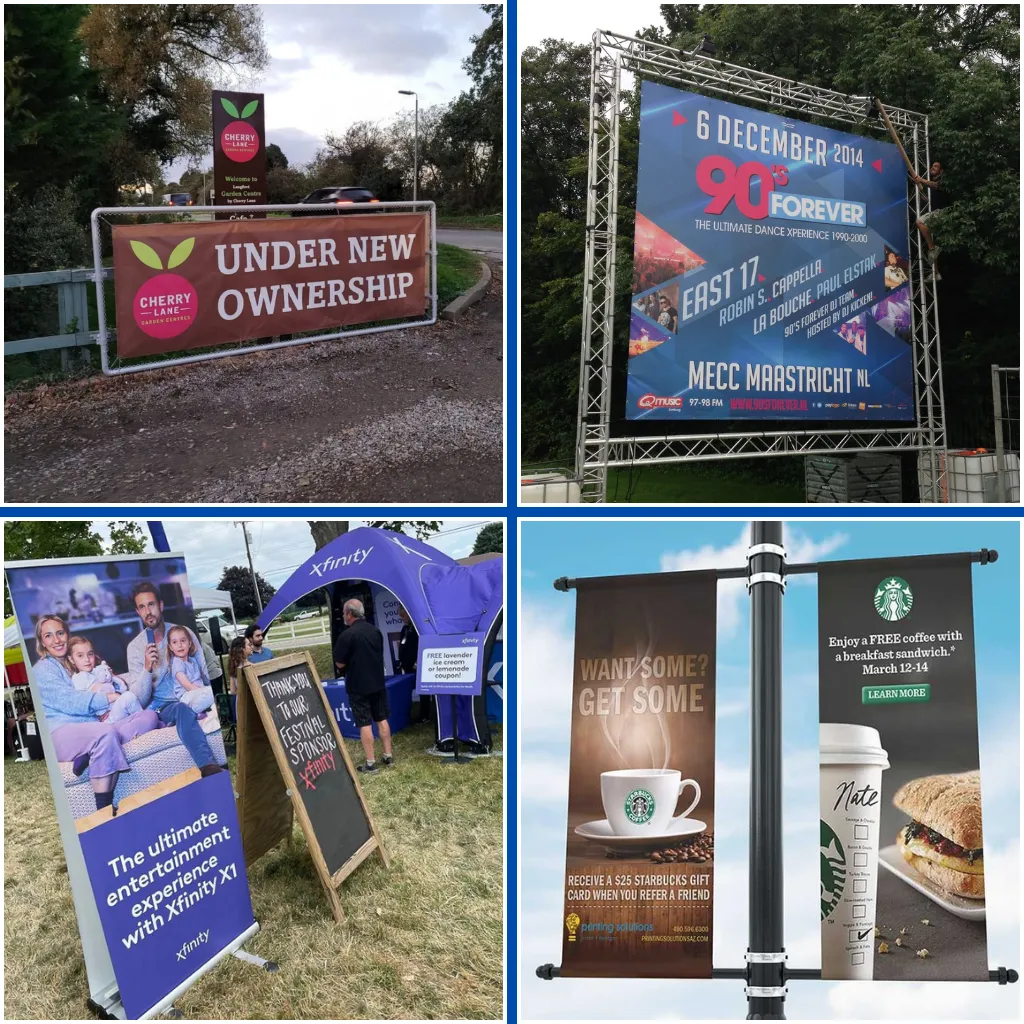
Operating in the exterior environment requires specialized engineering. An outdoor banner must mitigate wind load and thermal stress. In high-wind areas like coastal Dubai or open construction sites, a solid PVC banner is often swapped for a mesh variant. Mesh substrates feature a perforated weave that allows up to 30% air permeability, dramatically reducing the sail effect and preventing the structural failure of the mounting points.
3. Fabric Banner

While a PVC banner dominates the outdoors, a fabric banner is the premium choice for indoor environments. Woven from 100% polyester and printed using high-resolution dye-sublimation, fabric absorbs light rather than reflecting it. This creates a glare-free, highly saturated visual aesthetic perfect for luxury retail, trade show interiors, and red-carpet events where flash photography is prevalent.
4. Vinyl Banner

Often used interchangeably with the primary keyword, a vinyl banner refers to a highly flexible, calendared polymeric sheet. These are frequently used for shorter-term outdoor promotions, retail storefronts, and fence branding. They offer a smooth, ink-receptive surface for ultra-sharp solvent or eco-solvent printing, though they lack the extreme structural rigidity of a 510gsm knife-coated substrate.
5. Roll-Up Banner
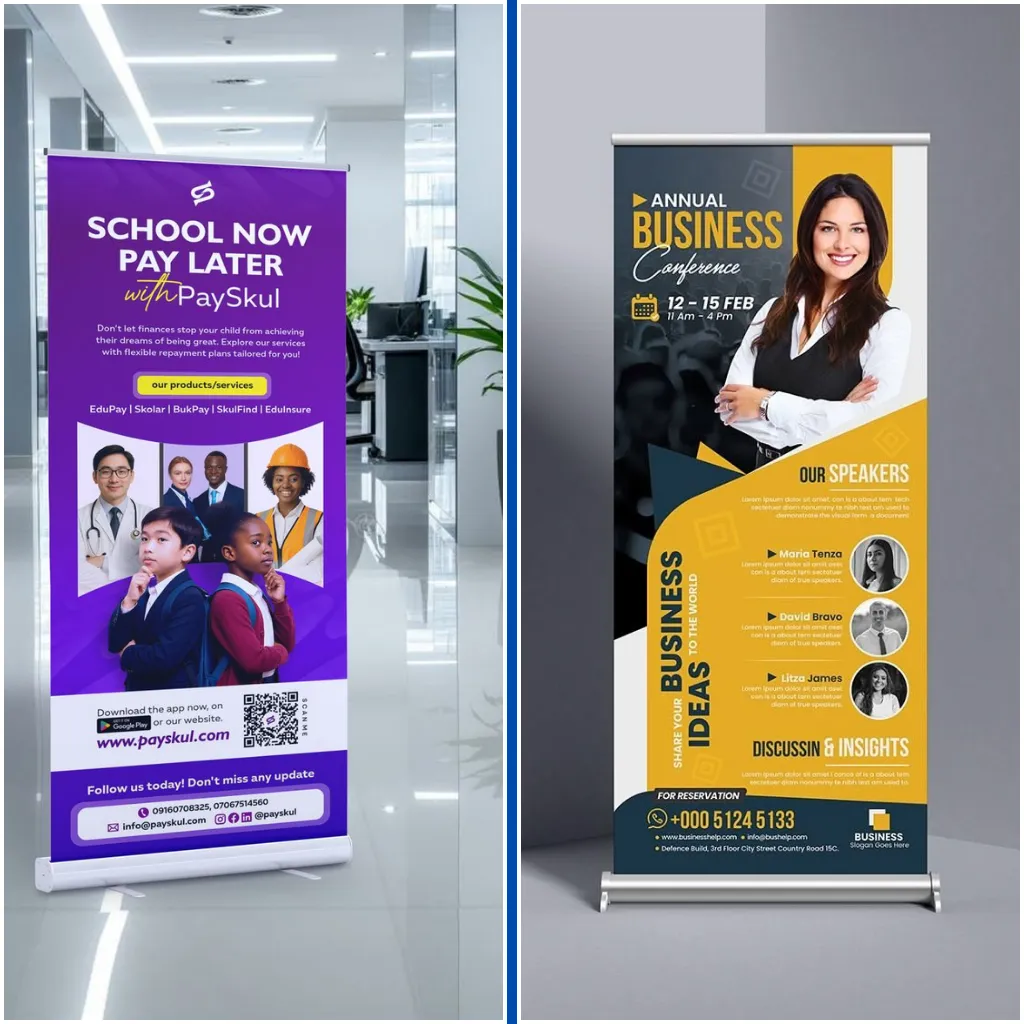
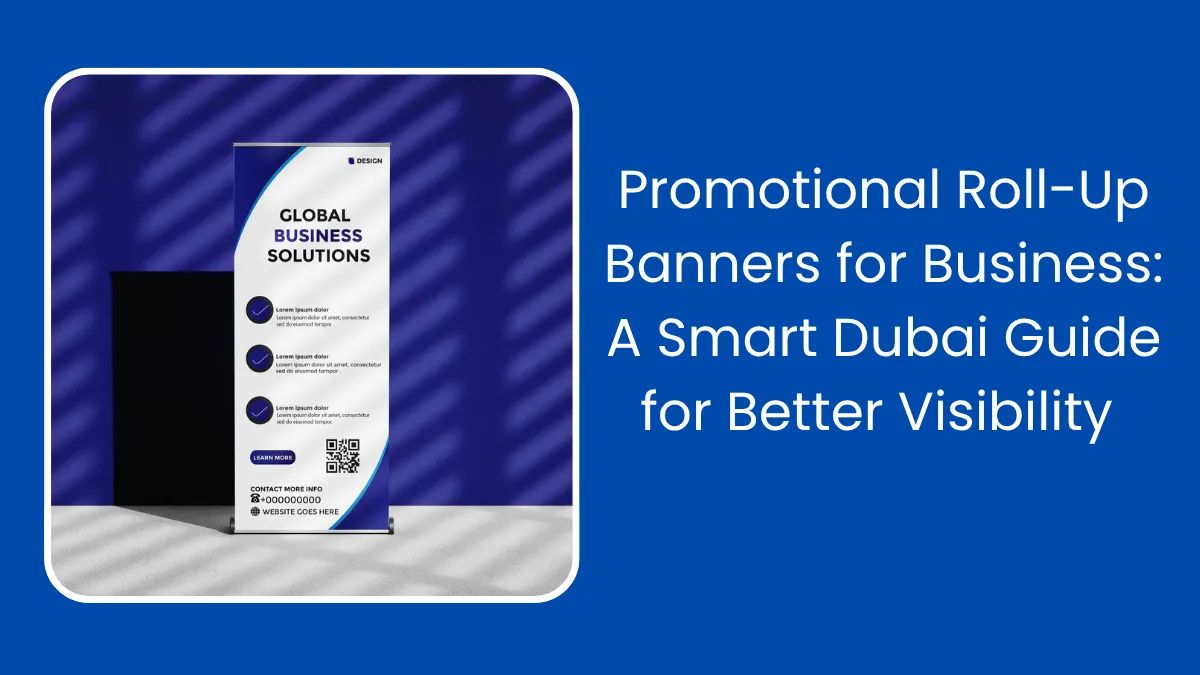
A highly portable, self-contained structural system. The roll-up banner utilizes an anodized aluminum base that houses a tension-spring mechanism. When deployed, the internal graphic—often printed on an anti-curl blockout PET film rather than standard flexible material—is pulled upward and secured by a collapsible mast. This system optimizes the booth footprint and allows for sub-60-second assembly.
6. Pop-Up Banner

Distinct from standard retractable systems, a pop-up banner relies on an expandable, geometric aluminum matrix frame. The graphic—usually a tensioned dye-sublimated fabric—remains attached to the frame via heavy-duty Velcro or silicone edge graphics (SEG). When expanded, the frame locks into place, creating a massive, seamless graphic wall that eliminates the wrinkles associated with folding a traditional PVC banner.
7. Back-Drop Banner

Required for press conferences, exhibition booths, and stage sets, a back-drop banner demands a non-reflective surface and massive scale. These are typically mounted via a specialized telescopic pole-and-drape system or a rigid truss structure. Depending on the lighting environment, event organizers must choose between a blockout PVC banner (to prevent rear light transmission) or a tensioned matte fabric (to eliminate camera flash glare).
Strategic Architectural and Event Ecosystems
Maximizing commercial visibility often requires combining these structural elements into a hybrid ecosystem.
For high-traffic trade shows at the Dubai World Trade Centre, a solitary system is rarely sufficient. A strategic deployment pairs a massive, tensioned Fabric Pop-Up Banner at the rear of the booth to establish visual height, while utilizing a portable Pop Table integration at the front to facilitate client interaction.
Flanking the entrance with twin Roll-Up Banners creates a defined architectural boundary, guiding foot traffic directly into the interaction zone. For exterior corporate events, pairing a heavy-duty PVC banner on the main stage truss with breathable mesh outdoor banners on the perimeter fencing ensures both brand continuity and structural safety under unpredictable wind conditions.
The Operational Decision Framework For PVC Banners
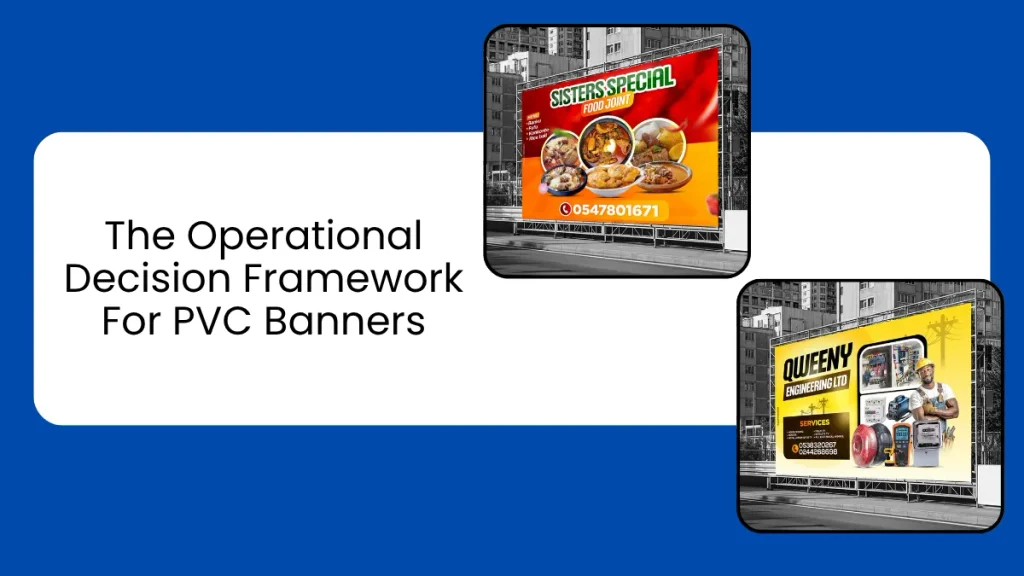
When specifying materials for commercial visibility, base your engineering decisions on three critical physical factors:
- Wind Load & Aerodynamics: If the installation is elevated or exposed to coastal winds, standard solid substrates act as a sail. You must specify a perforated mesh PVC banner to reduce aerodynamic drag on the mounting infrastructure.
- Ambient Light & Glare: Assess the lighting direction. If the banner sits in front of a window or light source, a blockout layer is mandatory to prevent ghosting. If the graphic faces heavy artificial lighting or camera flashes, switch from a glossy PVC banner to a matte fabric to prevent illegible glare.
- Logistics & Footprint: For international sales teams or fast-moving event staff, the rapid deployment of a Roll-Up or Pop-Up system far outweighs the cost savings of manually tying down a traditional flat sheet.
Mitigating Material and Installation Failures
The most common point of failure for a commercial PVC banner in Dubai is not the ink, but improper tensioning and edge finishing.
- Inexperienced installation often relies on raw, unhemmed edges. Under high wind stress or extreme summer thermal expansion, the eyelets will rapidly tear through the base fabric.
- Professional structural engineering requires double-folded, high-frequency heat-welded hems, reinforced with heavy-duty webbing.
- Furthermore, failing to maintain equal tension across all mounting points leads to localized stress fractures in the polymer layer, resulting in permanent creasing and eventual catastrophic tearing.
Precision Manufacturing with Unitec Advertising
Executing a flawless commercial branding strategy requires technical precision and a deep understanding of Dubai’s harsh environmental demands. Unitec Advertising operates as a premier B2B and B2C manufacturing partner, engineering high-performance display systems that solve physical logistical challenges.
From precision-tensioned fabric exhibition walls to heavy-duty, UV-cured PVC banner installations for architectural hoarding, our consultative approach ensures your graphics perform optimally. We do not just supply print; we analyze the environmental stress, specify the exact material GSM, and deliver structural reliability for your most critical campaigns.
Contact us at 971589412091.
Find us on Google Maps.
Get a free quote now: https://unitecadvertising.ae/request-a-quote/
Note: Read Our Latest Blogs Also
- LED Advertising Screens in Dubai: A Complete Guide for Business Visibility
- Premium House Name Plate Guide: Materials & Styles for Dubai Homes
- Choosing the Best Signage for Retail Shops in Dubai: The Complete Guide For All Types Of Businesses
- Premium Outdoor Flags Printing Guide: Types & Styles for Dubai Brands
- Promotional Roll-Up Banners for Business: A Smart Dubai Guide for Better Visibility
- The Complete Guide to Premium Metal Sign Board Designs for Modern Spaces
- Reception Signage: Types, Benefits, and Design Ideas for Offices
- Fabric Straight Pop-Up Guide for Dubai Businesses
- House Name Plate Design Ideas for Dubai Homes
- Signage Companies in Dubai for Custom Business Signs
What is the optimal GSM specification for an architectural PVC banner installed in the UAE?
For long-term outdoor architectural and building wrap installations in the UAE, a heavy-duty 440gsm to 510gsm knife-coated PVC banner is the optimal specification. This weight provides the necessary high-tenacity polyester denier count (typically 1000x1000D) to withstand high wind shear and extreme thermal expansion without suffering structural failure.
How does the choice of ink technology impact the UV degradation of a PVC banner?
Standard solvent inks are prone to rapid photo-oxidation when exposed to direct UAE sunlight. Industrial-grade UV-cured inks are specifically required for outdoor longevity; they polymerize instantly upon exposure to ultraviolet light, creating a chemical bond that resists sun-bleaching and micro-cracking for up to 36 months of direct exposure.
What is the structural difference between a knife-coated and a laminated PVC banner?
A laminated PVC banner presses a layer of polyvinyl chloride onto the top and bottom of a scrim via heat rollers, which is cost-effective but prone to delamination under extreme heat. A knife-coated banner embeds liquid polymer directly into the woven polyester base fibers, creating an inseparable composite that offers vastly superior tear resistance and dimensional stability.
When should a mesh substrate replace a solid PVC banner for outdoor applications?
A mesh substrate must replace a solid PVC banner in high-elevation or high-wind environments, such as construction hoardings or free-standing truss structures. The perforated weave allows up to 30% air permeability, which drastically reduces the aerodynamic sail effect and prevents catastrophic failure of the structural mounting points.
What is an anti-curl blockout PET film, and why is it used in Roll-Up Banners?
An anti-curl blockout film is a specialized hybrid material (Polyethylene Terephthalate) engineered with a central opaque layer. It is used in premium Roll-Up Banners because, unlike a standard flexible PVC banner, it maintains absolute edge-to-edge rigidity, preventing the vertical edges from curling inward under tension while blocking rear light transmission.
How do extreme summer temperatures cause edge failure in a poorly installed PVC banner?
Extreme heat causes polymeric substrates to undergo thermal expansion. If a PVC banner is installed rigidly without flexible tensioners (like bungee cords) or reinforced, heat-welded hems, the expansion and subsequent nighttime contraction will isolate stress at the metal grommets, causing the material to tear under its own kinetic movement.
Why is dye-sublimation on a Fabric Banner preferred over solvent printing for indoor exhibitions?
Dye-sublimation uses heat to transition ink into a gas, infusing it directly into the molecular structure of the polyester fibers. This creates a highly saturated, continuous-tone graphic that is glare-free under bright exhibition lights, whereas solvent printing on a glossy PVC banner reflects light, obscuring the brand message and ruining flash photography.
What is a Silicone Edge Graphic (SEG) system in relation to Pop-Up Banners?
An SEG system involves printing onto a tensioned fabric and sewing a thin silicone bead around the perimeter. This bead is press-fit into an extruded aluminum channel on the Pop-Up frame. It provides a drum-tight, completely seamless, and wrinkle-free display that mimics a solid architectural wall, far surpassing the aesthetics of a hanging PVC banner.
How do you prevent ghosting on a double-sided PVC banner display?
Ghosting occurs when ambient or direct light shines through the substrate, making the reverse image visible. To prevent this, a blockout PVC banner must be specified. This material features an engineered internal black or grey core layer sandwiched between two white printable surfaces, ensuring 0% light transmission.
What is the maximum seamless printable width for a commercial PVC banner?
Modern industrial roll-to-roll printers can output a continuous, seamless PVC banner up to 3.2 meters (10.5 feet) or 5.1 meters (16.7 feet) wide, depending on the machine format. For dimensions exceeding this, panels must be high-frequency heat-welded together to maintain structural integrity and visual continuity.
How does coastal humidity in Dubai affect the lifespan of outdoor banner mounting hardware?
While a UV-cured PVC banner is highly resistant to moisture, coastal humidity accelerates galvanic corrosion in the mounting hardware. It is critical to specify 316-grade stainless steel grommets, turnbuckles, and wire ropes to prevent rust bleeding onto the graphic and structural degradation of the tension points.
What are the load-bearing requirements for hemming a heavy-duty PVC banner?
To safely sustain wind loads, the perimeter of a heavy-duty PVC banner must feature a double-folded hem sealed via high-frequency heat welding, rather than standard stitching. For installations exceeding 50 square meters, the hem must also encapsulate a continuous nylon webbing belt to distribute the kinetic stress evenly across all anchor points.